Choosing the 2026 best MCCB Circuit Breaker requires more than comparing prices or molded-case ratings. Global buyers must match protection performance with real installation conditions, local standards, and long-term maintenance plans. A breaker used in a coastal factory faces moisture and corrosion. A unit installed in a commercial tower may need dependable selective coordination and frequent testing access.
This guide examines major MCCB types by breaking capacity, trip technology, pole configuration, voltage range, and application. It considers thermal-magnetic and electronic trip units, adjustable protection settings, communication options, and accessories such as auxiliary contacts and shunt trips. These details affect safety, uptime, panel space, and total ownership cost. Small differences matter.
No single model is best for every market. That is easy to forget. IEC-based projects, UL-oriented installations, and regional certification requirements may demand different documentation and testing evidence. Buyers should verify current certificates, short-circuit ratings, temperature derating data, and manufacturer support before placing an order. Product brochures alone are not enough.
The discussion draws on practical selection logic used by electrical engineers, panel builders, and procurement teams. It also recognizes a common weakness: specifications can look complete while omitting coordination studies, cable conditions, or ambient temperature limits. Careful review remains essential. A reliable MCCB Circuit Breaker should protect people, equipment, and continuity of service without creating unnecessary complexity. Safety comes first.
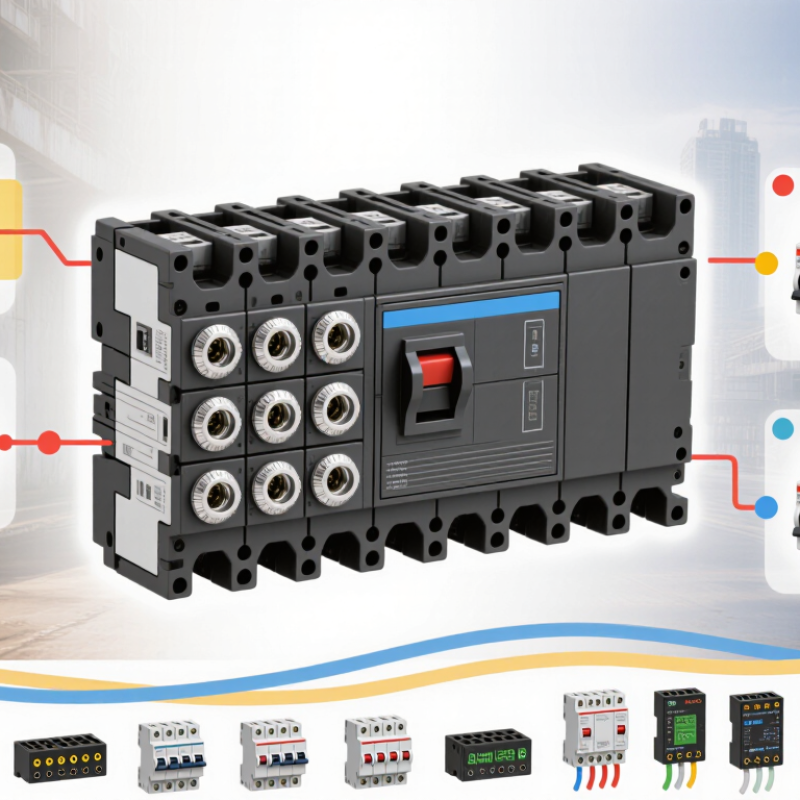
An MCCB, or molded case circuit breaker, protects electrical systems from overloads and short circuits. It opens the circuit before excessive current damages conductors, insulation, or connected equipment. Thermal trip units respond to sustained overloads. Magnetic or electronic units react faster to short-circuit faults. Many electronic versions also allow adjustable protection settings.
According to the IEA Electricity 2024 report, global electricity demand is expected to grow by an average of 3.4% annually from 2024 to 2026. More demand means greater pressure on distribution panels. In practical panel inspections, the correct MCCB depends on rated current, voltage, poles, trip curve, and interrupting capacity. IEC 60947-2 requires low-voltage circuit breakers to meet defined performance and testing requirements. Still, a compliant breaker can perform poorly if its settings are wrong. That detail is often underestimated.
Tips: Check the prospective short-circuit current before selection. Compare it with the MCCB’s rated short-circuit breaking capacity. Match the cable’s ampacity, not only the equipment load. Tighten terminals to the specified torque. Heat marks, loose lugs, and repeated trips need investigation, not simple replacement. IEA data supports rising demand, but local conditions remain decisive. Ambient temperature, enclosure ventilation, altitude, and harmonics can change actual performance. A qualified engineer should verify coordination between upstream and downstream breakers. Selective coordination may prevent a small fault from shutting down an entire facility. Forgetting this can be costly.
| MCCB Type | Primary Protection Method | Typical Current Range | Typical Pole Options | Typical Applications | Main Protection Benefits | Selection Considerations |
|---|---|---|---|---|---|---|
| Thermal-Magnetic MCCB | Thermal element for overload protection and magnetic element for short-circuit protection. | Approximately 15–1,600 A, depending on frame size and product family. | 2-pole, 3-pole, and 4-pole configurations are commonly available. | Commercial buildings, industrial distribution panels, motor feeders, and general low-voltage circuits. | Provides reliable, self-contained protection without requiring an external control power supply. | Check ambient-temperature derating, adjustable ranges, neutral-pole requirements, and available interrupting capacity. |
| Electronic-Trip MCCB | Microprocessor-based sensing for configurable long-time, short-time, instantaneous, and sometimes ground-fault protection. | Commonly used from approximately 100–2,500 A; higher ratings are available in some ranges. | 3-pole and 4-pole versions are widely used. | Main low-voltage switchboards, data centers, factories, large commercial facilities, and critical power systems. | Improves selectivity, provides more precise settings, supports event information, and allows better coordination with upstream and downstream devices. | Confirm trip-unit functions, sensor rating, control power requirements, communication options, and maintenance procedures. |
| Adjustable-Trip MCCB | Adjustable overload and short-circuit trip settings using thermal-magnetic or electronic trip technology. | Often available from approximately 100–1,600 A. | 2-pole, 3-pole, and 4-pole options vary by frame and standard. | Projects with changing load requirements, facility expansions, and distribution systems requiring coordination. | Allows field adjustment to match conductor ampacity, load characteristics, and coordination studies. | Settings must remain within the permitted range and comply with conductor, equipment, and local code requirements. |
| Fixed-Trip MCCB | Factory-set thermal-magnetic or electronic protection thresholds. | Commonly found in compact ratings from approximately 15–800 A. | 2-pole, 3-pole, and 4-pole models are available in many product ranges. | Standard feeder circuits, small industrial machines, HVAC equipment, and commercial branch distribution. | Simple selection, consistent protection, lower adjustment risk, and generally straightforward installation. | Verify that the fixed trip values match the design load, conductor ampacity, motor starting current, and prospective fault current. |
| Current-Limiting MCCB | Rapid interruption and internal current-limiting construction reduce let-through current and fault energy. | Often available from approximately 15–1,200 A, depending on the tested design. | Typically 2-pole, 3-pole, and 4-pole configurations. | High-fault-current distribution, industrial plants, dense switchboards, and systems requiring reduced arc-flash energy. | Can limit peak fault current, reduce thermal and mechanical stress, and help protect downstream equipment. | Use the manufacturer’s tested current-limiting data; verify system voltage, available fault current, and series-rated requirements. |
| High-Interrupting-Capacity MCCB | Designed and tested to interrupt higher prospective short-circuit currents at a specified voltage. | Common frame sizes range from approximately 100–1,600 A. | 3-pole and 4-pole configurations are common for main and feeder protection. | Utility-connected facilities, industrial plants, large commercial buildings, and transformer secondary circuits. | Provides a higher safety margin where available short-circuit current exceeds standard breaker ratings. | Compare the interrupting rating with the calculated prospective short-circuit current at the installation point. |
| Ground-Fault Protection MCCB | Detects current imbalance or residual current and trips when the configured ground-fault threshold and delay are exceeded. | Usually applied to medium- and high-current frames, often approximately 250–2,500 A. | Most commonly 3-pole and 4-pole. | Large feeders, service entrances, generators, transformers, and systems requiring ground-fault protection. | Helps reduce damage caused by sustained ground faults and supports selective coordination when properly configured. | Coordinate pickup and time delay with downstream protective devices; follow local requirements for personnel and equipment protection. |
| Motor-Protection MCCB | Overload, short-circuit, and phase-loss or phase-imbalance protection may be provided by the breaker and associated motor-control equipment. | Commonly selected from approximately 15–800 A, depending on motor full-load current and starting method. | Usually 3-pole; 4-pole versions may be used in specific systems. | Motor control centers, pumps, fans, compressors, conveyors, and industrial machinery. | Protects motor feeder conductors and short-circuit circuits while supporting motor starting and coordination requirements. | An MCCB is not a complete substitute for a motor overload relay; verify the full motor-protection arrangement. |
| Solar and DC MCCB | Thermal-magnetic or electronic overcurrent protection designed and tested for direct-current interruption. | Typical applications range from tens of amperes to approximately 1,600 A, depending on the DC system. | 2-pole, 3-pole, and 4-pole configurations may be used to isolate DC circuits. | Photovoltaic combiner outputs, battery storage, DC distribution, and renewable-energy power-conversion systems. | Provides overcurrent protection and isolation for DC circuits where arc extinction is more difficult than in AC systems. | Confirm DC voltage polarity, number of poles in series, interrupting rating, insulation distance, and the exact DC test standard. |
| MCCB with Shunt Trip | Remote electrical release opens the breaker when an external control signal is applied. | Available across many frame sizes, commonly approximately 15–1,600 A. | 2-pole, 3-pole, and 4-pole options are common. | Emergency shutdown systems, fire-alarm interfaces, generators, elevators, and automated energy-management systems. | Enables remote disconnection during emergencies or controlled shutdown sequences. | Match the shunt-trip coil voltage and duty requirements with the control circuit; verify fail-safe design requirements. |
| MCCB with Undervoltage Release | Trips or prevents closing when the control voltage falls below a defined level. | Available in many current ratings, commonly approximately 15–1,600 A. | 2-pole, 3-pole, and 4-pole versions are available depending on the design. | Machines requiring controlled restart prevention, essential services, motor feeders, and automatic transfer systems. | Helps prevent unexpected re-energization after voltage loss and supports controlled system restart. | Check pickup and dropout voltage, time delay, control-voltage compatibility, and the required restart sequence. |
| Four-Pole MCCB | Switches and protects three phase conductors plus the neutral, with neutral-pole behavior determined by the design. | Commonly available from approximately 15–1,600 A. | 4-pole configuration; neutral pole may be solid, switched, or protected according to the design. | Four-wire three-phase systems, transfer switching, data centers, hospitals, and systems with sensitive neutral-current requirements. | Can isolate the neutral with the phases and help prevent unwanted circulating currents in specific earthing arrangements. | Confirm whether the neutral is switched or protected, and comply with the applicable earthing and neutral requirements. |
It protects circuits from overloads and short circuits. Thermal protection handles sustained overheating. Magnetic or electronic protection reacts faster to sudden faults.
Check rated current, operating voltage, pole count, and breaking capacity. Match the cable’s ampacity, not only the equipment’s normal load.
The breaker must safely interrupt the available fault current. Compare the prospective short-circuit current with its rated breaking capacity.
Usually, yes. It handles common overload and short-circuit conditions. However, settings and site conditions still require review.
It suits variable loads and circuits needing adjustable protection. It can improve coordination and provide more detailed monitoring.
Motor starting current can trip unsuitable settings. Check instantaneous and short-time adjustments. Verify coordination with the starter and overload relay.
No. It may suit systems requiring neutral switching. The choice depends on the circuit arrangement and safety requirements.
High temperature, poor ventilation, altitude, and harmonics can affect capacity. A crowded panel may run hotter than expected. That detail is easy to miss.
Investigate loose terminals, heat marks, cable loading, and possible faults. Do not replace the breaker automatically. That shortcut may hide the real problem.
Proper coordination can isolate a small fault locally. Without it, one fault may shut down a larger facility. The selection may look correct, but site data can prove otherwise.
This guide explains how an MCCB Circuit Breaker protects electrical systems by interrupting abnormal current conditions, including overloads and short circuits. It introduces the main ways MCCBs are classified, such as thermal-magnetic, electronic, adjustable, fixed, manually operated, and remotely controlled designs. Understanding these differences helps global buyers match protection performance with system requirements, maintenance plans, and operational priorities.
The article also outlines the key ratings and features to compare, including rated current, voltage, breaking capacity, trip characteristics, poles, adjustability, accessories, and environmental suitability. It provides practical guidance for selecting MCCB types for commercial buildings, industrial equipment, distribution panels, renewable energy installations, and other applications. In addition, buyers will learn why global standards, installation conditions, wiring practices, certification documents, supply consistency, technical support, and total ownership cost should be evaluated before purchasing.

 AceReare