Top 10 Air Circuit Breaker Manufacturers Worldwide

Time:2026-10-02 Author:Oliver
0%

Choosing the right Air Circuit Breaker manufacturer requires more than comparing product brochures. Industrial buyers must examine interrupting capacity, rated current, insulation levels, operating life, protection functions, and after-sales support. A dependable breaker should open a fault quickly, withstand repeated switching, and remain serviceable inside a crowded switchboard.

Ralph H. Lee, a respected pioneer in arc-flash safety research, warned, “The arc flash is a serious hazard.” His reminder remains relevant. An Air Circuit Breaker protects equipment, but it also supports safer maintenance and more stable power distribution. The strongest manufacturers combine tested designs with clear manuals, reliable trip units, and practical service networks. Small differences matter.

This article reviews the Top 10 Air Circuit Breaker Manufacturers Worldwide, including major names such as Schneider Electric, ABB, Siemens, Eaton, Mitsubishi Electric, and other established suppliers. The comparison considers global reach, technical innovation, certification practices, product flexibility, and field reputation. It also looks beyond market visibility. A famous brand is not automatically the best choice for every facility.

Real projects can be less tidy. Local support may matter more than a global ranking. Spare-part availability can influence downtime. A technically advanced breaker may still disappoint when commissioning guidance is weak. These limits deserve attention. No ranking is permanent, and public data does not reveal every service experience. Readers should verify current specifications, regional approvals, fault ratings, and compatibility before making a purchase. That practical check turns a manufacturer list into a safer engineering decision.
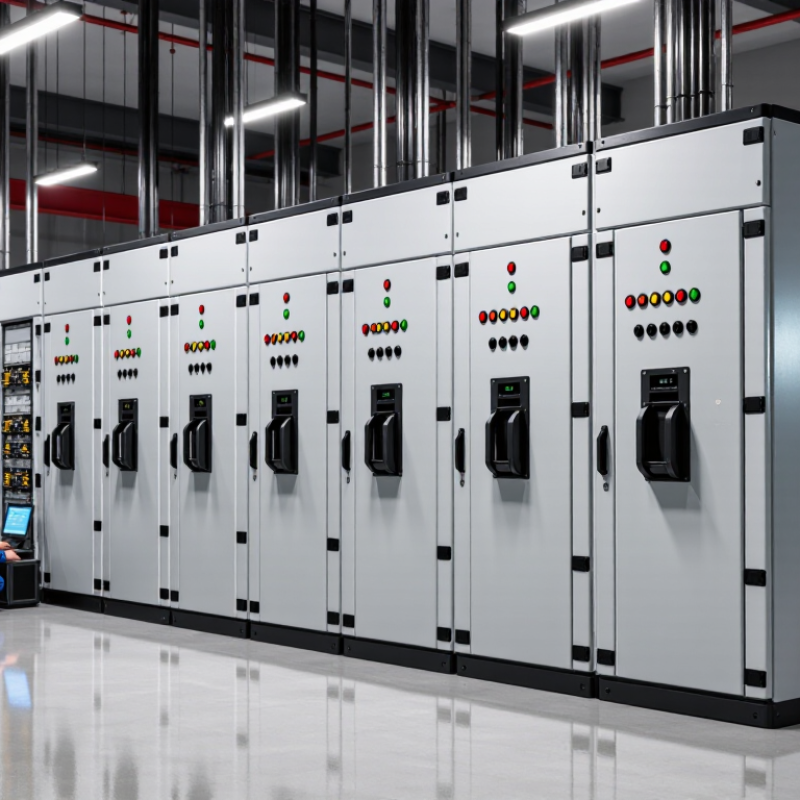
Top 10 Air Circuit Breaker Manufacturers Worldwide

Air Circuit Breakers: Definition, Structure, and Operating Principles

An air circuit breaker (ACB) is a low-voltage switching device that interrupts current through air. It protects distribution systems from overloads and short circuits. Under IEC 60947-2, many ACBs operate at rated voltages up to 1,000 V AC. Their structure usually includes fixed and moving contacts, an arc chute, a spring-charged mechanism, trip units, and terminals. The design looks simple. It is not.

During a fault, the trip unit detects excessive current and releases the operating mechanism. The contacts separate rapidly, creating an arc. Arc plates then divide, cool, and extinguish it inside the chute. Thermal-magnetic units use heat and magnetic force, while electronic trip units measure current more precisely.

Selective coordination matters in real switchboards. A downstream breaker should trip first, keeping essential loads energized. According to Grand View Research, the global circuit breaker market was valued at about USD 7.4 billion in 2023, with continued growth expected through 2030. The IEA also reported that global electricity demand increased by 2.2% in 2023, raising pressure on reliable distribution equipment.

Yet published ratings cannot replace field verification. Dust, loose connections, aging springs, and poor maintenance can change actual performance. Small mistakes matter. Testing, thermal inspection, and documented service records remain essential.

Criteria for Ranking the Top Ten Global Manufacturers

Top 10 Air Circuit Breaker Manufacturers Worldwide

Criteria for Ranking the Top Ten Global Manufacturers

A credible ranking must compare like with like. Air circuit breakers should be assessed under IEC 60947-2 or equivalent national standards, not marketing claims. The core score should include verified sales, shipment volume, regional coverage, and the number of operating installations. Grand View Research estimated the global circuit breaker market at about USD 7.8 billion in 2023, with continued growth through 2030. This supports market reach as a useful measure, but it cannot prove product quality alone.

Technical performance deserves equal weight. We would examine rated current, short-circuit withstand capacity, interruption time, mechanical endurance, and protection-setting accuracy. Independent test certificates matter. So does field evidence from substations, factories, hospitals, and data centers. A manufacturer with strong laboratory results but weak after-sales support should lose points. That happens more often than buyers admit.

Reliability needs numbers.

A practical ranking could assign 25% to product performance, 20% to global revenue and shipment data, 15% to service coverage, 15% to research investment, 15% to certifications, and 10% to sustainability and supply resilience. The International Energy Agency reported that global electricity demand is rising, increasing pressure on grid equipment and maintenance teams. However, public figures are often incomplete or inconsistent. Rankings should therefore separate audited data from expert interviews and customer references. Some judgment remains unavoidable. That weakness should be disclosed, not hidden.

Profiles of the Top Ten Air Circuit Breaker Manufacturers

The leading air circuit breaker manufacturers differ in more than production scale. Their profiles reveal distinct strengths across protection, digital monitoring, and service support. The first group focuses on low-voltage switchgear for factories and commercial buildings. Another group specializes in high-current systems for data centers, transport facilities, and utility plants. Several manufacturers operate regional engineering centers, shortening commissioning time and improving local technical support.

The International Energy Agency’s Electricity 2024 report projects global electricity demand to rise by about 4% annually through 2026. That growth increases pressure on reliable distribution equipment. The top ten manufacturers therefore compete through tested short-circuit performance, modular designs, and connected trip units. IEC 60947-2 remains a key reference for low-voltage circuit-breaker verification. Profiles also show a clear divide: some companies prioritize rugged mechanical construction, while others invest heavily in condition monitoring and predictive maintenance. Neither approach is perfect. Digital features can add complexity, while basic designs may provide fewer operating insights.

Tips: Compare interruption ratings, frame sizes, protection settings, and service networks before selecting a supplier. Ask for test certificates, maintenance intervals, and real installation references. Look beyond catalog claims. A technically strong breaker can still perform poorly when coordination studies, ventilation, or operator training are neglected.

This chart presents ten commonly used rated-current classes for low-voltage air circuit breakers aligned with IEC 60947-2 market practice. It provides a neutral technical comparison without using company or brand-specific data.

Product Features, Technologies, and Market Strengths Compared

Top 10 Air Circuit Breaker Manufacturers Worldwide: Product Features, Technologies, and Market Strengths Compared

The leading ten manufacturers compete through reliability, interrupting capacity, digital protection, and global service coverage. Their air circuit breakers commonly support low-voltage distribution panels, industrial plants, transport systems, and data centers. Field engineers often compare frame sizes, rated current, short-circuit performance, and mechanical endurance before selecting a supplier.

Modern breakers use electronic trip units with adjustable long-time, short-time, instantaneous, and ground-fault protection. Some models measure voltage, energy, temperature, and harmonics through built-in sensors.

Communication modules connect breakers to supervisory platforms, enabling remote status checks and maintenance alerts. Arc chutes, reinforced contacts, and quick operating mechanisms improve safety during severe faults.

Market strength differs by region. Some manufacturers excel in compact designs and fast delivery. Others provide extensive testing laboratories, retrofit support, or strong technical training. Broad certification portfolios help projects cross national requirements, but certification alone does not guarantee field performance. Installation quality matters greatly. A poorly tightened connection can defeat an expensive breaker.

In practical comparisons, lifecycle cost deserves more attention than purchase price. Spare parts availability, firmware support, and local engineers can reduce downtime. However, digital functions may add complexity for smaller facilities. More technology is not always better. A careful specification should match the breaker’s protection duties, network conditions, maintenance skills, and future expansion plans. No ranking is permanent; changing supply chains and service investment can quickly alter market leadership.

Applications, Standards, and Future Trends in Air Circuit Breakers

Air circuit breakers remain essential in low-voltage power systems, especially where high fault currents demand dependable protection. They are widely used in factories, commercial buildings, data centers, hospitals, and renewable-energy installations. In a main switchboard, an ACB can protect feeders, generators, and busbars. It also supports selective coordination, helping isolate a fault without shutting down an entire facility.

Designers should verify compliance with IEC 60947-2, UL 1066, or applicable ANSI/IEEE requirements. Ratings must match voltage, continuous current, short-circuit capacity, and installation conditions. Temperature, humidity, altitude, and enclosure design can change performance. Field testing matters. A specification sheet alone cannot reveal loose connections or poor maintenance. This is where experience often prevents expensive surprises.

Tips: Check the breaker’s interrupting rating against the available fault current. Test trip settings during commissioning. Keep connection points clean and correctly torqued. Future models will use smarter trip units, remote diagnostics, communication networks, and condition monitoring. Sensors may identify rising temperatures before failure occurs. However, digital data can create false confidence. A warning is useful only when someone responds to it. Cybersecurity and staff training will become equally important. Some maintenance plans still rely on fixed schedules, although measured equipment condition may offer better decisions.

Top 10 Air Circuit Breaker Manufacturers Worldwide - Applications, Standards, and Future Trends in Air Circuit Breakers

Rank Anonymized Manufacturer Profile Primary Market Coverage Typical ACB Current Range Common Pole Configurations Key Applications Common Product Standards Typical Protection Functions Digital and Connectivity Features Notable Future Trend
01 Global Profile A Europe, Asia-Pacific, Middle East, and Africa 630–6,300 A; low-voltage systems up to 1,000 V AC 3-pole and 4-pole; fixed and draw-out designs Main switchboards, industrial plants, data centers, and commercial buildings IEC 60947-2, IEC 61439, and region-specific installation rules Long-time, short-time, instantaneous, and ground-fault protection Electronic trip units, metering, Modbus communication, and event recording Condition monitoring and predictive maintenance based on thermal and electrical data
02 Global Profile B North America, Latin America, and selected export markets 800–6,000 A; commonly applied at 480–600 V AC 3-pole and 4-pole; draw-out construction widely used Utility distribution, hospitals, manufacturing facilities, and critical power systems UL 1066, ANSI C37.13, ANSI C37.50, and NFPA 70 requirements Adjustable overcurrent, short-circuit, ground-fault, and zone-selective interlocking Ethernet gateways, power-quality measurement, remote operation, and trip history Arc-flash risk reduction through faster clearing and coordinated protection schemes
03 Global Profile C East Asia, Southeast Asia, and international OEM channels 630–4,000 A; 400–690 V AC applications 3-pole and 4-pole; fixed, plug-in, and draw-out versions Factory automation, infrastructure projects, panel building, and transport facilities IEC 60947-2, GB/T 14048.2, and applicable national certification schemes Overload, short-circuit, earth-fault, undervoltage, and shunt-trip options RS-485 communication, digital displays, current measurement, and alarm contacts More compact designs with higher breaking capacity and improved installation flexibility
04 Global Profile D Europe and industrial export markets 800–6,300 A; systems commonly rated up to 690 V AC 3-pole and 4-pole; electrically operated draw-out units Renewable-energy plants, process industries, large commercial buildings, and data centers IEC 60947-2, IEC 61439, and electromagnetic-compatibility requirements Selective coordination, thermal memory, neutral protection, and communication-assisted protection Ethernet-based monitoring, web interfaces, energy metering, and integration with building systems Integration with microgrids, battery-storage systems, and distributed energy resources
05 Global Profile E South Asia, the Middle East, and Africa 630–3,200 A; low-voltage distribution up to 690 V AC 3-pole and 4-pole; fixed and manually operated draw-out types Commercial towers, oil and gas support facilities, utilities, and infrastructure projects IEC 60947-2, IEC 61439, and project-specific utility specifications Adjustable long-time, short-time, instantaneous, and earth-leakage protection Local displays, auxiliary contacts, motor operators, and basic remote-status signaling Improved resilience in high-temperature, dusty, and maintenance-constrained environments
06 Global Profile F North America and selected international markets 800–5,000 A; commonly used in 480 V and 600 V systems 3-pole and 4-pole; draw-out units for switchgear lineups Industrial switchgear, campuses, water treatment, and emergency power systems UL 1066, ANSI C37.13, NFPA 70, and NFPA 70E considerations Short-time withstand, ground-fault protection, zone interlocking, and arc-energy reduction Digital trip-unit self-testing, event logs, metering, and supervisory-system integration Cybersecure remote monitoring and standardized data exchange for critical facilities
07 Global Profile G China, Southeast Asia, and developing infrastructure markets 630–4,000 A; 380–690 V AC distribution systems 3-pole and 4-pole; fixed, plug-in, and draw-out configurations Manufacturing, airports, rail systems, commercial complexes, and public infrastructure GB/T 14048.2, IEC 60947-2, and local type-testing requirements Overcurrent, short-circuit, ground-fault, undervoltage, and reverse-power options Digital current displays, communication modules, remote open/close, and energy data collection Mass adoption of connected low-voltage switchgear for smart-building projects
08 Global Profile H Japan, Korea, Southeast Asia, and export markets 630–3,200 A; compact low-voltage switchboard applications 3-pole and 4-pole; fixed and draw-out types Electronics plants, buildings, factories, and high-reliability power systems IEC 60947-2, JIS-based requirements, and applicable regional certifications Electronic overload, short-circuit, earth-fault, and phase-loss protection High-resolution metering, self-diagnostics, communication interfaces, and maintenance alerts Higher reliability through self-diagnostics, modular trip units, and digital service tools
09 Global Profile I Europe, Latin America, and selected African markets 800–5,000 A; industrial and commercial systems up to 690 V AC 3-pole and 4-pole; electrically operated draw-out designs Energy infrastructure, hospitals, airports, process plants, and transport networks IEC 60947-2, IEC 61439, and IEC 61850 where substation communication is required Selective coordination, neutral protection, earth fault, and generator protection functions Gateway support, power-quality data, remote control, and digital commissioning records Interoperable protection and automation for hybrid AC, DC, and renewable-energy networks
10 Global Profile J Regional manufacturers serving local and export projects 630–2,500 A; standard low-voltage distribution applications 3-pole and 4-pole; mainly fixed and manually operated designs Small and medium industrial facilities, commercial buildings, and utility auxiliaries IEC 60947-2, national certification standards, and project-based specifications Thermal-magnetic or electronic overcurrent, short-circuit, and optional earth-fault protection Optional communication modules, auxiliary signaling, and basic energy monitoring Growth in modular, cost-efficient, and serviceable ACB solutions for emerging markets
Data note: The manufacturer identifiers are intentionally anonymized. Current ranges, voltage levels, applications, and standards represent commonly published industry specifications and market practices for low-voltage air circuit breakers; exact ratings and certifications vary by product series and jurisdiction.

FAQS

What standards should guide an air circuit breaker manufacturer ranking?

Products should meet IEC 60947-2 or equivalent national standards. Marketing claims alone are insufficient.

Which performance details matter when comparing air circuit breakers?

Compare rated current, short-circuit withstand capacity, interruption time, and mechanical endurance. Protection-setting accuracy also matters.

How important are independent certificates and field installations?

Both provide useful evidence. Check installations in substations, factories, hospitals, and data centers.

How could a manufacturer ranking be weighted?

Product performance could receive 25%. Revenue and shipments could receive 20%. Service, research, certification, and supply resilience need separate scores.

Why should after-sales service affect a manufacturer’s ranking?

Local engineers, spare parts, and technical training can reduce downtime. Strong laboratory results cannot replace weak field support.

What digital functions are common in modern air circuit breakers?

Electronic trip units can adjust long-time, short-time, instantaneous, and ground-fault protection. Sensors may monitor voltage, energy, temperature, and harmonics.

Is a higher technology level always better for every facility?

Not always. Digital functions may add complexity for smaller facilities with limited maintenance skills.

What should buyers examine beyond the purchase price?

Consider spare parts, firmware support, service response, and retrofit options. A cheaper breaker may cost more during extended downtime.

Why can installation quality affect breaker reliability?

A poorly tightened connection can undermine an expensive breaker. Testing and careful commissioning remain essential.

Are global manufacturer rankings permanent and completely objective?

No. Supply chains, service investment, and public data change over time. Some judgment remains unavoidable, and that weakness should be disclosed.

Conclusion

This article presents a practical overview of the global Air Circuit Breaker market, beginning with its definition, internal structure, and operating principles. It explains how these low-voltage protection devices use air as the arc-extinguishing medium and how their mechanisms support reliable switching, overload protection, and short-circuit interruption. The article also introduces the key criteria used to rank leading manufacturers, including product quality, technological innovation, safety performance, manufacturing capacity, certification, service coverage, and industry reputation.

It then compares the product features, control technologies, monitoring functions, and market strengths of the top ten manufacturers without focusing on any specific brand. In addition, the discussion covers major applications in industrial facilities, commercial buildings, infrastructure, and power distribution systems, along with relevant international standards and compliance considerations. Finally, it explores future trends such as intelligent monitoring, remote operation, energy efficiency, digital integration, and more sustainable product development.


Oliver

Oliver

Oliver is a seasoned marketing professional with a wealth of expertise in driving brand awareness and engagement. With a deep understanding of our company's product offerings, he consistently delivers high-quality content that enriches our professional blog. His insights not only shed light on......