China Top 10 200 Amp Breaker Box Suppliers for Buyers

Time:2026-10-12 Author:Charlotte
0%

Choosing a 200 Amp Breaker Box in China requires more than comparing prices, finishes, and product photographs. Buyers need evidence of safe design, stable supply, and verified manufacturing experience. A 200-amp panel may serve a large residence, workshop, or small commercial building, but its suitability depends on load calculations, busbar capacity, breaker compatibility, enclosure quality, and local installation rules.

Market reports show why this category deserves closer attention. Grand View Research estimated the global circuit breaker market at approximately USD 7.8 billion in 2023, with continued growth expected through 2030. MarketsandMarkets also forecasts strong expansion for low-voltage circuit breakers, supported by construction, electrification, and infrastructure upgrades. These reports do not measure residential 200 Amp Breaker Box sales alone. That limitation matters. Broad market numbers can sound impressive, yet they may not reveal a supplier’s real export performance or quality consistency.

Electrical educator Mike Holt offers a useful principle: “Learn the NEC, don’t memorize it.” The message applies to sourcing as well as installation. Buyers should examine test reports, certification records, factory inspection procedures, and replacement-breaker availability. Look closely at the busbar, terminal markings, knockouts, and internal wiring space. Small details can create large problems.

This guide reviews China’s top 10 200 Amp Breaker Box suppliers for buyers. It considers product range, production capability, documentation, customization, communication, and after-sales support. Some supplier claims may require independent verification. That is not a weakness to hide. It is a practical reminder that a polished website cannot replace traceable evidence, qualified inspection, and professional electrical review.
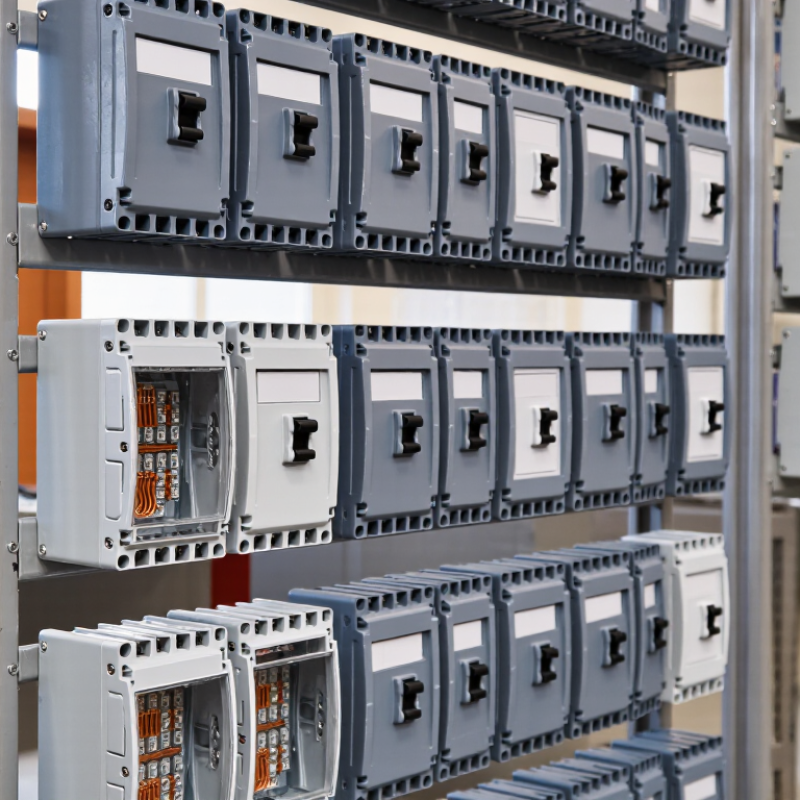
China Top 10 200 Amp Breaker Box Suppliers for Buyers

What Is a 200 Amp Breaker Box?

A 200 amp breaker box is the central distribution panel for a residential electrical system. It receives power from the utility service and divides it among branch circuits. At 120/240 volts, a 200 amp service provides a theoretical capacity of 48 kilovolt-amperes. That does not mean every circuit can draw 200 amps.

Inside the enclosure, the main disconnect, busbars, neutral bar, grounding bar, and branch breakers work together. The main breaker limits the panel’s total current, while smaller breakers protect individual circuits. NFPA 70, the National Electrical Code, requires suitable overcurrent protection, grounding, conductor sizing, and working clearances. Panel layouts also need careful inspection. A crowded box is harder to maintain and may increase service risks.

The U.S. Energy Information Administration’s 2020 Residential Energy Consumption Survey reported average household electricity use of about 10,500 kilowatt-hours annually. That average hides major differences. Electric heating, vehicle charging, induction cooking, and workshop equipment can create much higher peak demand. A 200 amp rating may fit many modern homes, but it is not automatically correct. A qualified electrician should complete a calculated load assessment before installation or replacement. I would not select a panel from appliance count alone; real operating patterns matter, and estimates can be imperfect.

Key Specifications and Safety Standards for Buyers

A 200 amp breaker box must match the building’s calculated electrical load, not just the buyer’s preferred number. Check the rated voltage, busbar capacity, main breaker size, circuit spaces, and short-circuit current rating. A stronger-looking enclosure is not automatically safer. Confirm whether the panel accepts copper, aluminum, or both conductor types.

Safety documentation deserves close attention. Ask suppliers for test reports, certification marks, installation instructions, and traceable production records. Common references include UL 67 for panelboards and UL 489 for molded-case circuit breakers, but destination-country requirements may differ. The enclosure should also suit its environment. Indoor equipment needs suitable protection from dust, while outdoor installations require weather-resistant construction and an appropriate NEMA or IP rating.

Thermal performance matters.

Inspect busbar joints, terminal torque guidance, wire bending space, and neutral-ground separation. These small details can affect heat buildup and maintenance safety. A practical buyer should request sample photos, dimensional drawings, and routine inspection records before placing a large order. Do not assume every 200 amp model supports the same accessories or breaker arrangement. I would recheck the load calculation and local electrical code with a qualified electrician, because a specification sheet can omit an important installation limitation. Suppliers that answer these questions clearly are easier to evaluate and more reliable for long-term projects.

How to Evaluate China-Based Breaker Box Suppliers

Evaluating China-based 200 amp breaker box suppliers requires more than comparing quotations. Review the supplier’s manufacturing history, engineering team, and export experience. Ask for factory photographs, production flow records, and recent inspection reports. A reliable supplier should explain enclosure materials, busbar design, terminal capacity, and heat management clearly.

Vague answers deserve caution.

Request a production sample before placing a large order. Check the cabinet’s steel thickness, door alignment, coating quality, wiring space, and labeling. Inspect whether screws remain secure after repeated tightening. Ask for test evidence covering temperature rise, insulation resistance, short-circuit performance, and ingress protection. The required standards depend on the destination market, so confirm them with a qualified local professional. Do not accept copied certificates or documents with mismatched model numbers.

Supplier control also matters. Check incoming material inspections, calibration records, batch traceability, and final electrical testing. Clarify warranty terms, spare parts, packaging strength, and response times for defects. A video audit can help, but it cannot replace an independent inspection.

Price still tempts buyers. I once treated a low quotation as efficiency, but missing test details created greater costs later. Delivery promises can also change when custom tooling or compliance revisions appear. Build these risks into the contract, and require approval samples before mass production.

China’s Top 10 200 Amp Breaker Box Suppliers

China’s Top 10 200 Amp Breaker Box Suppliers

China’s top 10 200 amp breaker box suppliers serve residential, commercial, and light industrial projects. Their products commonly use galvanized steel or powder-coated enclosures. These materials resist corrosion and support long service life. A reliable supplier should provide clear ratings for voltage, interrupting capacity, and temperature rise. Buyers should also check busbar thickness, neutral design, grounding points, and enclosure dimensions.

In practical sourcing work, factory verification matters more than attractive catalog photos. Ask for production-line images, sample units, inspection records, and test reports from recognized laboratories. Confirm whether the supplier controls stamping, assembly, wiring, and final testing internally. A capable technical team should explain breaker compatibility without vague promises. Export experience also helps with packaging, documentation, and consistent batch quality. Still, paperwork alone cannot prove workmanship.

Request one sample before approving a large order. Inspect screw torque, door alignment, coating coverage, and label clarity. Then compare the sample with the approved drawing. Many suppliers can customize knockouts, busbar layouts, and mounting holes, but changes may affect heat performance. That detail is easy to overlook. I would also review warranty terms, replacement procedures, and response times in writing. No supplier is perfect, and even a strong shortlist may contain inconsistent samples. Careful checks reduce surprises before installation.

China Top 10 200 Amp Breaker Box Suppliers: Common Configuration Benchmarks

This chart presents commonly available circuit-space configurations for 200A residential and light-commercial breaker boxes. The values describe product configurations rather than individual companies or brands.

Most 200A load centers are designed for 120/240V single-phase service, while circuit capacity, enclosure format, and breaker compatibility should be verified against the project’s electrical code and installation requirements.

How to Compare Prices, Certifications, and After-Sales Support

When comparing China’s top 200 amp breaker box suppliers, price should never stand alone. Request a line-item quotation covering enclosure material, busbar thickness, breakers, packaging, testing, tooling, and freight. A box priced at 85 dollars may become 120 dollars after inspection and export costs. Compare identical specifications, not attractive headline numbers.

Certifications require careful checking. Ask for current certificates, test reports, and the exact model numbers listed on them. Confirm whether the documents match the destination market’s requirements. Review enclosure ratings, temperature performance, short-circuit capacity, and copper or aluminum conductor compatibility. A factory audit can reveal practical details, such as label quality, torque testing, and whether serial numbers support traceability. Photos help, but they are not proof.

After-sales support often separates a reliable supplier from a cheap one. Request a written warranty, spare-parts policy, response time, and failure-handling process. Strong suppliers can provide installation drawings, replacement breakers, troubleshooting videos, and batch records. A 24-hour reply sounds useful, but response quality matters more. One imperfect point deserves attention: buyers sometimes compare certificates carefully but ignore communication after payment. That mistake can become expensive. Test the supplier with technical questions before placing a large order. Ask for a sample, inspect the terminal screws, and record every agreed specification.

China Top 10 200 Amp Breaker Box Suppliers for Buyers - How to Compare Prices, Certifications, and After-Sales Support
Comparison Dimension What Buyers Should Compare Common 200 Amp Benchmark Evidence to Request from Suppliers Cost Impact Buyer Review Priority
1. Product Price Unit price for the complete 200 amp breaker box, excluding or including accessories. Request a like-for-like quotation covering enclosure, main breaker, bus bars, neutral bar, ground bar, and cover. Detailed pro forma invoice and itemized bill of materials. High Very High
2. Electrical Rating Continuous current rating, system voltage, phase configuration, frequency, and number of circuits. 200 A service rating; commonly 120/240 V AC for single-phase North American applications. Product datasheet, wiring diagram, nameplate photograph, and test report. Medium Very High
3. Interrupting Capacity The short-circuit current rating or interrupting rating of the main and branch breakers. Typical configurations may be 10 kA, 22 kA, or higher, depending on the breaker system and certification. Breaker data sheet and certification file showing the applicable kA rating. Medium to High Very High
4. Safety Certification Whether the panelboard or breaker box has certification recognized in the target market. UL 67 is commonly relevant to panelboards in the United States; IEC 61439-3 may apply to certain low-voltage distribution boards. Certificate number, scope of certification, issuing body, and current validity date. Medium to High Very High
5. Enclosure Protection Indoor or outdoor suitability, corrosion resistance, ingress protection, and mounting style. NEMA 1 is generally used indoors; NEMA 3R is commonly selected for outdoor rain-resistant applications. Enclosure specification, material grade, coating information, and relevant test documentation. Medium High
6. Materials and Construction Bus-bar material, conductor plating, enclosure steel thickness, terminal quality, and internal spacing. Copper or aluminum bus bars may be available; material choice should match the approved design and thermal requirements. Material certificates, dimensional drawings, photographs, and sample inspection results. Medium High
7. Customization Capability Availability of custom circuit layouts, breaker combinations, labels, knockouts, colors, and mounting options. Confirm whether customization changes the certified configuration or requires additional testing. Approved drawings, engineering change procedure, and prototype approval record. Low to High Medium
8. Minimum Order and Lead Time Minimum order quantity, sample policy, production time, packaging, and export readiness. Samples are often available before volume orders; production timing depends on customization and component availability. Written lead-time commitment, production schedule, packaging specification, and shipment terms. Medium High
9. Warranty Coverage Warranty period, covered components, exclusions, replacement policy, and responsibility for shipping costs. Compare the warranty for the complete assembly separately from warranties for individual breakers or electrical components. Signed warranty terms, claims procedure, response time, and spare-parts policy. Medium High
10. After-Sales Support Technical response speed, installation guidance, troubleshooting, replacement parts, and remote support. A reliable supplier should provide installation documents, wiring diagrams, fault-response procedures, and a defined service contact. Service-level agreement, support contact details, response-time commitment, and previous project references. Medium Very High
Price, lead time, certification scope, and warranty terms vary by configuration, destination market, and order volume. Buyers should verify current supplier quotations and certification documents before placing an order.

FAQS

What should a buyer check before choosing a 200 amp breaker box?

Check the building’s calculated load, rated voltage, busbar capacity, main breaker size, circuit spaces, and short-circuit rating. Do not choose by amperage alone.

Does a stronger enclosure always provide better safety?

No. Safety also depends on thermal performance, terminal quality, wiring space, grounding design, and certified testing. Appearance can mislead buyers.

Which conductor types should the breaker box support?

Confirm whether it accepts copper, aluminum, or both. The terminal design must match the planned conductors and installation requirements.

What safety documents should buyers request?

Request current certificates, test reports, installation instructions, and traceable production records. Match the listed model number carefully.

Do electrical standards differ between countries?

Yes. Common references include UL 67 and UL 489, but destination-country rules may differ. A qualified electrician should verify local requirements.

How should buyers compare supplier prices?

Request a line-item quotation for materials, busbars, breakers, testing, packaging, tooling, and freight. An $85 box may reach $120 after extra costs.

What enclosure rating is suitable for outdoor installations?

Outdoor equipment needs weather-resistant construction and an appropriate NEMA or IP rating. Indoor equipment still needs protection from dust.

How can buyers evaluate a supplier’s factory quality?

Request sample photos, dimensional drawings, inspection records, and a factory audit. Photos help, but they are not proof.

What after-sales support should a supplier provide?

Ask for warranty terms, spare-parts policies, response times, troubleshooting materials, replacement breakers, and batch records. Fast replies are not always useful replies.

What mistake do buyers often make during supplier comparison?

Some buyers verify certificates but ignore communication after payment. That can become expensive. Ask technical questions and inspect a sample before ordering.

Conclusion

This guide introduces the 200 Amp Breaker Box, explaining its role in distributing electrical power safely across residential, commercial, and light industrial systems. It reviews essential features such as rated current, voltage compatibility, circuit capacity, enclosure design, busbar quality, grounding arrangements, and protection against overheating or short circuits. Buyers will also learn why recognized safety standards, proper testing, clear labeling, and installation guidance are important when selecting electrical equipment.

The article provides a practical framework for evaluating China-based suppliers, including manufacturing capability, quality control procedures, product customization, export experience, documentation, and communication efficiency. It also presents ten leading supplier categories for buyers to compare without focusing on any specific brand. Finally, the guide explains how to assess total pricing, certification validity, warranty terms, spare-part availability, delivery reliability, and after-sales support. By comparing these factors together, buyers can choose a dependable 200 Amp Breaker Box solution that meets project requirements and long-term safety expectations.


Charlotte

Charlotte

Charlotte is a seasoned marketing professional with a deep understanding of the company's portfolio and a passion for elevating its presence in the market. With a keen eye for detail and a commitment to excellence, she ensures that our professional blog is regularly updated with insightful articles......