Why Choose a Trusted ACB Manufacturer?

Time:2026-09-12 Author:Sophia
0%

Choosing a trusted ACB manufacturer is a practical decision, not merely a purchasing preference. Air circuit breakers protect large electrical systems from overloads, short circuits, and costly downtime. Their reliability affects factories, commercial buildings, data centers, and critical infrastructure. A dependable supplier understands these operating pressures through real project experience.

The quality of ACB Manufacture begins with engineering discipline. Skilled manufacturers select durable materials, precise trip units, and carefully controlled assembly processes. They test breaking capacity, insulation performance, temperature rise, and mechanical endurance. Reputable companies also follow recognized requirements, such as IEC 60947-2, while maintaining clear production records. Ask for test reports. Examine the details.

A trusted manufacturer provides more than a product catalogue. It offers technical guidance, accurate drawings, installation support, and responsive after-sales service. Engineers should explain protection settings in practical terms, not hide behind complicated language. They should also help match the breaker to load characteristics, ambient temperature, and coordination requirements. Small mistakes matter. A poorly selected ACB can create nuisance trips or leave equipment exposed.

No manufacturer is perfect, and honest evaluation remains important. Marketing claims may sound impressive, yet field performance deserves closer attention. Review certification evidence, customer applications, warranty conditions, and spare-parts availability. A reliable supplier welcomes reasonable questions and admits limitations when they exist. That transparency builds confidence over time. In the end, choosing a trusted ACB manufacturer means choosing predictable protection, accountable expertise, and safer electrical operations.
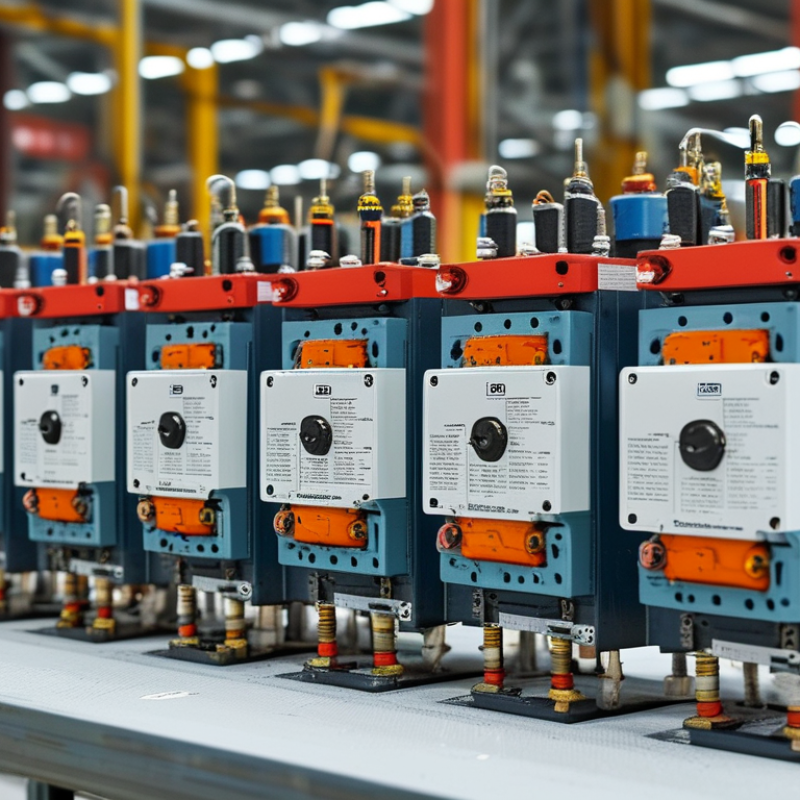
Why Choose a Trusted ACB Manufacturer?

Air Circuit Breaker Basics: Ratings Up to 6,300 A and 50/60 Hz Systems

Why Choose a Trusted ACB Manufacturer?

Air circuit breakers protect low-voltage systems from overloads, short circuits, and equipment damage. Modern ACBs can support rated currents up to 6,300 A, serving factories, data centers, and large commercial buildings. The current rating describes continuous carrying capacity, not automatic fault performance. That distinction matters.

A reliable manufacturer should provide verified data for 50 Hz and 60 Hz systems. Engineers must check rated operational voltage, short-circuit breaking capacity, insulation levels, and trip-unit settings. Electronic trip units can improve coordination between incoming and downstream breakers. In practice, protection settings need adjustment after reviewing actual load profiles and cable lengths. Small errors grow.

Field commissioning often reveals problems that drawings overlook. Heat around terminals, limited ventilation, or frequent motor starts can change operating conditions. A trusted supplier supports selection, testing, installation guidance, and maintenance documentation. Look for evidence from recognized testing procedures, traceable quality control, and clear service records. These details help reduce uncertainty during an emergency shutdown.

Not every 6,300 A breaker fits every application. A high frame rating may add cost, space, and unnecessary complexity. Engineers should compare the real load, future expansion, fault level, and system frequency before choosing. Manufacturer support is valuable, but it should not replace independent design review. A careful specification leaves room for doubt, inspection, and correction.

IEC 60947-2 Compliance: Comparing Icu, Ics, and Short-Circuit Ratings

Why Choose a Trusted ACB Manufacturer?

An air circuit breaker should be selected by verified performance, not appearance or price. IEC 60947-2 provides the testing framework for low-voltage circuit breakers. It covers rated voltage, current, breaking capacity, temperature rise, and operating endurance. A trusted manufacturer documents these conditions clearly. That documentation matters when engineers review a panel under real fault risks.

Icu is the ultimate short-circuit breaking capacity. It shows the highest prospective fault current the ACB can interrupt safely during testing. Ics is the service short-circuit breaking capacity. It indicates whether the breaker can interrupt a fault and remain suitable for continued service. These values are often expressed in kiloamps. They must be checked at the actual system voltage, frequency, and power factor. A higher Icu does not automatically mean better everyday protection. Ics may matter more for facilities that cannot tolerate long shutdowns.

Short-circuit ratings also need coordination with upstream and downstream devices. Selectivity, backup protection, and withstand ratings can change the final decision. In panel inspections, rating tables sometimes look reassuring while test conditions remain unclear. That is a warning sign. I have found that even small gaps in technical schedules can create costly questions later. A dependable manufacturer supplies type-test evidence, installation guidance, and consistent technical support. Still, no document replaces an application review. Engineers should verify fault levels, cable sizes, maintenance access, and future load growth before approving the ACB.

Why Choose a Trusted ACB Manufacturer?

IEC 60947-2 Compliance: Comparing Icu, Ics, and Short-Circuit Ratings

Icu is the ultimate short-circuit breaking capacity, while Ics is the service short-circuit breaking capacity that the circuit breaker can interrupt under the standard test sequence and remain suitable for continued service. IEC 60947-2 permits Ics to be declared at 25%, 50%, 75%, or 100% of Icu. The chart uses a fixed Icu of 50 kA to show the corresponding verified Ics levels without using company or brand data.

How Trusted ACB Makers Verify Performance Through Type Tests and Quality Data

Why Choose a Trusted ACB Manufacturer?

A trusted ACB maker proves performance with evidence, not confident claims. Type tests examine short-circuit withstand, temperature rise, insulation strength, and mechanical endurance. These tests simulate harsh events inside real switchboards. A reliable manufacturer uses qualified laboratories and follows recognized standards, such as IEC 60947-2.

Quality data should be traceable. Test reports need clear product ratings, test conditions, instruments, and acceptance results. Production records should connect each air circuit breaker to materials, assembly checks, and routine testing. During factory visits, engineers may inspect contact surfaces, arc chambers, and trip-unit calibration. Small details matter. However, no test report removes every risk. Installation errors, poor ventilation, and neglected maintenance can still reduce service life. That is where honest technical guidance becomes valuable.

Tips: Ask for complete type-test reports, not selected pages. Check the tested frame size and trip settings. Compare laboratory dates and equipment calibration records. Request routine-test procedures for every shipped unit. If data appears vague, pause before approving the purchase. A trusted supplier should explain limitations clearly, even when the answer is inconvenient. Performance verification is not a single certificate. It is a continuing chain of controlled design, measured production, and responsible field support.

Reliability Factors: Mechanical Life, Electrical Life, and Maintenance Intervals

Why Choose a Trusted ACB Manufacturer?

Reliability begins with verified endurance, not attractive specifications. IEC 60947-2 commonly classifies mechanical endurance as M1 or M2. M1 represents 2,000 operations, while M2 represents 10,000 operations. These figures describe switching movements without load. Electrical life is different. It reflects interruption under current, including demanding fault conditions. The same standard evaluates electrical endurance through E classifications, which vary with utilization and test duty. A trusted manufacturer should provide tested values, not vague claims. Small details matter, such as contact wear indicators, stored-energy mechanisms, and trip-unit event records. They reveal what routine inspections may miss.

Maintenance intervals should follow operating conditions. NFPA 70B emphasizes a documented electrical maintenance program rather than one universal calendar interval. NETA maintenance guidance also links inspection frequency to environment, loading, fault exposure, and previous test results. In practice, technicians may inspect an ACB annually, then perform deeper testing after a major fault or abnormal heating. Dust can stiffen a mechanism. Repeated high-current trips can damage contacts. Neither problem waits politely for the next planned shutdown. Maintenance records should include contact resistance, insulation results, operating counts, trip tests, and photographs. This creates traceability across years.

There is an uncomfortable point. A long mechanical life does not guarantee safe interruption. A breaker can reach its operation rating while its contacts remain electrically stressed. Trusted suppliers support realistic life calculations, accessible spare parts, qualified service guidance, and clear test documentation. That evidence is more useful than optimistic marketing.

Choosing an ACB Supplier by Service Coverage, Customization, and Lifecycle Cost

Why Choose a Trusted ACB Manufacturer?

Choosing an ACB Supplier by Service Coverage, Customization, and Lifecycle Cost

A trusted ACB manufacturer does more than ship a breaker. Their engineers review load profiles, fault levels, and panel space before recommending a frame size. This practical step reduces costly mismatches during commissioning. Service coverage also matters. Local technical support can shorten troubleshooting time when a trip occurs at night. Look for commissioning guidance, spare-parts access, testing support, and clear maintenance procedures. Documented test reports and trained personnel provide stronger evidence than promises.

Customization should solve a real operating problem, not decorate a quotation. Adjustable trip settings, communication options, drawout designs, and enclosure requirements can affect safety and maintenance. An experienced supplier explains which changes are useful and which add complexity. A common mistake is over-specifying accessories, then struggling with training and replacement parts. That is an uncomfortable lesson. The lowest purchase price can become expensive when downtime, inspections, energy losses, and obsolete components are included.

Tips: Request a lifecycle-cost estimate covering installation, testing, spares, servicing, and replacement intervals. Ask for references from similar ratings and environments. Confirm response times in writing. Keep settings and test records accessible. Small details matter.

Why Choose a Trusted ACB Manufacturer? — Choosing an ACB Supplier by Service Coverage, Customization, and Lifecycle Cost
The following is a practical procurement comparison framework. Acceptance values should be confirmed against the project specification, applicable standards, installation conditions, and the supplier’s formal technical documentation.
Evaluation Dimension Measurable Factor Relevant Requirement or Technical Reference Why It Matters Recommended Verification Method
Service Coverage Standards compliance Low-voltage air circuit breakers should be selected and tested in accordance with the applicable requirements of IEC 60947-2 or the equivalent regional standard. Confirms that ratings, protective functions, temperature-rise limits, dielectric performance, and short-circuit capabilities are assessed against a recognized product standard. Request the applicable declaration of conformity, type-test evidence, routine-test records, and the exact standard edition used for the product.
Service Coverage Technical support scope Support should cover selection, protection coordination, installation, commissioning, troubleshooting, preventive maintenance, and replacement planning. ACB performance depends on correct settings, wiring, installation clearances, and coordination with upstream and downstream protective devices. Use a written service matrix showing included activities, responsible personnel, deliverables, escalation routes, and support availability.
Service Coverage Commissioning documentation Typical commissioning records include insulation checks, control-circuit verification, mechanical operation checks, trip-unit setting verification, and functional trip tests where applicable. Documented commissioning creates a baseline for future fault analysis and maintenance and helps identify installation errors before energization. Require a completed commissioning checklist, test results, final protection settings, wiring diagrams, and signed handover records.
Service Coverage Spare-parts and repair support Critical parts may include auxiliary contacts, closing and opening releases, undervoltage releases, motor operators, trip units, arc-control components, and mechanical operating parts. Availability of compatible parts can reduce outage duration and avoid premature replacement of an otherwise serviceable ACB. Ask for a parts list, compatibility information, expected availability period, repair process, and identification method for each assembly.
Service Coverage Response and restoration targets Response time, remote diagnosis time, site attendance time, and restoration target should be defined contractually rather than assumed. Clearly defined service levels make downtime risk measurable and allow comparison between suppliers on more than product price. Include service-level targets, exclusions, emergency contacts, escalation stages, and reporting requirements in the purchase or service agreement.
Customization Electrical rating fit Verify rated operational voltage, rated current, frequency, short-circuit breaking capacity, service breaking capacity, and short-time withstand capability for the installation. Choosing ratings only by current can leave the installation inadequately protected against available fault current or coordination requirements. Compare the product data sheet with the system short-circuit study, load schedule, busbar rating, and protection-coordination study.
Customization Protection and trip-unit configuration Common protection functions include long-time, short-time, instantaneous, and earth-fault protection. The available functions depend on the selected trip unit. Appropriate functions and adjustable settings help achieve selectivity, equipment protection, and compliance with the project protection philosophy. Review the trip curve, adjustment ranges, sensor rating, time-current settings, test procedure, and coordination results.
Customization Installation configuration Configuration may include fixed or withdrawable construction, front or rear connections, horizontal or vertical orientation, neutral-pole arrangement, and interlocking requirements. The correct mechanical arrangement affects maintainability, panel compatibility, isolation procedures, and replacement time. Approve a dimensional drawing, connection layout, withdrawal clearances, interlock schedule, and panel interface drawing before production.
Customization Monitoring and communication Optional functions may include current and voltage measurement, energy monitoring, event records, alarm contacts, and communication through an approved industrial protocol. Monitoring can support condition assessment, energy management, remote diagnostics, and faster troubleshooting when integrated correctly. Confirm measurement accuracy, communication points, register lists, cybersecurity requirements, gateway compatibility, and integration responsibilities.
Customization Environmental suitability Selection should consider ambient temperature, altitude, humidity, pollution level, enclosure rating, corrosion exposure, vibration, and indoor or outdoor installation. Environmental conditions can affect continuous current, insulation performance, mechanical reliability, and enclosure protection. Provide site conditions and obtain written derating data, operating limits, enclosure information, and installation restrictions.
Lifecycle Cost Total cost of ownership TCO = Purchase Price + Engineering + Installation + Commissioning + Energy Losses + Maintenance + Downtime Risk + Disposal A lower purchase price may result in higher ownership cost if the ACB requires more maintenance, has higher losses, or lacks parts and technical support. Request a five- or ten-year cost model using identical operating hours, load profile, electricity price, maintenance tasks, labor rates, and downtime assumptions.
Lifecycle Cost Energy-loss cost Annual Energy Cost = 3 × I² × R × Operating Hours × Electricity Price Conductor and contact resistance produce heat losses. The effect increases with the square of current, so losses should be evaluated at realistic operating loads. Use verified resistance or power-loss data at the intended current and compare results under the same load profile and tariff assumptions.
Lifecycle Cost Maintenance requirements Maintenance planning should address inspection, cleaning, mechanical operation, connection checks, trip-unit testing, and condition-based replacement of worn parts. Preventive maintenance helps identify contact wear, loose connections, contamination, mechanism problems, and deteriorated control components before failure. Obtain the maintenance manual, task frequency, required tools, test equipment, spare-parts list, labor estimate, and warranty conditions.
Lifecycle Cost Downtime and replacement risk Evaluate isolation time, withdrawability, availability of replacement modules, fault-diagnosis capability, and the supplier’s repair process. For critical loads, the financial impact of an outage can exceed the original equipment price. Calculate downtime exposure using the site’s production or service value per hour and document the proposed recovery sequence.
Lifecycle Cost Warranty and lifecycle continuity Warranty terms should specify duration, covered components, exclusions, commissioning conditions, claim procedures, and responsibilities for travel and labor. Clear warranty and lifecycle policies reduce disputes and help ensure that support remains available after the initial purchase. Review the complete warranty document, product change-notification process, technical-document revision control, and end-of-support policy.
Procurement conclusion: A trusted ACB supplier should be evaluated by documented compliance, complete technical and service coverage, configurable protection and installation options, transparent lifecycle-cost assumptions, maintainable construction, and dependable long-term parts and support—not by initial purchase price alone.

FAQS

What does an air circuit breaker protect against?

It protects low-voltage systems from overloads, short circuits, and equipment damage. It helps protect cables, panels, and connected equipment.

Can an air circuit breaker carry 6,300 A?

Some models support rated currents up to 6,300 A. This rating describes continuous current capacity, not automatic fault performance.

Does a 6,300 A rating suit every installation?

No. The correct choice depends on actual load, future expansion, fault level, space, and system frequency. Bigger is not always better.

Which electrical details should engineers verify?

Check operational voltage, breaking capacity, insulation levels, frequency, and trip-unit settings. Cable lengths and real load profiles also matter.

Why are 50 Hz and 60 Hz systems important?

Breaker data should match the system frequency. Verified information for both frequencies supports safer and more accurate equipment selection.

How can electronic trip units improve protection?

They can coordinate incoming and downstream breakers more effectively. Settings may need adjustment after reviewing motor starts, cable lengths, and load changes.

What problems can commissioning reveal?

Commissioning may reveal hot terminals, poor ventilation, or repeated motor-start effects. Drawings often miss these details. Check the panel directly.

What support should a dependable supplier provide?

Useful support includes selection advice, testing, commissioning guidance, maintenance procedures, spare parts, and clear service records. Written response times help.

How should customization be evaluated?

Customization should solve a real operating problem. Adjustable trips, communication features, drawout designs, and enclosure changes may improve serviceability.

How can lifecycle cost affect the purchasing decision?

Include installation, testing, spares, servicing, energy losses, downtime, and replacement intervals. The cheapest quotation may not be cheapest overall. Recheck the assumptions.

Conclusion

Choosing a trusted ACB manufacturer is essential for achieving safe, stable, and efficient power distribution. Air circuit breakers can support systems up to 6,300 A across 50/60 Hz applications, but their real value depends on verified performance. Compliance with IEC 60947-2 helps users evaluate key ratings such as Icu, Ics, and short-circuit withstand capability. Reliable manufacturers support these claims through rigorous type tests, consistent quality data, and controlled production processes.

Long-term reliability also depends on mechanical life, electrical life, and clearly defined maintenance intervals. When comparing suppliers, buyers should consider not only product specifications but also service coverage, technical support, customization options, spare-part availability, and total lifecycle cost. A professional approach to ACB Manufacture ensures that each breaker is matched to its operating environment and maintained effectively throughout its service life, helping reduce downtime, improve safety, and provide dependable protection for critical electrical systems.


Sophia

Sophia

Sophia is a dedicated marketing professional with an exceptional depth of knowledge about her company's products and services. With a keen understanding of market trends and customer needs, she crafts insightful blog posts that not only inform but also engage readers, enriching the company’s online......