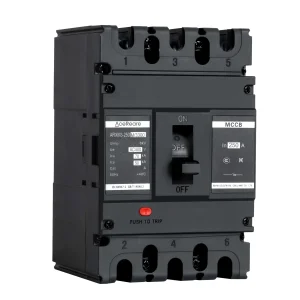
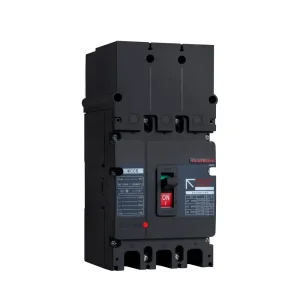
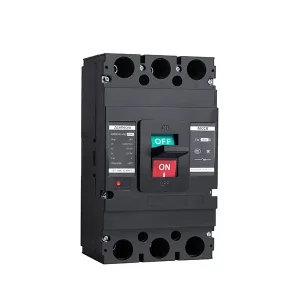
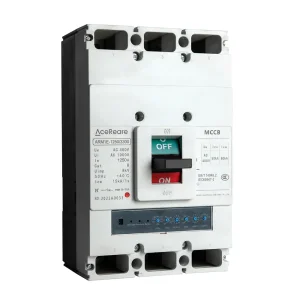
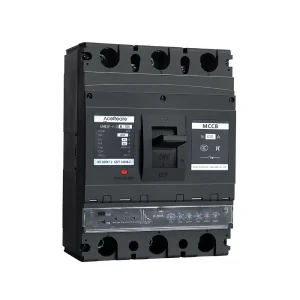
In the evolving landscape of global energy distribution, understanding the semantic difference between Air Circuit Breakers (ACB) and Molded Case Circuit Breakers (MCCB) is critical for procurement and systems engineering. While both serve the fundamental purpose of circuit protection, their architectural and application-specific nuances define industrial scalability.
ACBs, characterized by their high current carrying capacity and modular intelligence, are the backbone of primary distribution. In contrast, MCCBs provide high-density, robust protection for secondary distribution. The choice between them is a trade-off between interrupting capacity and installation footprint.
Industry 4.0 is pushing for "Intelligent Measurement" within circuit breakers. Our research indicates that the demand for MCCBs with communication, metering, and edge computing capabilities is surging by 12% annually as manufacturers integrate smart grid solutions.
A: A high-value supplier provides not just parts, but documentation (test reports, 3D designs, and thermal analysis), which reduces the customer's time-to-market and R&D overhead.
A: In coastal or harsh industrial environments, corrosion resistance is paramount. We perform 72-hour tests to ensure longevity where standard components fail.
 AceReare