 AceReare
1 / 4
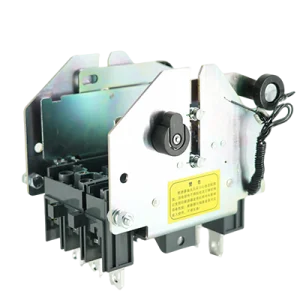
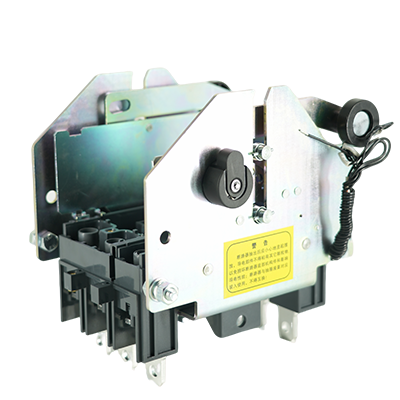
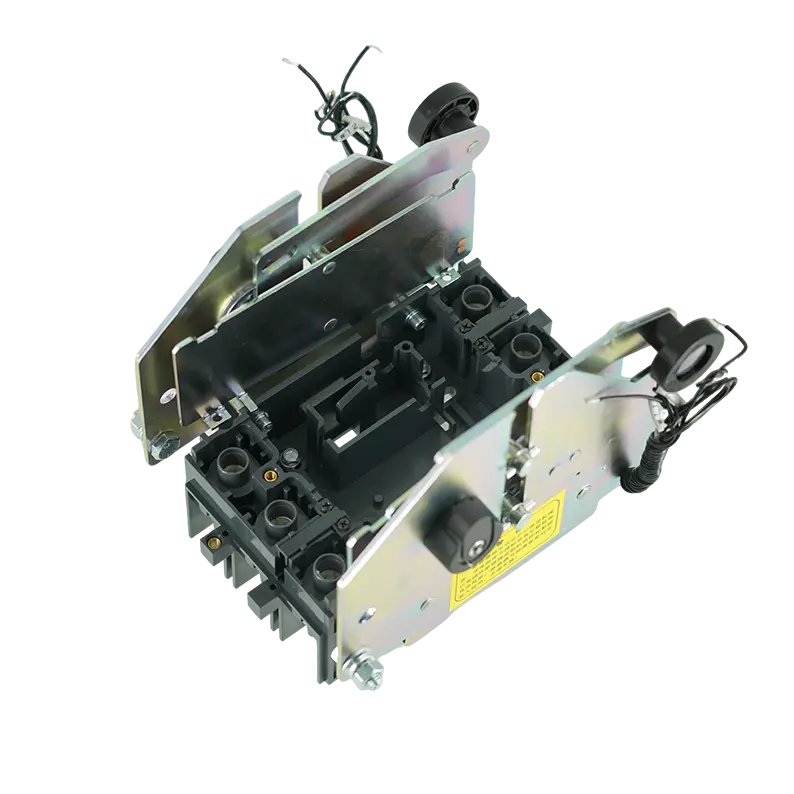
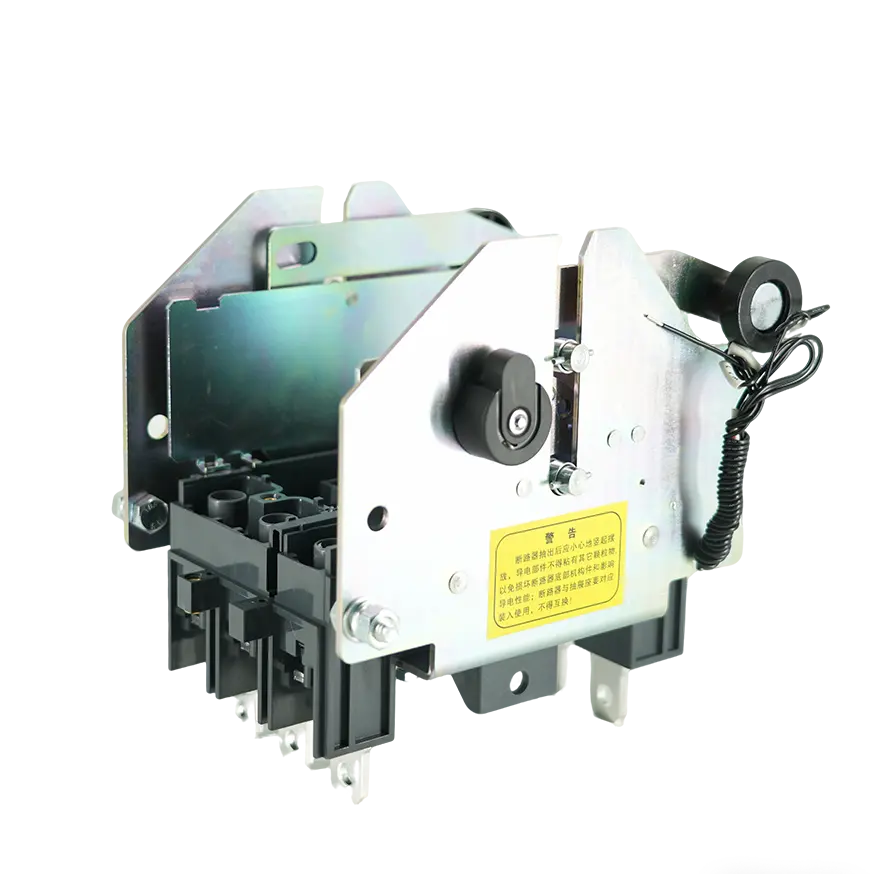
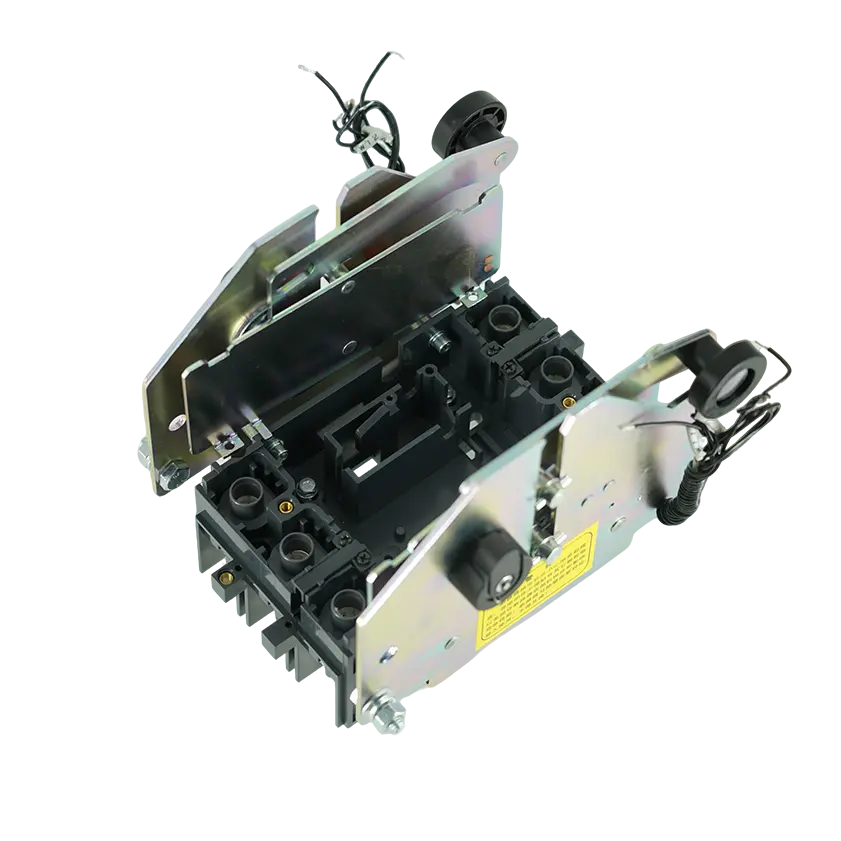
Provides connection, testing, and extraction positions. The connection position ensures normal power supply; the test site powers off the main circuit while keeping the secondary circuit active for safe debugging; the extraction position physically disconnects the unit, creating a visible power outage breakpoint.
Features a clearly visible insulation gap after extraction, eliminating the risk of electric shock or misoperation during maintenance to fully comply with electrical safety regulations.
Allows the circuit breaker body to be directly removed for maintenance and replacement without dismantling the main and secondary cables, preventing damage to the cabinet wiring.
Designed structurally so that insertion and extraction can only occur when the circuit breaker is open. This prevents cabinet door access under load and accidental contact with live parts.
Integrates auxiliary contacts, shunt/undervoltage trip, and other accessories to unify the transfer of both the main circuit and secondary lines, greatly simplifying cabinet wiring.
Combines visible isolation breakpoints with mechanical interlocking to significantly reduce the risk of electric shock and arc flash during maintenance.
Eliminates the need to disconnect wiring, reducing circuit breaker replacement times from several hours down to just over ten minutes.
Enables rapid replacement with backup circuit breakers in critical circuits, making it ideal for factories, data centers, and other continuous-power environments.
Circuit breakers sharing identical specifications are completely interchangeable, standardizing spare parts and providing flexibility for future system expansions.
Utilizes contact plugs to keep cabinet wiring highly organized, promoting improved heat dissipation and superior electrical insulation.
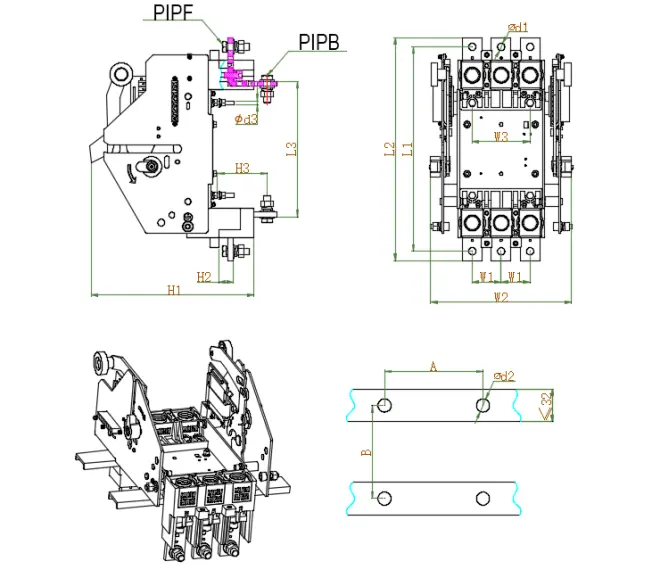
| Adapt to MCCB | Poles | Overall dimensions | Installation dimensions | ||||||||||||
|---|---|---|---|---|---|---|---|---|---|---|---|---|---|---|---|
| L1 | L2 | L3 | H1 | H2 | H3 | W1 | W2 | W3 | Φd1 | Φd2 | A | B | Φd2 | ||
| M5-160/250, M5E(i)-160/250 | 3P | 199 | 217.6 | 124 | 180.5 | 17 | 38.5 | 35 | 176.5 | 70 | 8.5 | M5 | 70 | 75 | 6 |
| M5-400/630, M5E(i)-400/630 | 3P | 313 | 340 | 206 | 268 | 23 | 85 | 45 | 215 | 90 | 11 | M6 | 100 | 150 | 7 |

Risus commodo viverra maecenas accumsan lacus vel facilisis.
Risus commodo viverra maecenas accumsan lacus vel facilisis.
Risus commodo viverra maecenas accumsan lacus vel facilisis.
Risus commodo viverra maecenas accumsan lacus vel facilisis.
Risus commodo viverra maecenas accumsan lacus vel facilisis.
Risus commodo viverra maecenas accumsan lacus vel facilisis.
Risus commodo viverra maecenas accumsan lacus vel facilisis.
Risus commodo viverra maecenas accumsan lacus vel facilisis.
The drawer base realizes three positions: connection (normal power supply), testing (main circuit powered off, secondary circuit active for safe debugging), and extraction (complete physical disconnection forming a visible power outage breakpoint).
It provides a clearly visible insulation gap after extraction, eliminating the risk of electric shock or misoperation. Additionally, its mechanical interlocking ensures insertion and extraction can only happen when the circuit breaker is open.
Yes. The circuit breaker body can be directly removed for maintenance and replacement without dismantling the main and secondary cables, protecting the cabinet wiring from damage.
It integrates auxiliary contacts, shunt/undervoltage trip, and other accessories to unify the transfer of both the main circuit and secondary lines, simplifying the overall cabinet wiring layout.
Yes, they feature modular universality. Circuit breakers of the same specifications are completely interchangeable, making spare parts unified and future system expansions or renovations more flexible.
Drawer bases are highly recommended for applications requiring an uninterrupted power supply, such as critical factory production lines, data centers, and other continuous-power operating environments where rapid component swapping minimizes downtime.