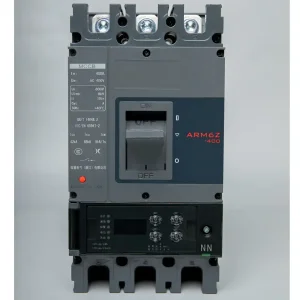
 AceReare
1 / 2
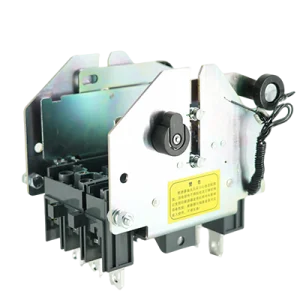
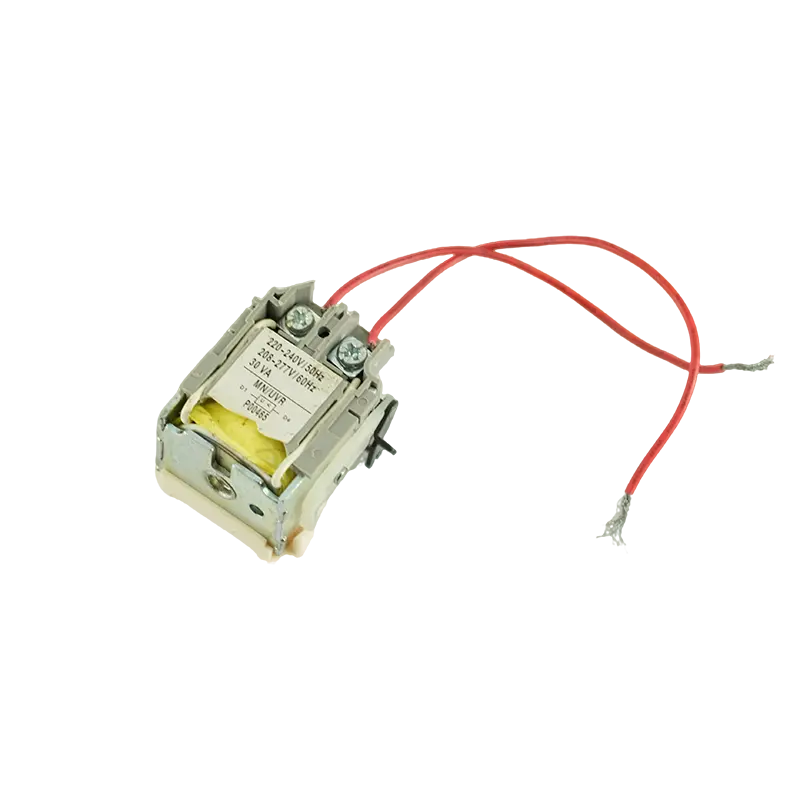
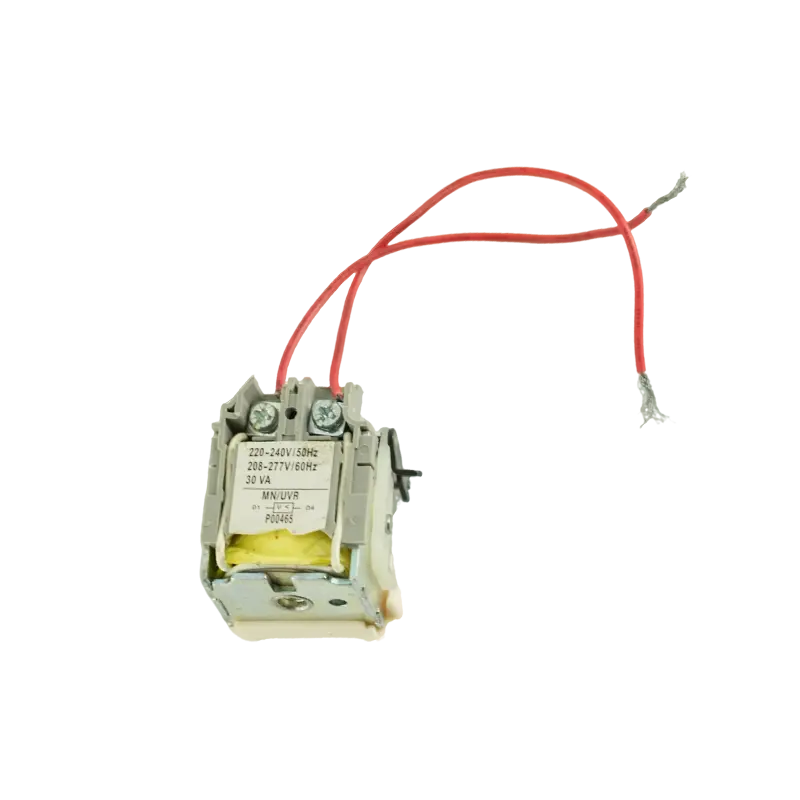
When the line voltage drops to 35%~70% of the rated voltage, the electromagnetic coil suction inside the release becomes insufficient, releasing the mechanical lock to drive the MCCB moving contact to quickly disconnect and cut off the main circuit. Disconnection triggers immediately upon total voltage loss. After voltage recovery, manual reset and closing are required to prevent automatic power transmission hazards.
Inductive and electric equipment like motors, compressors, and frequency converters can experience speed drops and sharp current increases (locked rotor current) under undervoltage. Prolonged operation causes winding overheating, insulation aging, or burnout. Timely power-off avoids these faults.
If a sudden power restoration occurs when no one is on duty, self-starting equipment can cause mechanical injuries, damage, chaotic production processes, fires, and electrical safety accidents. Mandatory manual closing is a key safety design.
Under low voltage, precision equipment such as PLCs, industrial control modules, instruments, and servo systems can suffer from data confusion, control failure, and component breakdown. Early disconnection avoids hardware damage.
When grid voltage fluctuates significantly or a local fault voltage drop occurs, actively disconnecting non-critical loads reduces the pressure of grid recovery, prevents fault expansion, and ensures priority power supply to critical circuits.
The distribution cabinet is the core node of the power distribution system. Risks of equipment overload, short circuits, and spontaneous combustion caused by undervoltage will spread. The undervoltage release acts as front-end protection to cut off circuits early, reducing electric shock, fire, and mechanical accidents.
Distribution cabinets divide incoming and branch circuit breakers. Configured with different action thresholds, non-essential auxiliary circuits disconnect first, while key circuits (main equipment, fire protection, emergency lighting) retain power. This prevents single-circuit undervoltage from tripping the entire cabinet.
Continuous production lines, chemical plants, cold chain systems, and medical equipment cannot tolerate disordered starts or stops. Undervoltage tripping prevents equipment from operating under pathological voltage conditions, avoiding product scrap, process interruption, and unit resonance.
Linked with voltage meters, intermediate relays, and sound/light alarms, it issues alerts during voltage abnormalities. Mandatory manual closing requires operators to confirm voltage recovery and fault resolution before power transmission, standardizing procedures.
In high-rise buildings, mines, oil fields, hazardous chemical workshops, and operating rooms, undervoltage protection is a mandatory safety requirement to prevent explosions, fires, and medical accidents caused by accidental power outages.

Risus commodo viverra maecenas accumsan lacus vel facilisis.
Risus commodo viverra maecenas accumsan lacus vel facilisis.
Risus commodo viverra maecenas accumsan lacus vel facilisis.
Risus commodo viverra maecenas accumsan lacus vel facilisis.
Risus commodo viverra maecenas accumsan lacus vel facilisis.
Risus commodo viverra maecenas accumsan lacus vel facilisis.
Risus commodo viverra maecenas accumsan lacus vel facilisis.
Risus commodo viverra maecenas accumsan lacus vel facilisis.
The undervoltage release typically triggers a trip when the line voltage drops to 35%~70% of the rated voltage, or when the voltage completely disappears (voltage loss/power outage).
It prevents the equipment from automatically restarting and powering up when the grid voltage returns to normal, eliminating safety risks of unexpected machine operations or electrical surges.
Under low voltage, inductive equipment experiences a drop in speed and a sharp increase in current (locked rotor current). This causes winding overheating, insulation aging, and eventual component burnout.
It is a configuration where non-essential auxiliary circuits trip first during a voltage drop, while critical circuits (like emergency lighting, fire safety, and main systems) remain powered, preventing a localized fault from blacking out the entire system.
It is typically mandated by electrical codes in high-risk or critical environments, such as high-rise buildings, mines, oil fields, chemical plants, and hospital operating rooms, to prevent safety disasters during power fluctuations.