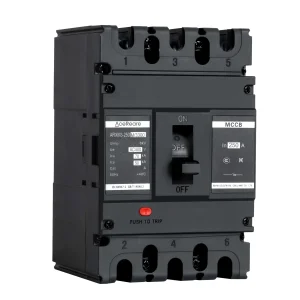
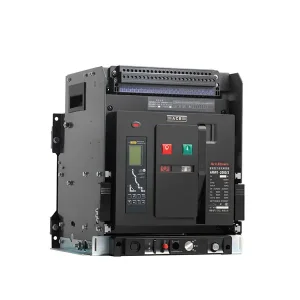
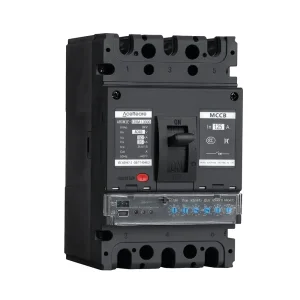
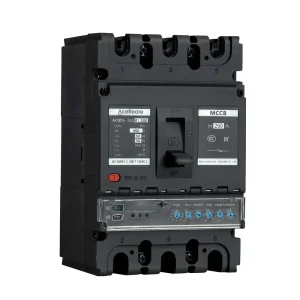
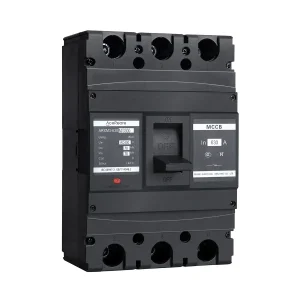
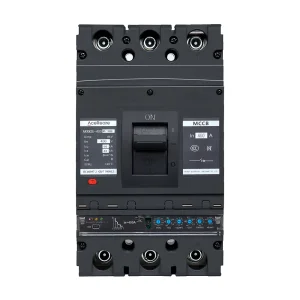
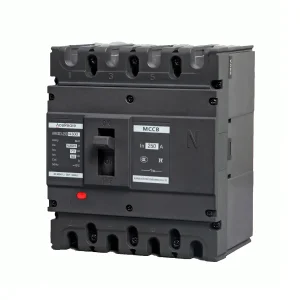
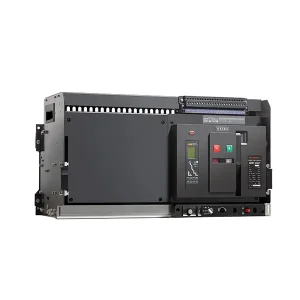
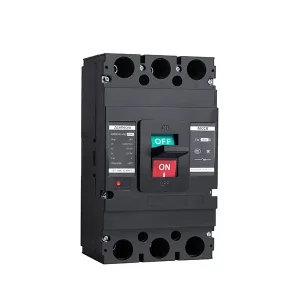
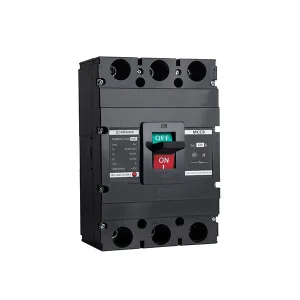
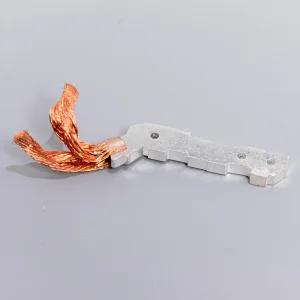
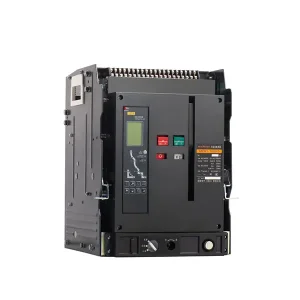
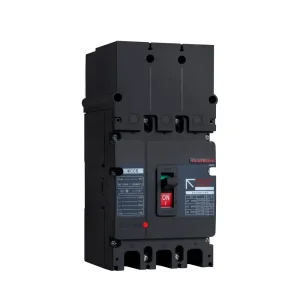
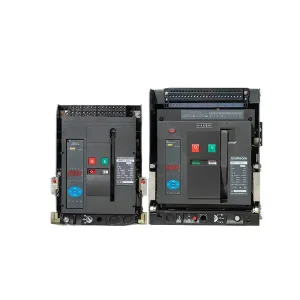
Explore our premium distribution, molded case, and open-frame circuit protection equipment engineered for industrial and solar applications.
High-amperage direct current interruption is a foundational challenge in modern electrification. Our 400A DC breakers sit at the nexus of renewable generation and reliable storage.
In modern 1000V to 1500V DC central inverter architectures, 400A DC circuit breakers isolate string combiner boxes. By neutralizing localized faults before they propagate to the main DC bus, they protect multimillion-dollar capital investments and maximize system uptime.
High-density battery enclosures feature exceptionally low internal resistance, creating short-circuit current rise rates (di/dt) that can exceed 100kA/ms. A robust 400A DC MCCB must act with precise current limiting capabilities, breaking under extreme time constants (L/R) to prevent cascade thermal runaway.
Level 3 EV fast chargers demand highly reliable local isolation. Operating between 400V and 1000V DC, our breakers protect downstream power modules from upstream transformer surges and isolation faults, ensuring continuous high-throughput charging cycles.
Established in 2015, Acereare Electric represents a multi-generational legacy in high-performance circuit protection manufacturing.
Integrating R&D, precision manufacturing, and international trade compliance, Acereare operates two wholly-owned subsidiaries: RuiRui Electric and KeRui Electric. We have inherited over 20 years of manufacturing craftsmanship from two generations of industrial electrical pioneers. Ruiru Electric was registered in 2015, establishing modern, automated manufacturing lines to handle high-demand ODM/OEM operations for major global brands.
Equipped with advanced laboratories for testing low-temperature, high-altitude, and salt spray tolerances, Acereare delivers industrial-grade components globally. We currently maintain strategic partnership relationships with nearly 100 high-end domestic and overseas customers.

Understanding the processes, supply logistics, and engineering metrics that differentiate Acereare in high-current DC application protection.
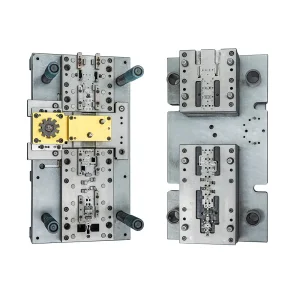
One-Stop Service including six advanced processing techniques. Powered by high-precision production machinery, quality tooling, and more than 10 manual and automated assembly lines.
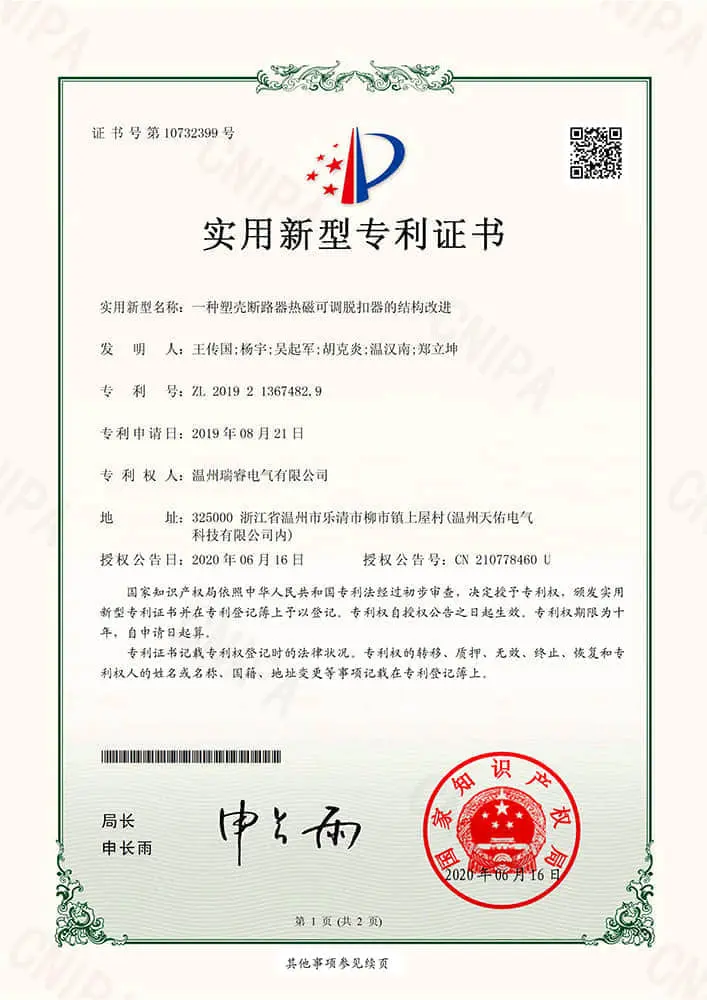
Over 50 professional R&D engineers with an average of 5+ years of electrical product design experience. Proficient in 3D finite element simulation and part prototyping, initiating over 50 projects yearly.
Dual factories running components stamping and final assembly in parallel. Real-time scheduling via ERP and U8 digital warehouse systems coordinates raw materials with container logistics.
A rigorous, multi-stage quality gate system using PLM, BI, ERP, and MES software. Our private testing laboratory employs over 150 dedicated testing instruments and 20 quality inspectors.
DC networks do not possess a natural voltage zero-crossing. Design engineers must evaluate the physics of electromagnetic trip systems to secure the grid structure.
| Circuit Breaker Series | Rated Operating Voltage (Ue) | Ampere Range (In) | Trip Unit Technology | Key Application Environment |
|---|---|---|---|---|
| ARXM3 Series | Up to DC 1000V | 63A - 630A | Thermal-Magnetic (Adjustable/Fixed) | Industrial Distribution, Heavy Machinery |
| ARM3E Series | AC 400V - 690V | 125A - 250A | Microprocessor-based Electronic LSIG | Smart Grids, High Precision Protection |
| ARW1 Series | AC 400V / 690V | 400A - 6300A | Intelligent Electronic Trip (ACB) | Main Distribution Boards, High Current AC Systems |
| Solar Type MCCB | Up to AC 800V / DC 1000V | 250A - 400A | Specialized PV Frame Protection | Solar Combiner Boxes & Grid-Inverters |
Commercial applications often introduce extreme stresses. Our breakers undergo specialized validation processes to perform under harsh conditions.
Utilizing low-temperature resistant polymers, specialized non-congealing synthetic grease lubricants, and thickened contact coatings. Our breakers maintain rated mechanics in sub-zero locations, backed by complete -40 ℃ laboratory reports.
Designed to withstand maritime climates. Our components undergo 72-hour salt spray testing for fully assembled units and 48-hour testing for semi-finished components, protecting crucial port and offshore equipment.
As thin air reduces convective cooling and dielectric strength, our high-altitude derating guides calculate thermal performance offsets. Adjusting these parameters ensures operation up to 5000 meters above sea level.
Providing high-precision protection against short circuits and overloads in light commercial and residential distribution boards, balancing space constraints with dependable breaking capacities.
To resist ambient heat in closed electrical panels, we utilize high-temperature thermoplastics and insulated thermal-barrier coatings. All models undergo continuous loading tests in our 55 ℃ constant-temperature laboratory.
Modern MCCB configurations integrate digital microcontrollers with edge computing. This supports active current, voltage, and thermal diagnostics via Modbus, RS485, or Ethernet links.
Establishing brand equity requires tailored mechanical integration, quality assurance parameters, and professional support.
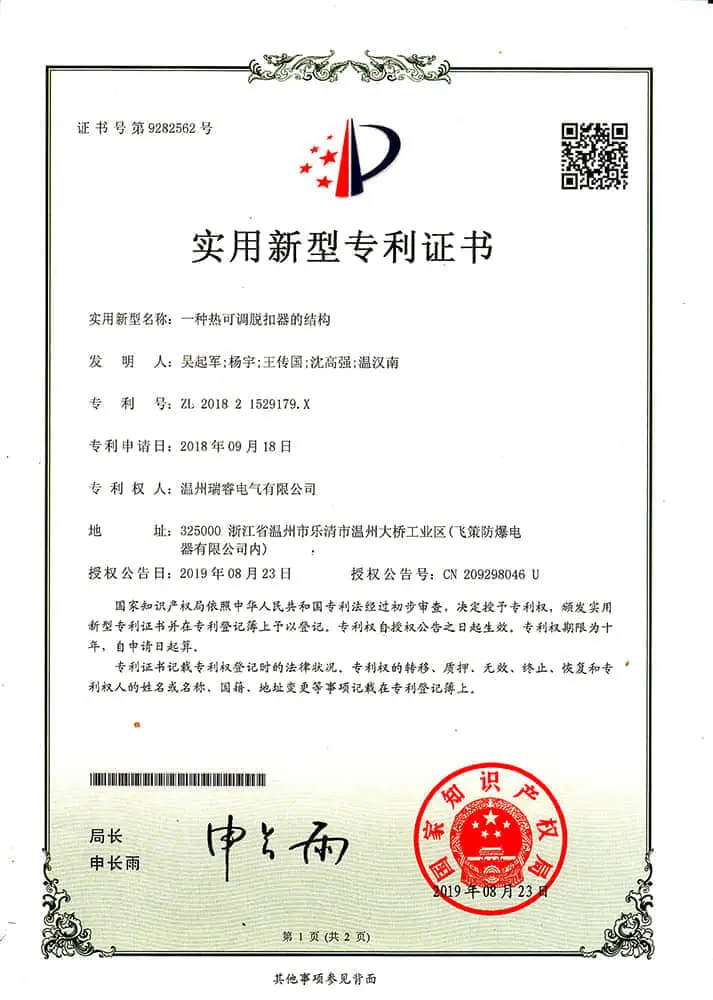
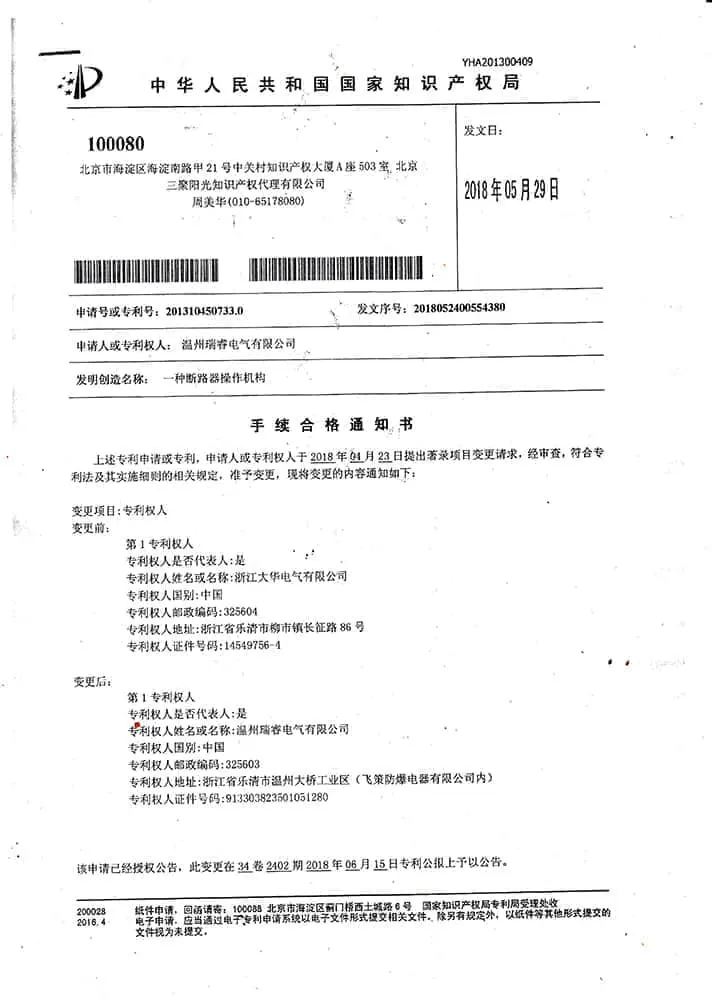
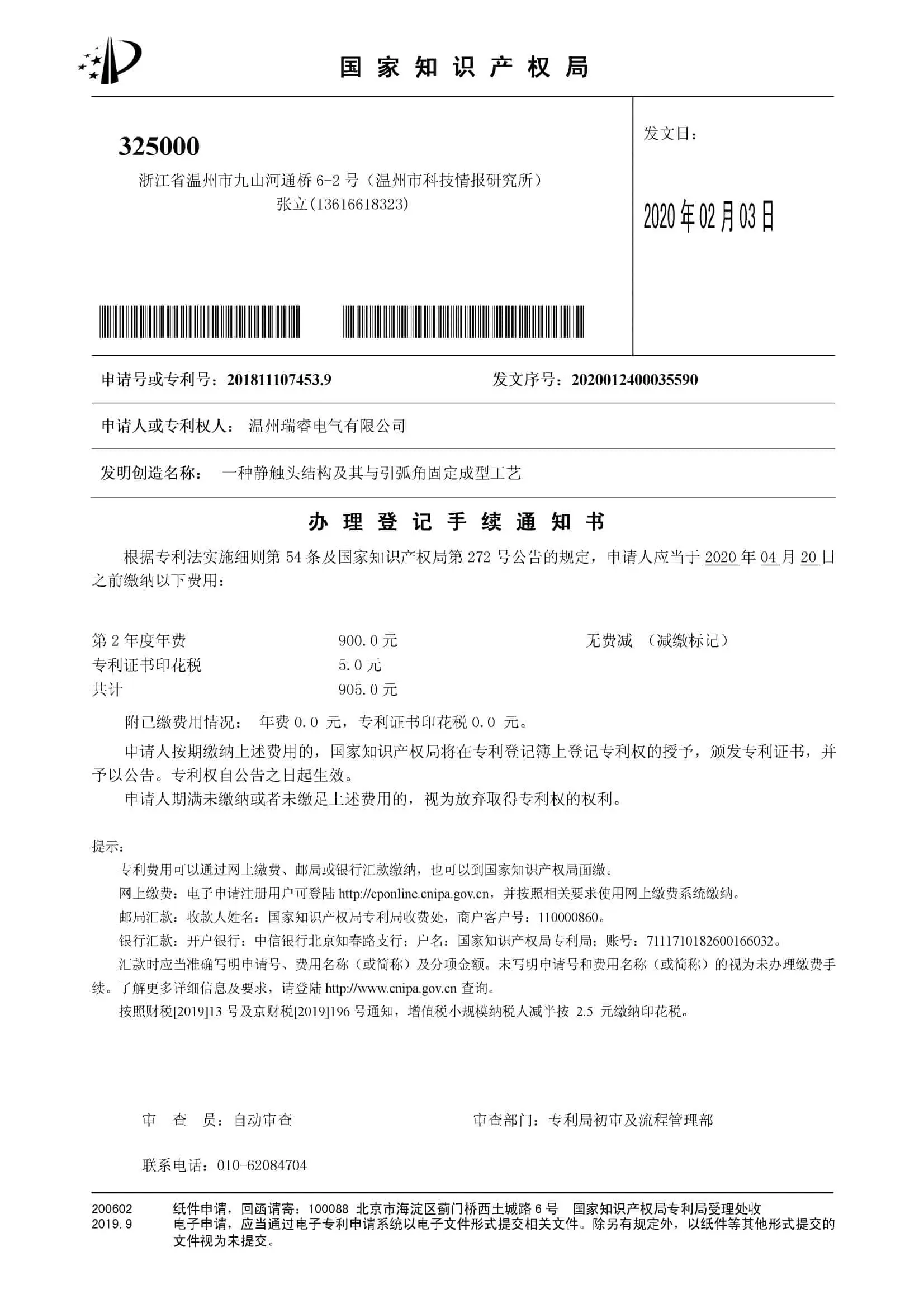
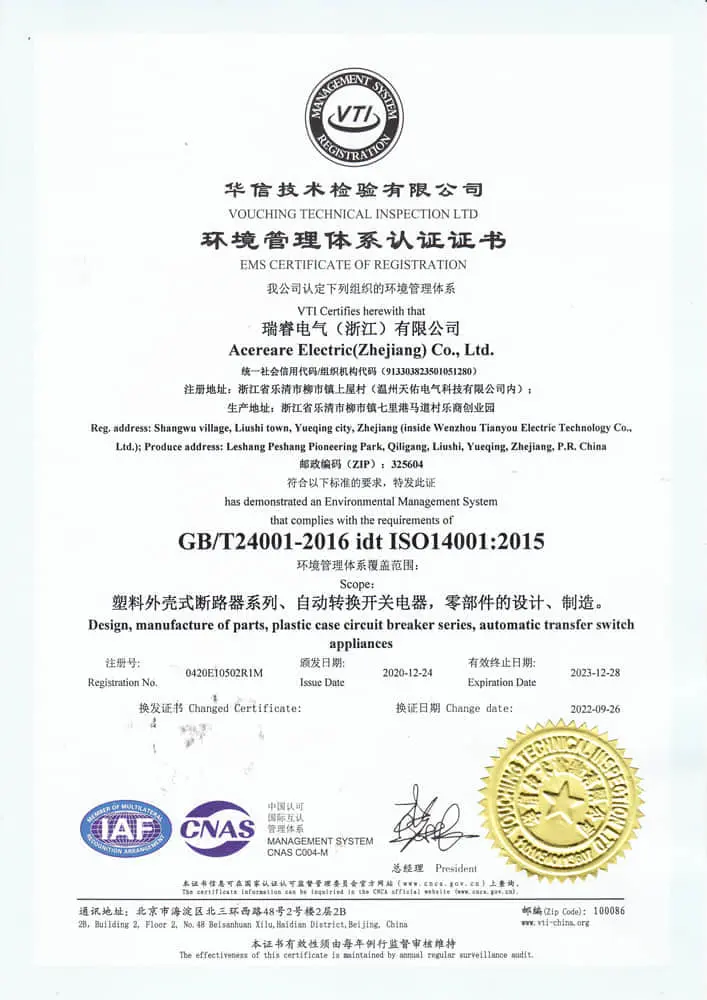
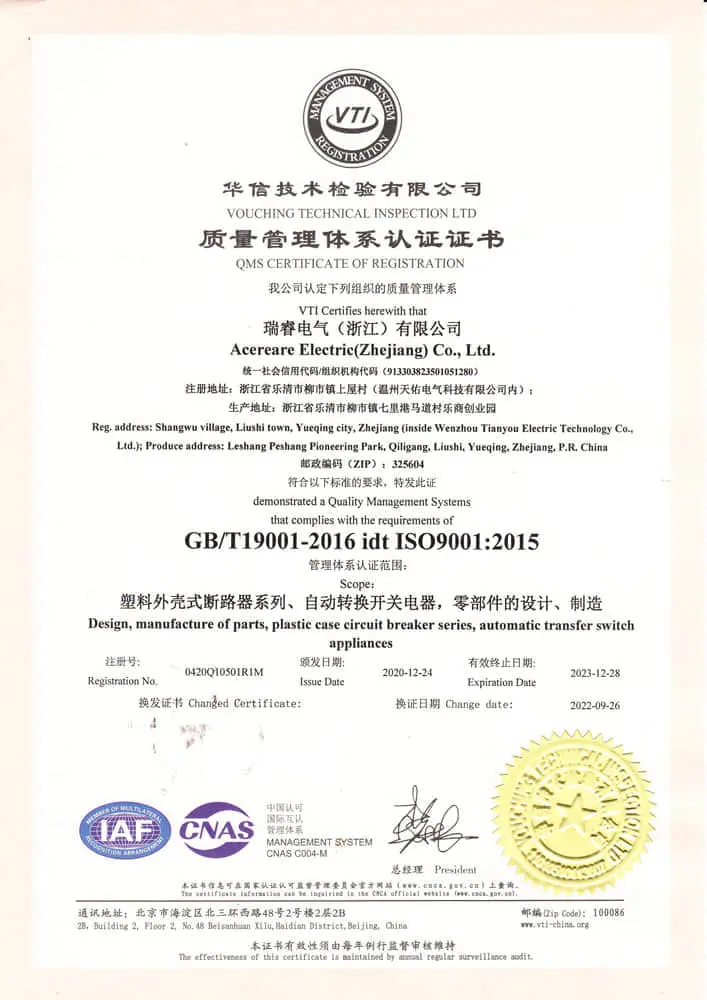
Our products are tested and validated by accredited third-party laboratories to meet CE, CCC, CB, and IEC safety standards.


Sourcing directors must look ahead to long-term regulatory and engineering shifts. Here is how we are developing the next generation of DC safety products.
Traditional contacts introduce arc plasma, causing micro-ablation. The industry is moving toward semiconductor-based solid-state switches. Acereare's R&D team is testing solid-state designs that clear faults in under 100 microseconds, eliminating electrical arcs entirely.
Our roadmap prioritizes halogen-free, recyclable structural resins. Replacing standard fiberglass-reinforced polymers with bio-based materials reduces the carbon footprint of large switchgear assemblies without sacrificing dielectric performance.
Next-generation 400A DC breakers will feature integrated temperature sensors on the busbar contacts. By monitoring thermal levels in real time, they can alert operators to increased contact resistance before a thermal failure occurs.
Get answers to common engineering questions regarding the specification, installation, and operation of 400A DC circuit breakers.
Alternating current (AC) has a natural zero-crossing point twice per cycle, where the current falls to zero, helping extinguish the arc. Direct current (DC) maintains a continuous voltage. A DC breaker must stretch and cool the arc, forcing it into splitters to increase the arc resistance until it exceeds the system voltage and is extinguished.
The time constant (L/R) represents the ratio of inductive reactance to resistance in the circuit, which dictates how fast a short-circuit current rises. A larger L/R time constant means the breaker must absorb more inductive energy during interruption. Most standard industrial DC applications use a time constant of 5ms to 15ms, though heavy-duty industrial systems may require custom considerations.
For installations above 2000 meters, thin air limits thermal dissipation and electrical insulation. We apply altitude correction coefficients (derating factors) from standard tables, typically reducing the rated current and operational voltage by 5% to 15% to maintain safe operating margins.
Polarized DC breakers use internal permanent magnets to assist in driving the arc into the arc chutes. They must be wired in a specific current direction. Non-polarized breakers do not rely on fixed magnet poles, allowing bidirectional current flow. Bidirectional systems are ideal for solar batteries that undergo charge and discharge cycles.
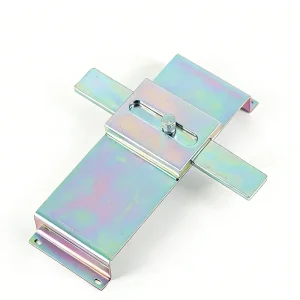
Explore auxiliary electrical components, mechanical interlocks, stamping busbars, and high-voltage photovoltaic circuit switches.
 AceReare