Direct factory access to China's leading low-voltage electrical components designed for renewable energy systems.
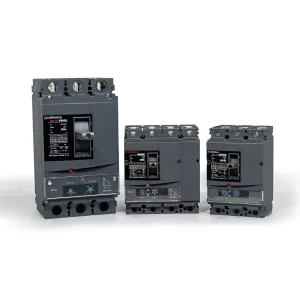
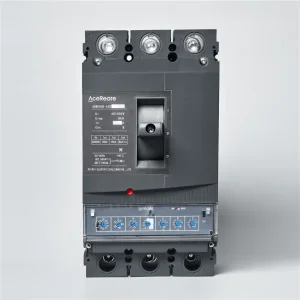
An Industrial-Strength Technical Guide to High-Voltage Solar Distribution and Network Fault Protection.
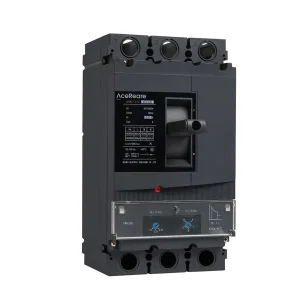
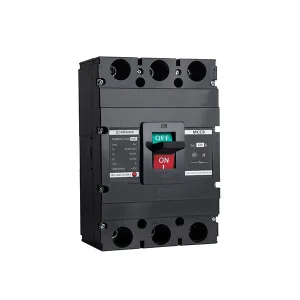
The global energy landscape is undergoing an unprecedented structural transition towards green grid integration. The International Energy Agency (IEA) estimates that renewable capacity additions will reach record heights, with utility-scale solar photovoltaic (PV) systems leading this trajectory. This rapid scaling demands massive upgrades to low-voltage distribution platforms. Central to this evolution is the deployment of specialized Photovoltaic Molded Case Circuit Breakers (PV MCCBs) that can withstand high voltage limits and extreme continuous loads.
In traditional grid infrastructures, standard AC distribution boards operated at nominal values. However, to minimize line losses and optimize power density, modern solar generation loops have transitioned rapidly to 1500VDC architectures, as well as 800VAC / 1000VAC / 1140VAC circuits on the inverter output side. At these elevated levels, standard commercial breakers fail due to inadequate dielectric insulation, susceptibility to localized heat dispersion, and insufficient short-circuit interrupting capacity. Therefore, custom-engineered PV MCCBs are critical to protecting multi-million dollar solar assets and grid substations.
The integration of massive Battery Energy Storage Systems (BESS), floating photovoltaic systems (FPV), and remote utility projects requires high-durability protection against complex, localized faults. China’s electrical manufacturing ecosystem, represented by innovators such as Acereare Electric, provides global EPCs and grid developers with the exact technical solutions needed to address high ambient temperatures, rapid switching arcs, and communication capabilities for next-generation smart grids.
As string and central inverters output higher current ratios, standard circuit breakers must adapt. The move from 1000V to 1500V system configurations reduces balance-of-system (BOS) costs, but introduces unique electrical challenges. Arc mitigation becomes exceptionally complex. Without specialized contact configurations, permanent DC arcs can destroy terminal pins and circuit housings. High-quality manufacturers use multi-pole series connection topologies to distribute current loads and ensure immediate magnetic responses to faults, preserving system integrity in micro-seconds.
Providing structural excellence and low-voltage engineering solutions to premium global customers since 2015.
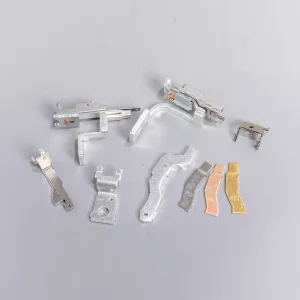
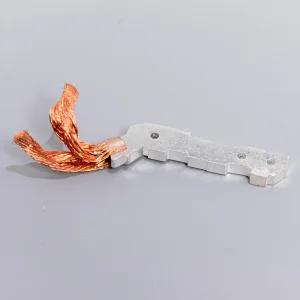
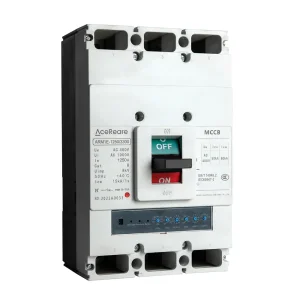
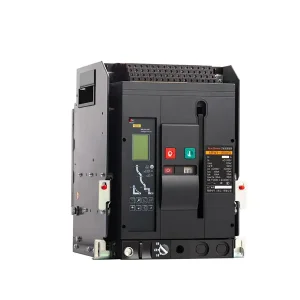
Founded in 2015, Acereare Electric controls two wholly-owned subsidiaries: "RuiRui Electric" and "KeRui Electric". Building on over 20 years of craftsmanship inherited through generations, we have established ourselves as a premier ODM/OEM manufacturer in China. We design, produce, and sell high-capacity Molded Case Circuit Breakers (MCCB), Air Circuit Breakers (ACB), and custom stamping components for smart distribution networks.
By using modern ERP and U8 software management, we optimize production scheduling, material procurement, and quality assurance workflows. This ensures consistent quality across all production batches, from raw contact materials to fully certified switchgear assemblies.

In utility-scale distribution networks, MCCBs must prevent catastrophic failures from overloads, short-circuits, and ground faults. Standard thermal-magnetic designs rely on bi-metallic strips for thermal overload protection and electromagnetic solenoids for instantaneous short-circuit protection. While cost-effective, thermal-magnetic breakers can struggle in extreme environments due to ambient temperature variations. To solve this, modern solar power stations use electronic trip units (ETUs) to maintain calibration and operational reliability across wider temperature ranges.
Advanced electronic MCCBs feature micro-processors that calculate true RMS currents. This enables precise LSIG curve coordination:
(L) Long-time delay: Prevents overload by mimicking the thermal characteristics of conductors.
(S) Short-time delay: Provides selective coordination to isolate downstream faults without tripping the main breaker.
(I) Instantaneous trip: Initiates magnetic bypass protection within milliseconds during severe short circuits.
(G) Ground fault protection: Detects residual leakage currents to prevent electrical fires and protect operators.
Next-generation smart PV installations utilize digital communication channels. By integrating RS485, Modbus-RTU, and Ethernet gateways, Acereare MCCBs enable utility managers to monitor current and voltage trends in real time. This supports predictive maintenance and remote fault resets, which are essential for minimizing downtime at remote solar plants.
Committed to shared success through reliable products, advanced research, and scalable manufacturing capacities.
One-stop production across 10 manual and automated assembly lines. Features six core fabrication techniques supported by precision testing instrumentation.
Over 50 dedicated R&D engineers with 5+ years of experience in 3D CAD modeling, component fabrication, and complex electrical engineering.
We own and operate two manufacturing facilities. By integrating ERP and U8 management software, we link production phases to guarantee timely deliveries.
Every batch undergoes strict testing in our quality laboratories, equipped with over 150 instruments and managed via PLM, BI, and MES platforms.
Our circuit breakers are engineered to maintain performance and safety across challenging environmental conditions.
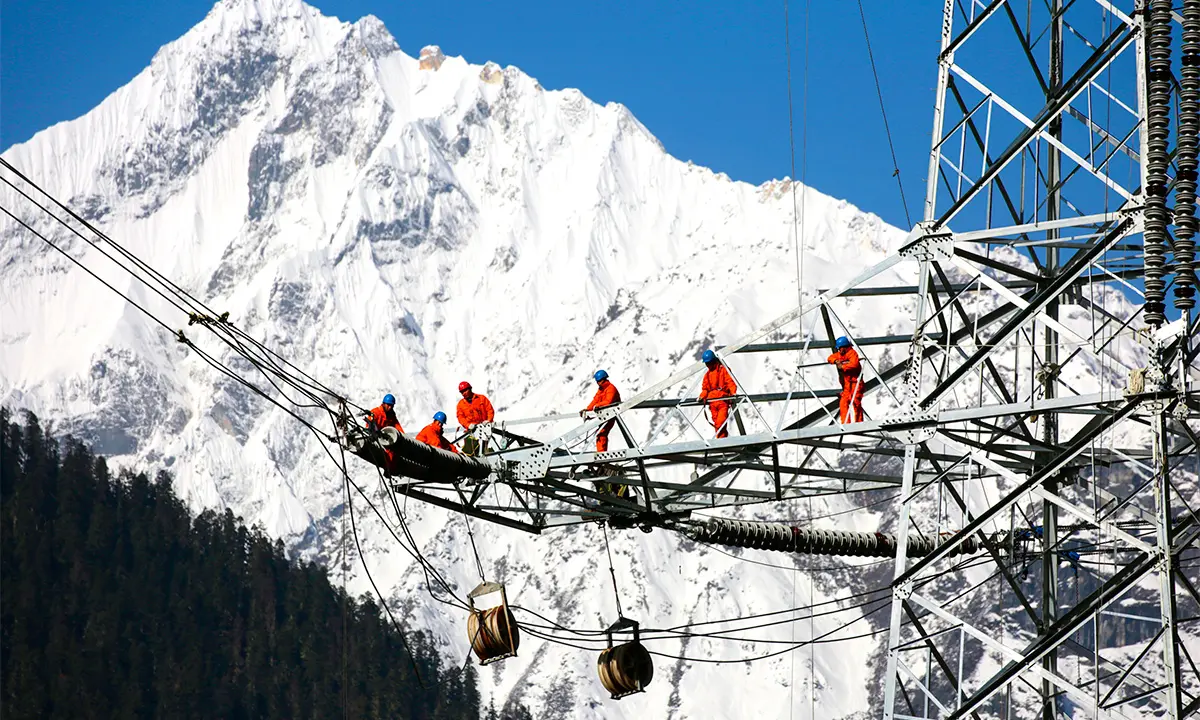
Engineered using impact-resistant polymers and low-viscosity mechanical lubricants. Certified via lab reports down to -40°C to support installations in cold climates.

Corrosion protection designed for offshore substations, coastal facilities, and floating solar arrays. Standardized for 72-hour salt spray testing on fully assembled units.
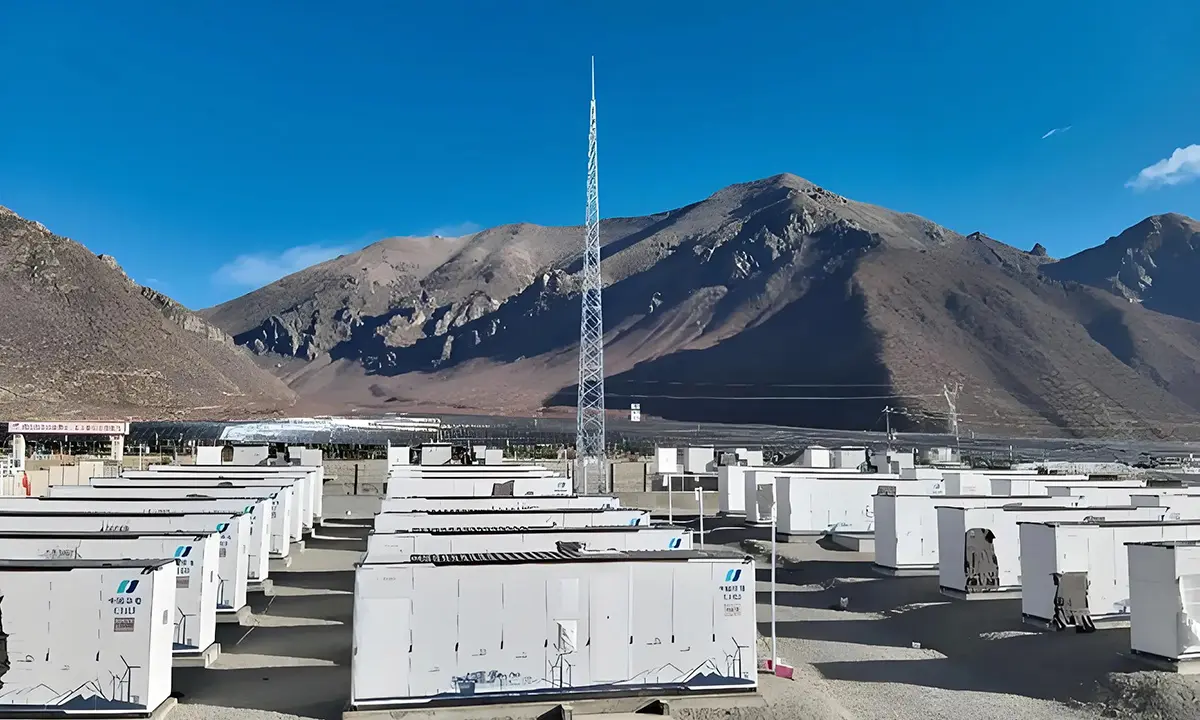
For installations exceeding 2000 meters, we adjust electrical clearances and insulation profiles. We provide high-altitude derating parameters to ensure stable operation.

High-sensitivity protection designed to protect home appliances and residential rooftop solar setups from electrical faults and short circuits.
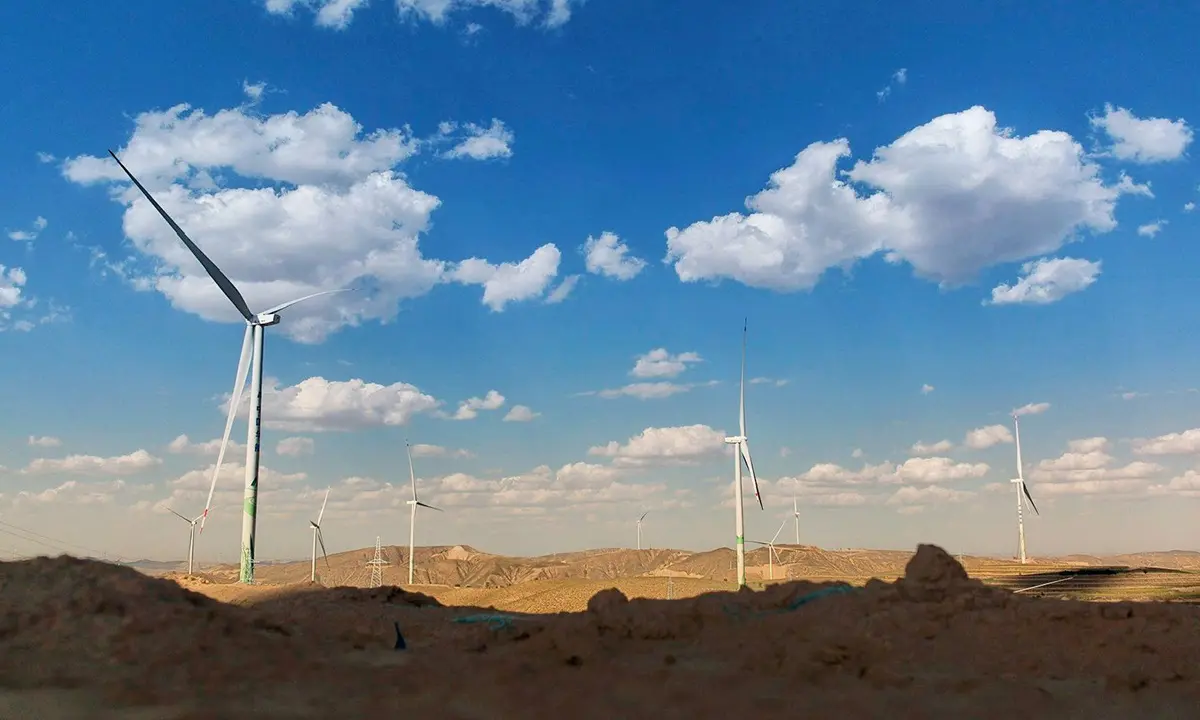
Features thermal insulation barriers and treated components to prevent degradation at high temperatures. Verified to maintain rated capacities in 55°C test chambers.
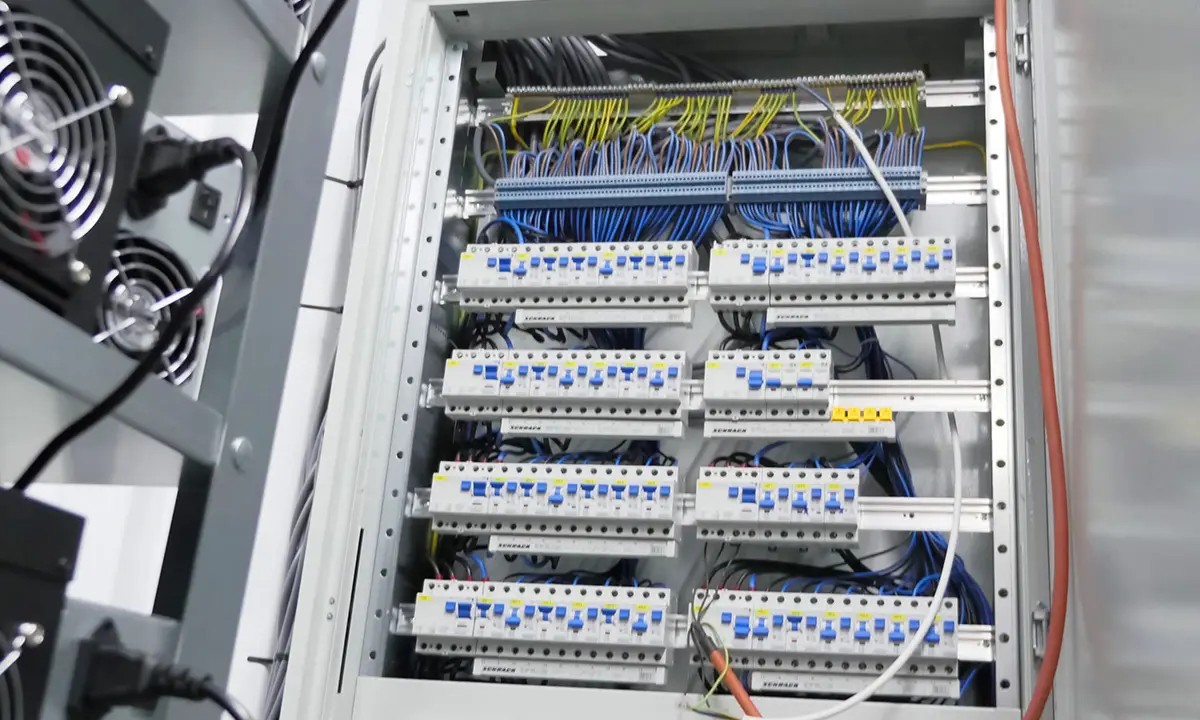
Smart network support featuring built-in micro-CTs, active voltage sensors, and Modbus/Ethernet gateways for real-time telemetry and edge analytics.
The transition toward higher capacity solar parks will continue to drive switchgear innovations. Key focus areas include arc flash mitigation and the integration of solid-state circuit breaking technologies. Unlike traditional mechanical contacts, solid-state circuit breakers (SSCBs) use power semiconductor devices to isolate electrical loads, achieving response times under a microsecond. This level of protection prevents voltage sags and minimizes arc flash hazards in large combiner systems.
Additionally, predictive analytics and artificial intelligence are changing operational planning. By linking smart MCCBs with enterprise asset management (EAM) platforms, managers can transition from reactive maintenance to real-time predictive service. Machine learning systems monitor contacts, load histories, and operating temperatures to predict component end-of-life, helping operators avoid unexpected outages and reduce long-term operational costs.
Developing halogen-free, recyclable resins to meet global environmental regulations while maintaining insulation performance.
Eliminating mechanical wear through semiconductor switching topologies, driving down response times to the microsecond level.
Direct integration of low-voltage switchboards with remote SCADA networks using cybersecurity-hardened communication channels.
We provide tailored branding, custom manufacturing, and global testing certification to match your project specifications.
Experience our automated assembly, precision copper stamping, thermal-magnetic calibration stations, and quality control systems. Our advanced facility highlights how we control quality at every step of production.
We manage all processes within an integrated ERP system, linking departments to provide reliable deliveries for global utility installations and infrastructure developers.
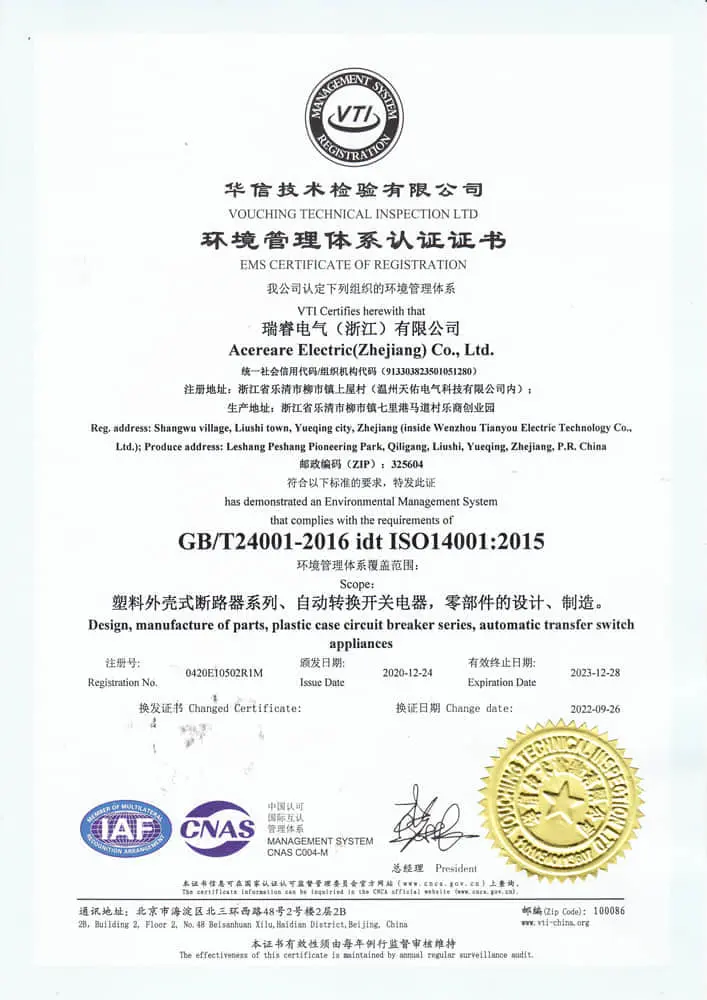
Our products are certified by domestic and international standards organizations, ensuring compliant operation globally.




Common questions answered regarding photovoltaic MCCB selection, environmental calibration, and customization.
Explore our complete range of high-voltage circuit breakers and precision-stamped metal components.
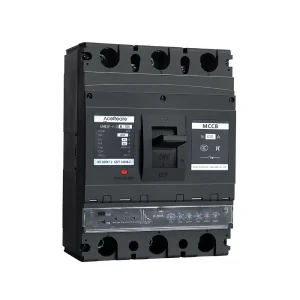
 AceReare