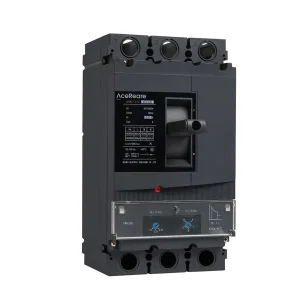
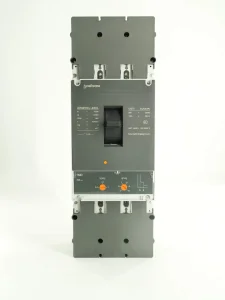
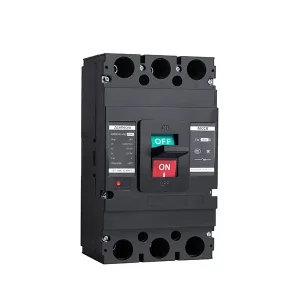
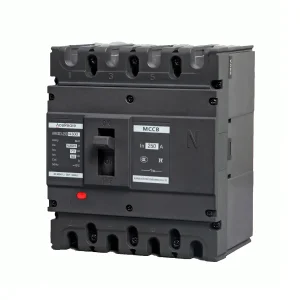
Engineered for extreme solar installations, smart grids, and industrial energy storage solutions.
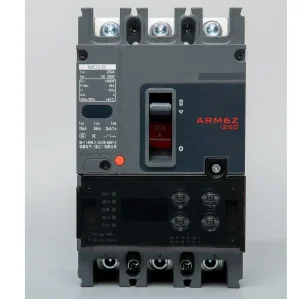
As global power systems undergo massive integration of clean energy, utility-scale photovoltaic (PV) setups push the boundaries of electrical transmission limits. Traditional AC components are no longer sufficient to handle the unique physical characteristics of high-voltage DC distribution, leading to the rise of specialized Photovoltaic Molded Case Circuit Breakers (PV MCCBs).
Unlike alternating current (AC) systems which naturally cross a zero-voltage point 100 or 120 times per second (allowing the electrical arc to extinguish easily), direct current (DC) maintains a continuous voltage. When a fault occurs in a PV array, the resulting DC arc is highly persistent and intense. A specialized PV MCCB must utilize advanced magnetic blowout systems and high-durability arc-chutes to stretch, cool, and extinguish the arc within milliseconds to prevent catastrophic fire hazards.
Modern commercial and utility-scale solar farms are shifting from 1000V DC systems to 1500V DC topologies. This increase in voltage reduces cable losses and balance-of-system (BOS) costs but requires circuit breakers to possess higher insulation levels, wider air gaps, and robust mechanical structures. ODM designers must reformulate the thermosetting plastics (like Bulk Molding Compound - BMC) used for breaker shells to withstand severe thermal stresses.
Technological innovation in solar power architectures dictates the evolution of downstream protection equipment. As a leading manufacturer in China, Acereare Electric tracks three major technical paradigms reshaping the global market:
Traditional thermal-magnetic MCCBs are being replaced by smart electronic trip systems. Integrated Modbus, RS485, and CAN-bus communication modules enable real-time telemetry of current, voltage, temperature, and wear indicators. Operational centers can execute remote-tripping and diagnostic processes, maximizing uptime for remote solar fields.
With the integration of Battery Energy Storage Systems (BESS), modern grids see bidirectional power flows. Photovoltaic MCCBs must work reliably regardless of current direction. Non-polarized breaker mechanisms eliminate installation configuration errors and guarantee fault clearing during both battery charging and solar generation cycles.
International environmental regulations mandate circuit breakers constructed with halogen-free flame retardants, lead-free solder points, and highly recyclable metallic contacts. Manufacturers targeting the European and North American markets are prioritizing RoHS compliance and life-cycle assessment transparency in their ODM workflows.
Procurement managers and engineering consultants globally demand compliance, performance reliability, and custom packaging. To align with global supply networks, our engineering solutions emphasize critical testing metrics:
| Feature / Parameter | Standard Industrial Requirement | Acereare Premium PV Grade Specification | Procurement Benefit |
|---|---|---|---|
| Rated Operational Voltage (Ue) | 400V - 690V AC | Up to 1140V AC / 1500V DC | Supports high-efficiency modern utility PV string configurations. |
| Breaking Capacity (Icu) | 35kA - 50kA | Up to 200kA (under specific series topologies) | Protects downstream components during major short circuits. |
| Service Breaking Capacity (Ics) | 50% or 75% of Icu | 100% of Icu (Ics = Icu) | Guarantees breaker reliability even after handling severe faults. |
| Impulse Withstand Voltage (Uimp) | 6kV - 8kV | 8kV - 12kV | Shields the micro-controllers from lighting and grid surges. |
| Operational Life cycles | 10,000 Mechanical / 1,500 Electrical | 20,000 Mechanical / 3,000+ Electrical | Extends system lifespan in high-switching commercial fields. |
Additionally, global enterprises require localization support like customizable user manuals in local languages, customized packaging configurations, dynamic brand label laser engraving, and certified test reports (CE, CB, TUV, UL) ensuring smooth import processes and system approval by local grid inspectors.
Solar power stations are built in regions with high solar irradiance, which often present harsh environmental challenges. Our PV MCCBs are engineered to handle these conditions:
In high-altitude polar or high-latitude regions, materials become brittle and standard grease hardens, causing mechanical failure. We use low-temperature resistant polycarbonates, apply low-temperature lubricants, and perform rigorous testing at -40°C in our laboratory to guarantee flawless mechanism spring release.
Offshore floating solar arrays and dock power installations require high corrosion protection. Our components feature thickened electroplated layers and stainless-steel components. We perform up to 72 hours of salt spray testing on complete machines and 48 hours on internal mechanisms to verify corrosion resistance.
As altitude increases, air density drops. This reduces both the heat-dissipating capacity of the breaker and its dielectric insulating properties. By applying high-altitude derating coefficients, we guide engineering designs to ensure performance integrity at altitudes exceeding 2000m to 5000m.
Desert solar stations can experience ambient temperatures above 50°C. Standard thermal-magnetic breakers trip prematurely under such heat. Acereare addresses this by using heat-resistant thermal-insulation coatings and testing components in a constant 55°C environment to define accurate correction factors.
Smart grids require high-precision power metering and active control. Our intelligent electronic breakers support load-side edge calculations and telemetry. This enables features like automatic fault isolation, power quality monitoring, and automated line reclosing for smart urban networks.
For residential PV arrays, compact size and reliable operation are key. Our MCCBs offer residential consumers space-saving installations, high flexibility, and protection from system damage caused by micro-inverter or storage system short circuits.
Established in 2015, Acereare Electric integrates R&D, production, and sales. Operating two wholly-owned subsidiaries—RuiRui Electric and KeRui Electric—we build on 20 years of craftsmanship passed down through two generations. Today, we rank among China's top ODM and OEM manufacturers for low-voltage breakers, serving nearly 100 high-end global partners.
Our two factories specialize in both manufacturing components and assembling complete machines. We manage our processes using ERP and U8 software. Our quality inspection routine includes over 150 testing instruments and 20 quality control specialists using PLM, BI, ERP, and MES software. We also host a dedicated testing lab to analyze raw materials and components, ensuring product reliability before final assembly.
With an engineering team of over 50 R&D specialists (each with at least 5 years of industry experience), we manage more than 50 research and development projects annually. We handle custom product modifications, 3D modeling, tool design, and international standards testing (such as CE, IEC, CB, CCC) to provide a smooth development cycle for global clients.

We help partners build brand equity in local markets by providing custom laser-engraved logos, specialized packaging configurations, and rapid prototype manufacturing to support new product introductions.
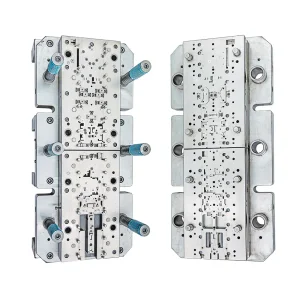
Our OEM operations include customized component stamping, custom mold development (with refundable mold fees based on volume), specialized electrical parameter adjustments, and 24-hour response support.
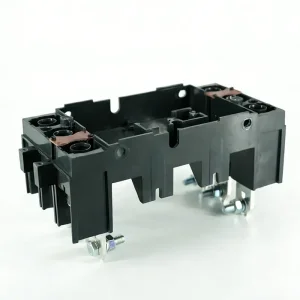
For custom product requirements, we design unique structural layouts, modify internal micro-electronic control boards, build customized technical catalogs, and maintain low minimum order quantities (MOQs).
As solar energy integrates with global microgrids, Acereare Electric's engineering team focuses on three key future initiatives:
Traditional mechanical switches have dynamic mechanical opening speeds of 10 to 20 milliseconds. Our solid-state switch research aims for microsecond trip speeds, helping to eliminate risks associated with extreme short-circuit faults in high-capacity energy storage systems.
We are developing circuit breakers with integrated 5G and Narrowband IoT (NB-IoT) capabilities. These modules will allow our breakers to communicate directly with regional cloud management systems without needing separate gateways, lowering deployment costs for distributed generation setups.
We are testing eco-friendly, carbon-neutral insulating polymers that maintain structural strength at temperatures up to 150°C. We are also exploring new silver-alloy contact materials designed to extend electrical life cycles without using hazardous heavy metals.
Technical questions regarding the application and customization of Photovoltaic Molded Case Circuit Breakers (PV MCCB):
Discover our complete range of low-voltage systems, sub-assembly elements, and components.
 AceReare