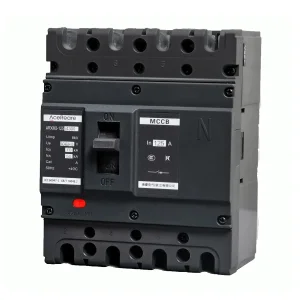
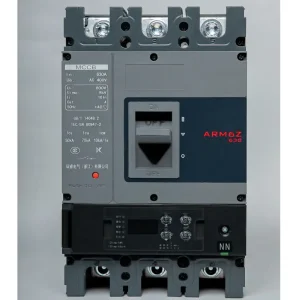
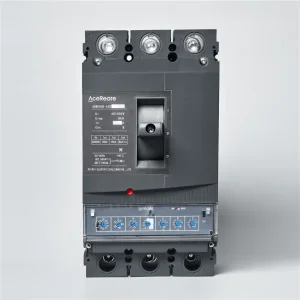
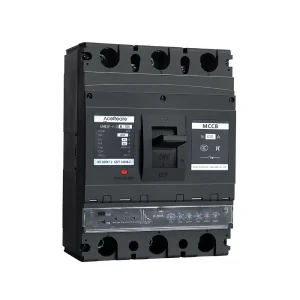
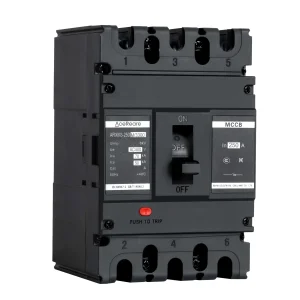
High breaking capacity and intelligent adjustable circuit breaker models customized for global distribution systems.
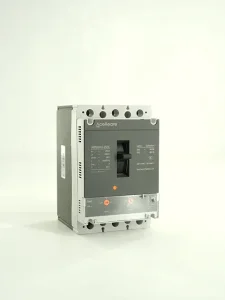
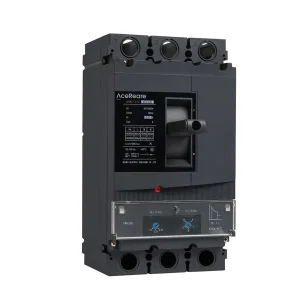
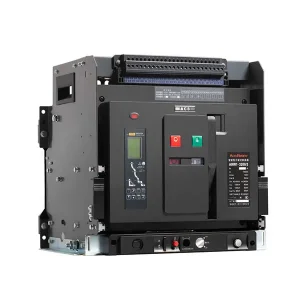
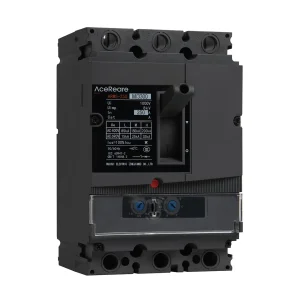
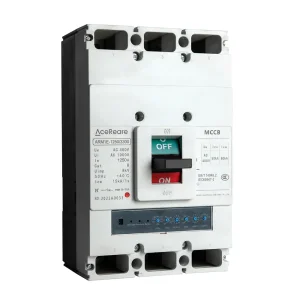
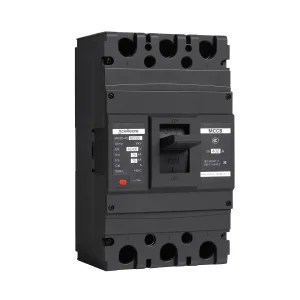
As the global power infrastructure transitions toward low-carbon and renewable energy configurations, DC Molded Case Circuit Breakers (DC MCCBs) have shifted from being secondary utility safety accessories to becoming critical structural components in industrial networks. The inherent differences between direct current (DC) and alternating current (AC) present severe electrical physical challenges. In AC systems, the current cycles through a natural zero-crossing point twice per cycle, helping to extinguish the electric arc. Conversely, a DC arc has no zero-crossing point, making it highly persistent and challenging to extinguish. This requires specialized mechanical engineering, optimized arc suppression grids, and high-performance magnetic blowout technologies.
Globally, the integration of utility-scale solar photovoltaic (PV) setups, large scale battery energy storage systems (BESS), modern electric vehicle (EV) charging facilities, and hyperscale data centers has driven the demand for high-capacity, reliable DC protection gear. The market requirements demand devices capable of handling nominal operational voltages from 750VDC up to 1500VDC, combined with short-circuit breaking capacities (Icu) reaching 100kA or more. At this level of electrical stress, selecting a qualified ODM circuit breaker manufacturer with deep engineering expertise is crucial for project reliability, system safety, and overall cost efficiency.
The regulatory and standards framework for DC circuit breakers varies across regional markets, creating complexity for global deployment. In Europe and other markets following the IEC framework, IEC 60947-2 governs the performance metrics of low-voltage switchgear. In North America, the UL standards, specifically UL 489B (specifically addressing molded-case circuit breakers for use with photovoltaic systems) and UL 489F (covering battery storage applications), define performance benchmarks. These standards require circuit breakers to undergo rigorous test routines under extreme temperatures and cycle duties.
For project developers, industrial procurement directors, and switchboard builders, obtaining safety critical hardware from an OEM/ODM partner with ISO-certified testing laboratories and pre-qualified products accelerates compliance approvals, reduces development timelines, and ensures long-term system reliability.
Underpinned by two generations of craftsmanship and two wholly-owned subsidiaries (RuiRui Electric & KeRui Electric), we deliver world-class OEM/ODM services.
One-stop production capability featuring six distinct manufacturing processes. Utilizes high-precision automated production lines, testing instruments, and over 10 manual and automated assembly lines.
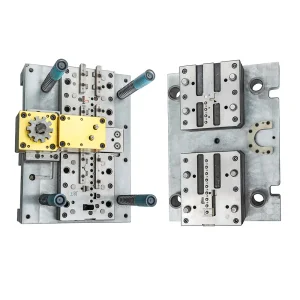
Over 50 experienced engineers specializing in parts design, mold building, and system layout using advanced 3D engineering software. Successfully launches 50+ research and development projects each year.
Equipped with two modern production bases for internal component manufacturing and complete breaker assembly. Guided by advanced ERP and U8 software to integrate all operations and optimize supply chains.
Multi-step quality inspection system supported by our own testing laboratory. Outfitted with over 150 testing instruments and managed by 20+ QC inspectors using PLM, MES, BI, and ERP systems.
Designed, tested, and certified to perform under demanding operational conditions across multiple global sectors.


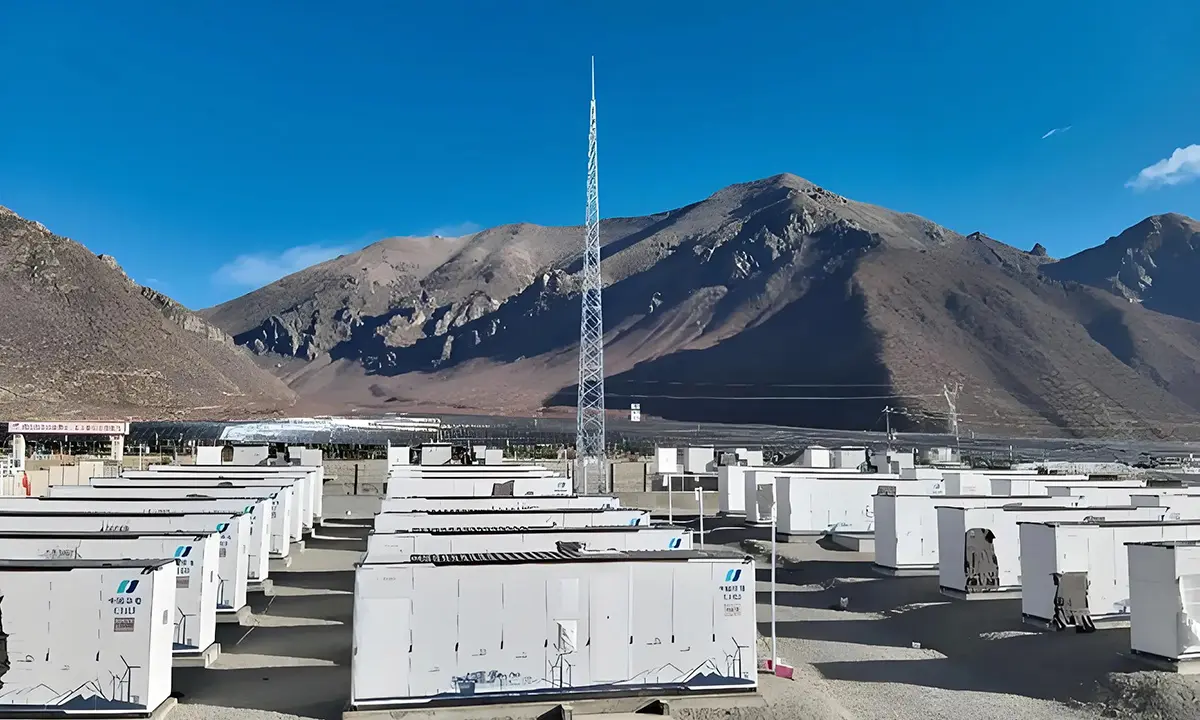


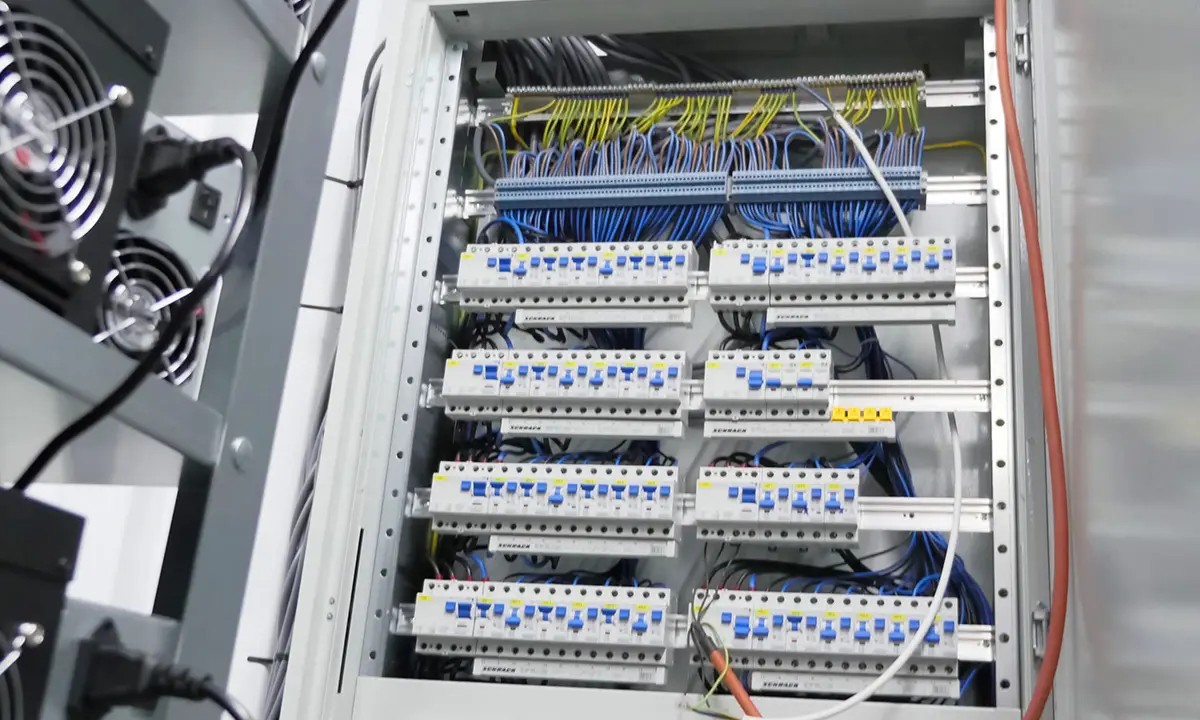
Protecting DC circuits requires a clear understanding of electrical physics. In high-power applications, when the circuit breaker contacts open, the current continues to bridge the physical gap, creating an electric arc. The arc temperature can exceed 5,000 Kelvin, creating a highly conductive plasma state. To extinguish this arc, a DC molded case circuit breaker must quickly force the arc into cooling chambers. Here, the arc is split into smaller segments by metallic plates, increasing the arc voltage until it exceeds the system voltage, causing it to collapse.
Our engineering team has developed several proprietary technologies to optimize this process. By using specialized materials in the arc chamber, the system generates gas pressure when exposed to an arc, helping to push it towards the splitter plates. Additionally, we integrate high-strength permanent magnets near the contacts. These magnets create a magnetic field that uses the Lorentz force to pull the arc into the suppression chamber, significantly reducing clearing times and contact wear.
Thermal-magnetic trip units use a bimetallic strip to protect against long-term overloads, alongside an electromagnetic coil for fast-acting short-circuit protection. This design is highly reliable and operates independently of auxiliary power. However, modern smart grids increasingly require electronic trip units. These systems utilize current sensors and microprocessor control boards to offer precise adjustability for parameters like Long-time, Short-time, Instantaneous, and Ground fault protection (LSIG). This allows for customizable protection curves and ensures selective coordination in complex power distribution networks.
The future of low-voltage distribution systems centers on digital connectivity. Our next-generation DC circuit breakers feature integrated microchips capable of measuring voltage, current, power, and internal temperature. Using communication protocols such as Modbus-RTU, CANopen, or Ethernet, these smart breakers can transmit operational data to supervisory systems in real time. This enables remote diagnostics, automated trip logging, and predictive maintenance schedules based on contact erosion metrics and operation count tracking.
At our testing facilities, prototype designs undergo strict validation tests before entering mass production. These include mechanical durability checks (verifying performance across thousands of operations), temperature rise testing at rated currents, and short-circuit testing under maximum voltage conditions. This thorough evaluation process ensures our circuit breakers perform reliably in high-temperature solar installations, vibrating wind turbines, and humid industrial marine environments.
From project analysis to final logistics, we manage the entire production cycle to guarantee consistent quality and on-time delivery.
We offer scalable customization services, ranging from custom branding to the co-development of new electrical architectures.
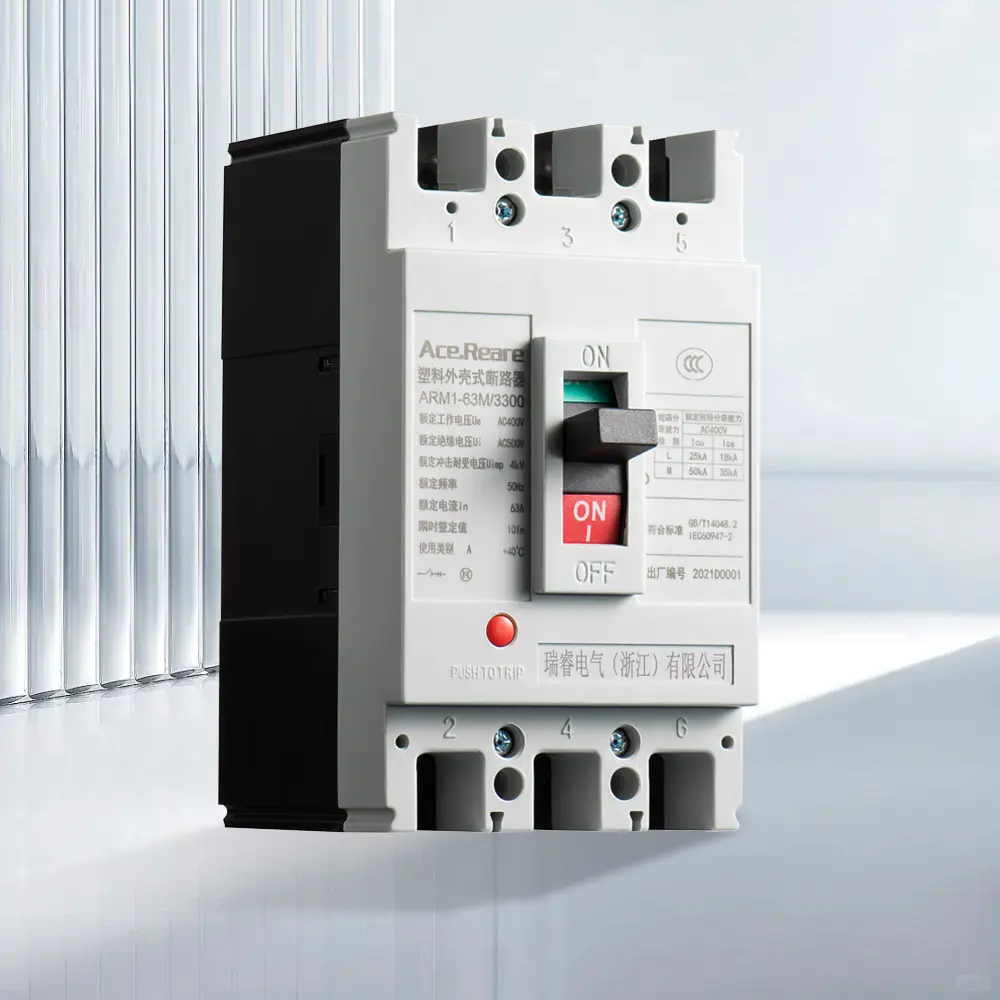
Build your market presence with customized logo printing, tailored packaging, and custom labels. We use high-quality raw materials to ensure your products meet the quality standards expected of your brand. Our quick-turn prototyping services help accelerate your time-to-market for new product releases.
Take a look inside our ISO-certified factory to see our automated production processes and quality assurance laboratories.
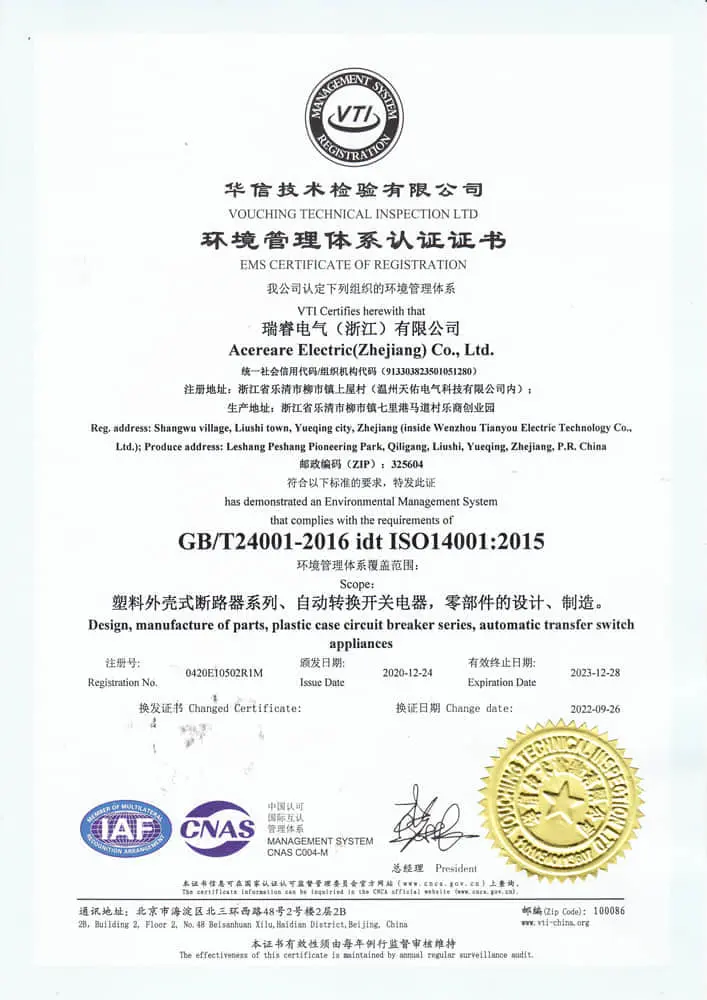
Our manufacturing facility and products hold certifications from major international standards organizations, ensuring smooth compliance approvals.
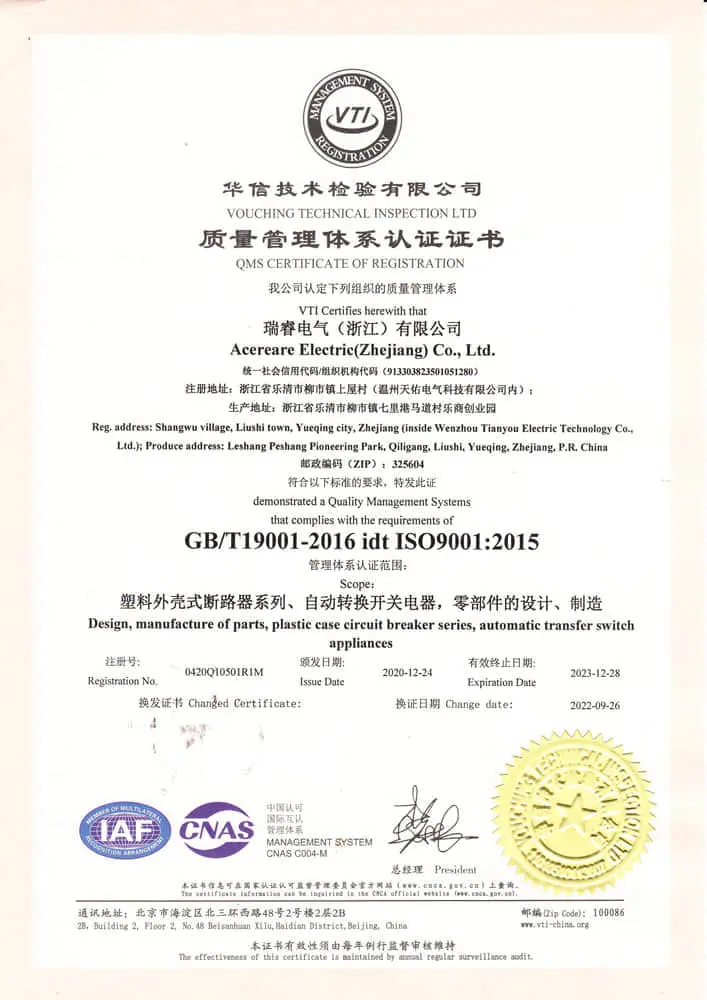
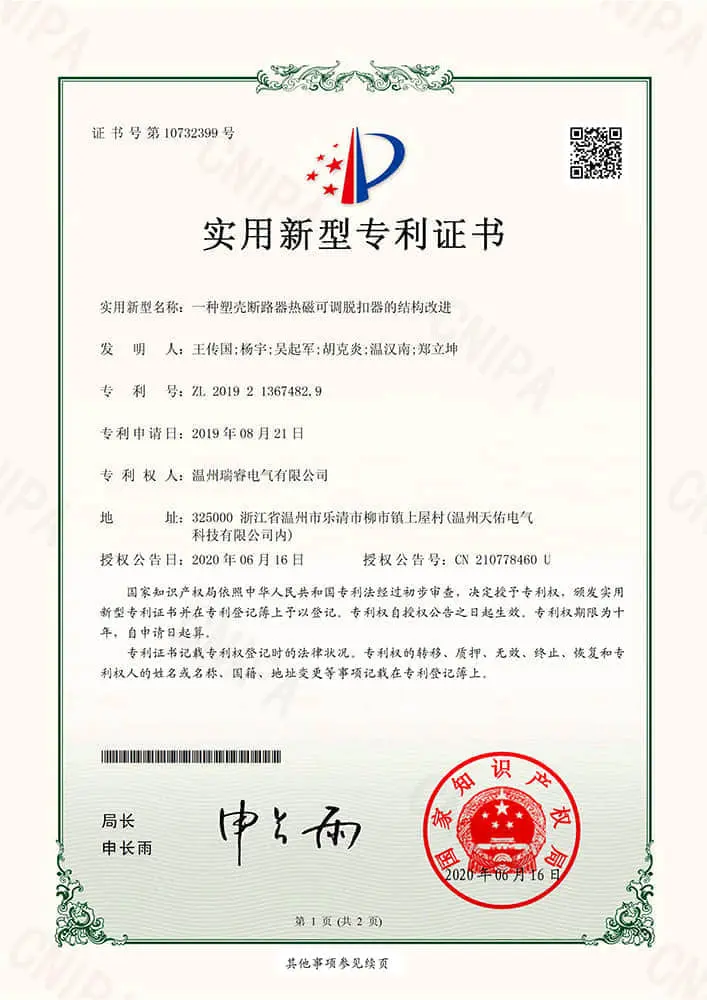
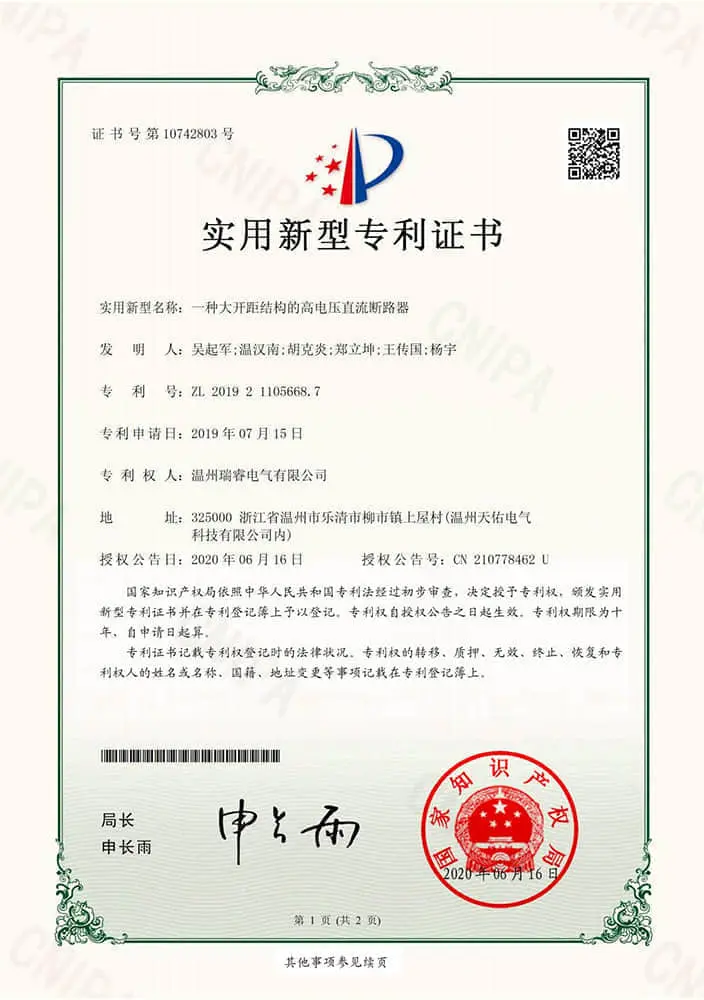
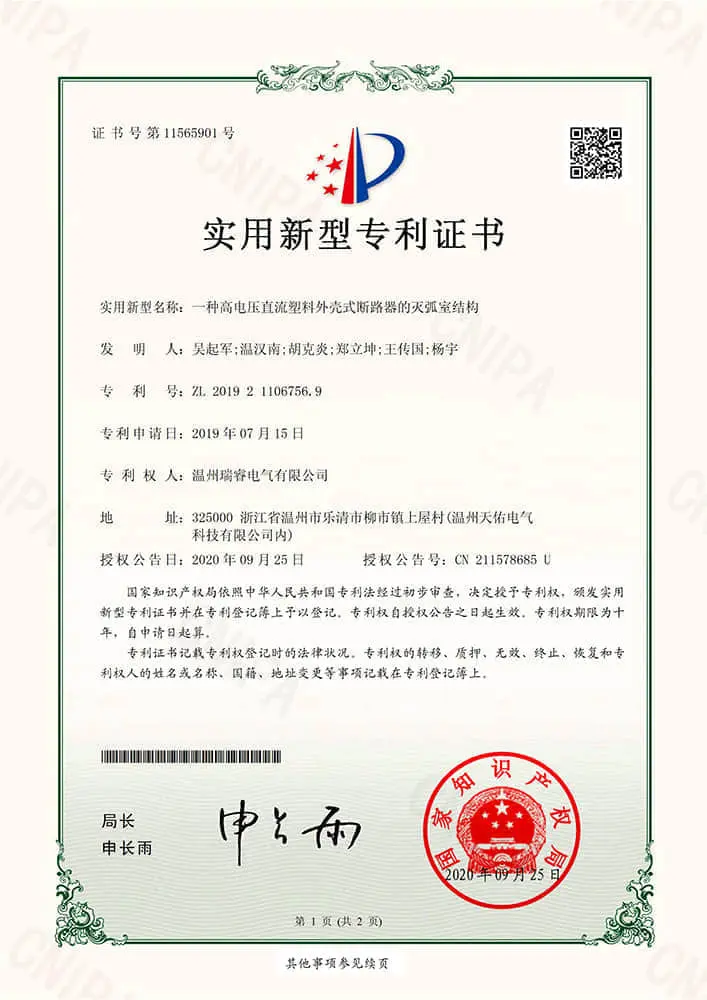
Answers to technical and engineering questions regarding DC MCCB selection, integration, and performance.
Browse our full range of molded case circuit breakers, components, and air circuit breaker lines built for global distribution networks.
 AceReare