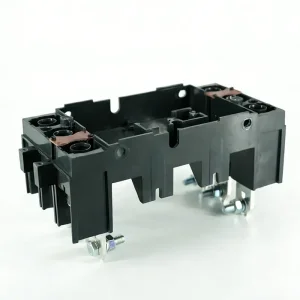
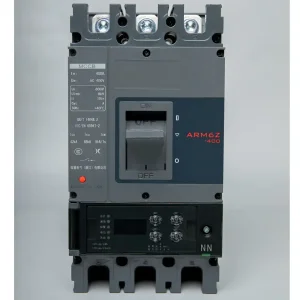
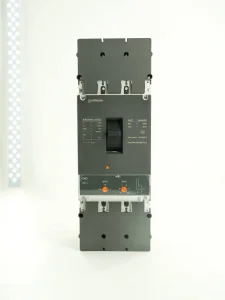
Explore our engineering-grade Molded Case Circuit Breakers (MCCB), Air Circuit Breakers (ACB), and precision metal stamping components certified for global distribution networks.
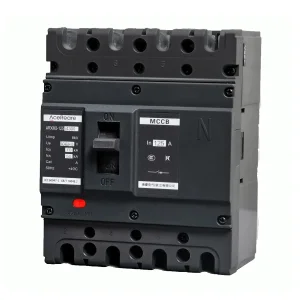
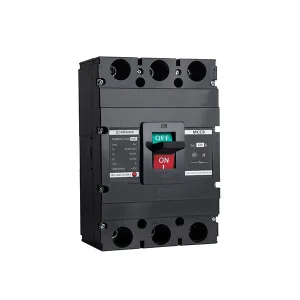
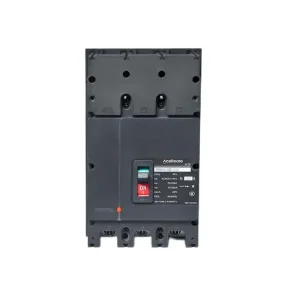
Founded in 2015, Acereare Electric operates through its two wholly-owned subsidiaries, "RuiRui Electric" and "KeRui Electric". We are a professional, vertically-integrated manufacturer specializing in the research, development, production, and global sales of Molded Case Circuit Breakers (MCCB), Air Circuit Breakers (ACB), and precision internal and external electrical components.
Our craftsmanship heritage spans over 20 years across two generations. Officially registered under the Acereare brand in 2015, we have combined traditional industrial precision with advanced smart automation. Based on a mature manufacturing system, our factories rank among the top OEM/ODM partners in China for low-voltage switchgear components, serving more than 100 enterprise clients globally.
Our active R&D division runs over 50 projects annually, using advanced PLM software to design custom molds, components, and complete assemblies.

Acereare Electric offers complete low-voltage circuit breaker solutions, combining professional R&D with strict testing in our own facilities.
We provide a complete one-stop service with six main processing techniques, utilizing high-precision production machinery and testing equipment across 10 manual and automated assembly lines.
Our team of over 50 R&D engineers average more than 5 years of industry experience. We handle complete 3D design of custom components, molds, and finished mechanisms.
By running two specialized production plants, we maintain control over components and final assembly. Operations are integrated via modern ERP and U8 software systems.
We perform multi-stage quality inspections using our in-house lab, which is equipped with 150+ testing instruments. Quality workflows are managed through PLM, BI, ERP, and MES software.
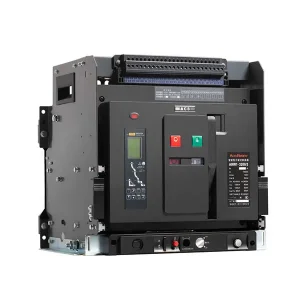
A detailed technical look at our 630A Air Circuit Breakers (ACB) and Molded Case Circuit Breakers (MCCB), designed for modern industrial distribution networks.
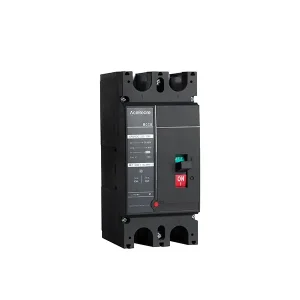
The 630A Air Circuit Breaker (ACB) and high-capacity Molded Case Circuit Breakers (MCCB) are critical components in heavy industrial and utility power networks. Acting as the primary protection mechanism at the transition between medium-voltage substations and low-voltage distribution lines, the 630A rating requires precise calibration, minimal contact resistance, and reliable arc extinguishing technology.
| Electrical Parameter | ARW1-3200 (630A Frame Option) | ARM5HU-630-3P (MCCB) | Photovoltaic Solar MCCB (630A) |
|---|---|---|---|
| Rated Current (In) | 630A (adjustable from 0.4 - 1.0 In) | 630A (fixed or adjustable options) | 630A |
| Rated Voltage (Ue) | 400VAC / 690VAC | 400VAC / 690VAC | 800VAC / 1000VAC / 1140VAC |
| Ultimate Short-Circuit Breaking Capacity (Icu) | 80kA / 100kA | 50kA / 65kA | 35kA / 50kA |
| Service Short-Circuit Breaking Capacity (Ics) | 100% Icu | 100% Icu | 100% Icu |
| Poles Configuration | 3 Poles / 4 Poles | 3 Poles | 3 Poles |
| Trip Unit Type | Intelligent Microprocessor Controller (LSI) | Thermal-Magnetic / Electronic (LSI) | Heavy-duty Magnetic / Solar Specific |
| Standards Compliance | IEC/EN 60947-2, GB/T 14048.2 | IEC/EN 60947-2, CE, CCC | IEC 60947-2 for Photovoltaic (PV) |
Our ARW1 series 630A ACBs feature integrated Modbus-RTU communication interfaces. This enables remote telemetry, remote parameter adjustment, remote breaker control, and real-time status signals for automated industrial controls and smart grids.
How our vertically integrated production in Liushi, Wenzhou provides cost efficiencies and consistent quality control.
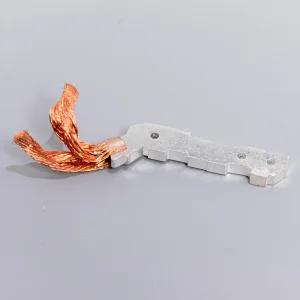
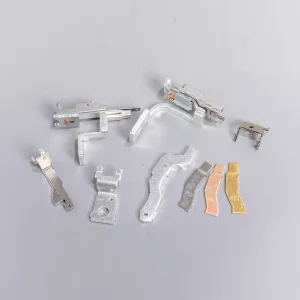
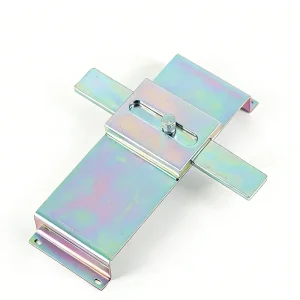
Unlike standard assembly factories, we manufacture key switchgear components in-house. From 250A/630A copper moving contacts to silver alloy contact points, metal stamping plates, and molded busbars, our complete component supply chain ensures stable quality and competitive costs.
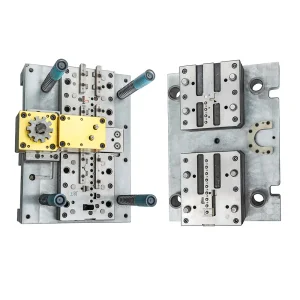
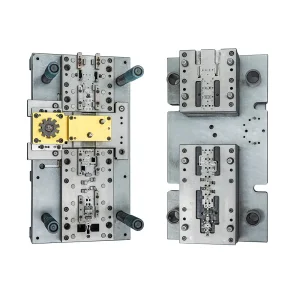
We run an internal high-speed progressive die tooling shop. This allows us to design, modify, and build custom metal molds for MCCB components, moving parts, and custom mechanical interlocking systems, significantly reducing development timelines.
Operating via two dedicated plants, our factories allocate specific lines for high-volume automated component manufacturing and dedicated manual integration lines for complex complete air circuit breakers (ACB), optimizing delivery times for large-scale orders.
Acereare circuit breakers are engineered for challenging environments, offering protection across varied operating conditions.
We use low-temperature resistant structural materials and specialized synthetic lubricants, coupled with thickened anti-corrosion plating on mechanical components. Our circuit breakers are tested down to -40°C for reliable mechanical actuation in cold regions.
Designed for coastal installations and dockside power networks, our units undergo salt spray tests (72 hours for complete assemblies, 48 hours for sub-assemblies). This protects current-carrying copper parts from salt spray degradation.
For installations above 2000 meters, where thinner air reduces dielectric strength and cooling efficiency, we apply standard high-altitude derating coefficients to modify clearance gaps and load ratings, helping maintain safe operations.
We use high-temperature engineering plastics and apply insulating coatings over microcontroller circuits. Copper and iron components are treated to resist moisture. Product thermal characteristics are verified in our 55°C constant-temperature testing chamber.
Our intelligent MCCBs and ACBs provide protection functions alongside real-time metering and communications. They calculate phase currents, voltages, active power, and power factors, feeding data back to central control systems.
Used widely within commercial distribution boards and sub-panels, our MCCBs help protect electrical installations from overload and short-circuit faults, supporting stable electrical service in public buildings.
An overview of the key technological developments shaping low-voltage circuit breaker design and switchgear manufacturing.
The low-voltage circuit breaker industry is shifting towards intelligent, highly connected, and sustainable solutions. As industries integrate more renewable energy, grid architectures require circuit breakers that can handle high DC voltages and manage complex multi-directional energy flows.
Key technical shifts include:
Guidance for industrial buyers and procurement managers looking to source high-voltage ACBs and MCCBs.
Industrial procurement teams face the challenge of balancing up-front costs with long-term system reliability. A circuit breaker failure can lead to downtime, safety hazards, and equipment damage. When sourcing 630A ACBs or MCCB units, buyers should prioritize several key factors:
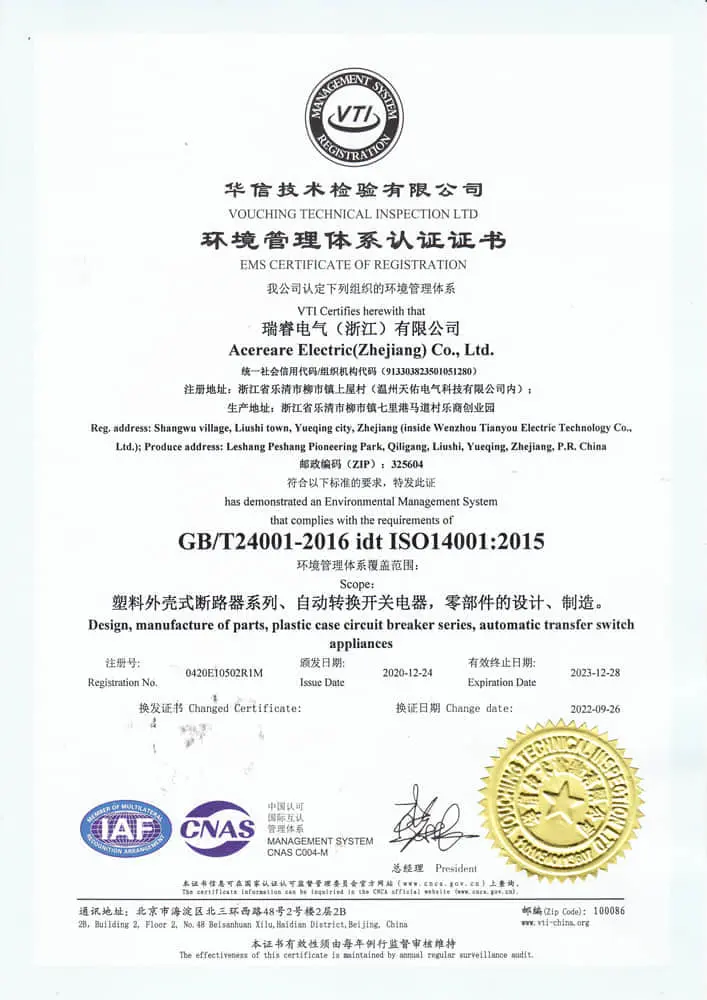
Verify that components carry valid test certificates from recognized bodies like KEMA, TÜV, CE, CB, and CCC. These certifications confirm that the circuit breakers have passed short-circuit tests, insulation resistance checks, and mechanical life tests under laboratory conditions.
Inquire whether the manufacturer produces core sub-assemblies in-house. Vertically integrated factories that stamp their own copper parts and manufacture their own contact systems generally offer more consistent quality control compared to factories that rely purely on external parts assembly.
Ensure that the circuit breaker's rated service short-circuit breaking capacity (Ics) matches its ultimate breaking capacity (Icu). Breakers with Ics = 100% Icu can continue to function after interrupting a major short-circuit event, reducing maintenance requirements.
Technical answers to common engineering and procurement questions regarding low-voltage power distribution protection.
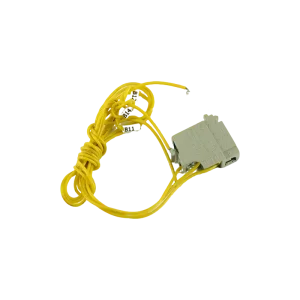
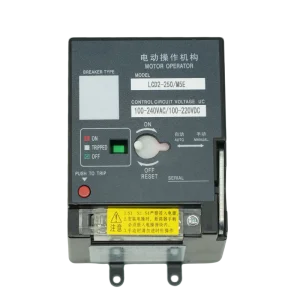
Explore more specialized switchgear models, communication accessories, drawer-type ACBs, and automated motor operating mechanisms.
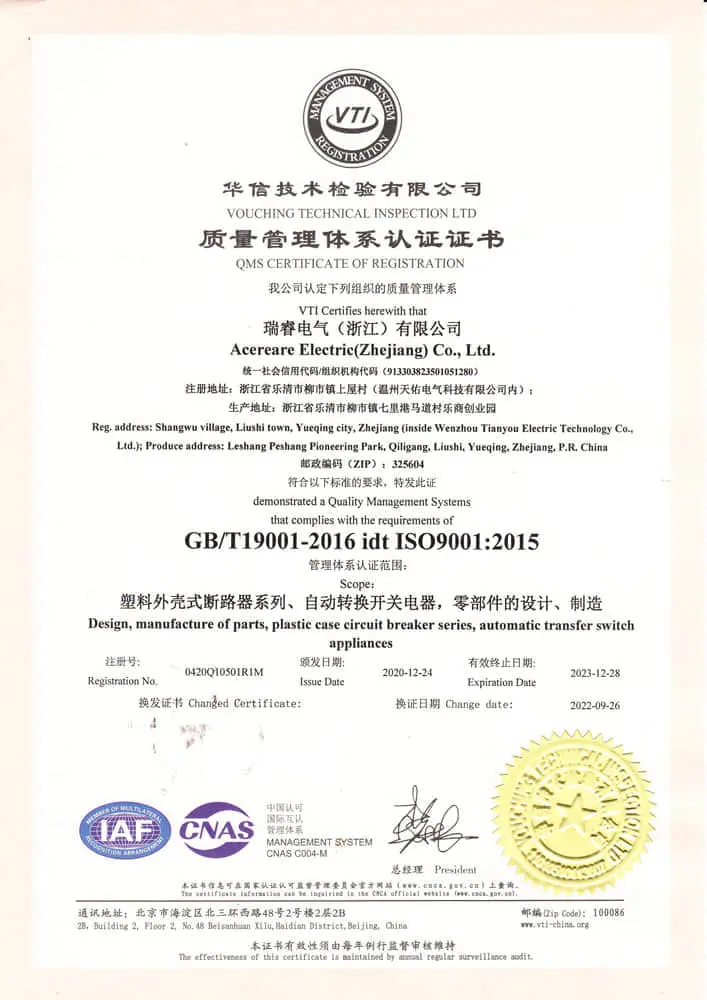
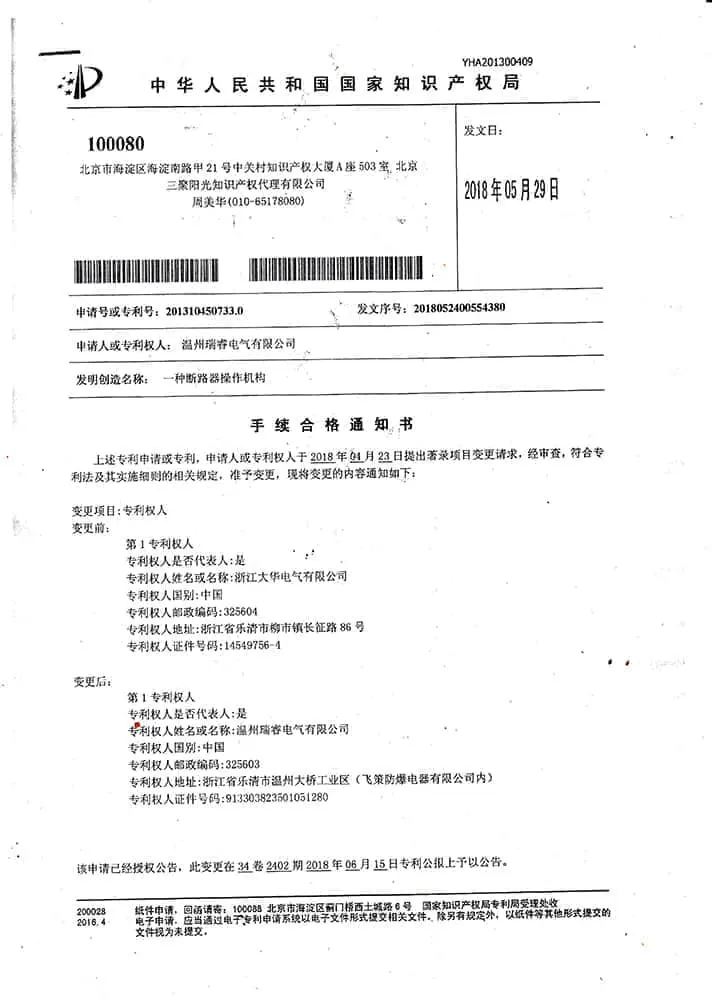
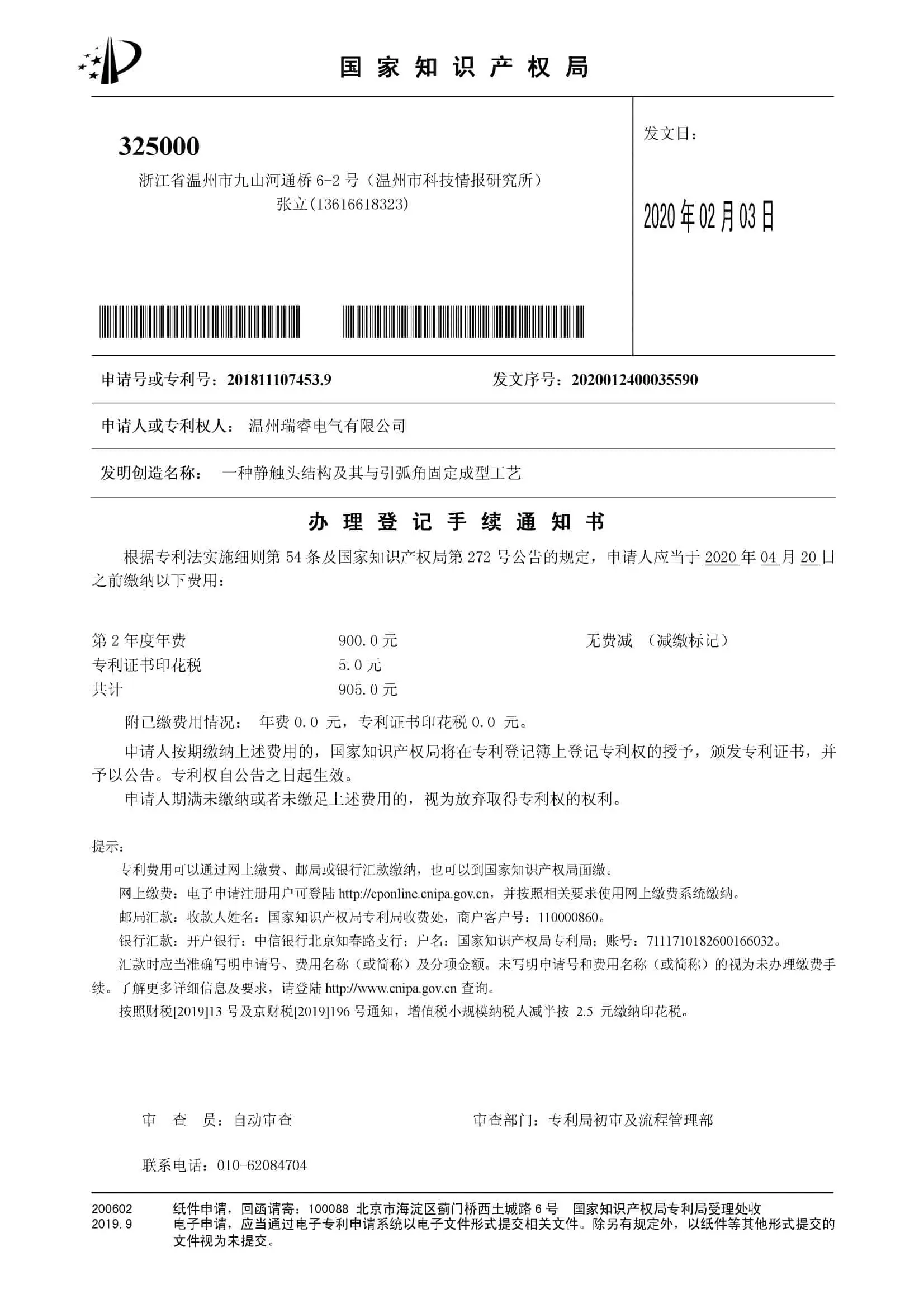
Our circuit breakers conform to major international electrical standards, backed by third-party testing.






 AceReare