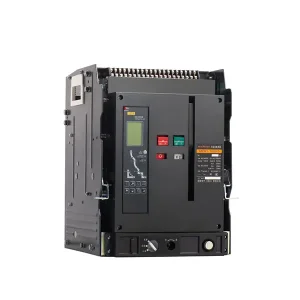
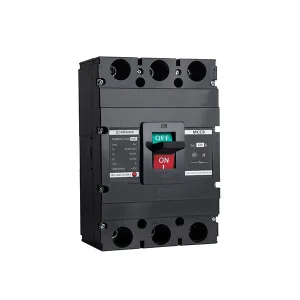
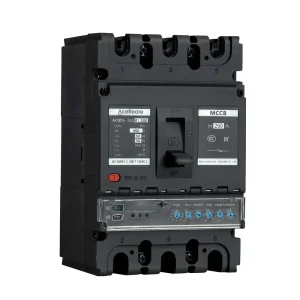
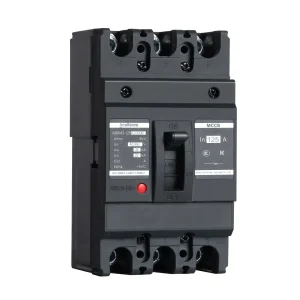
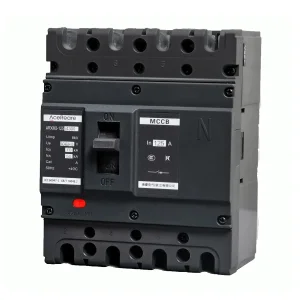
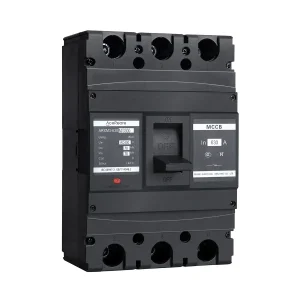
Founded in 2015, Acereare Electric operates with two wholly-owned subsidiaries: "RuiRui Electric" and "KeRui Electric". Our manufacturing heritage and technical acumen run deeper, inheriting over 20 years of refined electromechanical craftsmanship passed down through two generations. With a focus on Molded Case Circuit Breakers (MCCB), Air Circuit Breakers (ACB), and specialized electrical stamping components, we rank among China's top-tier ODM/OEM developers.
By implementing advanced enterprise tools including Product Lifecycle Management (PLM), Business Intelligence (BI), Enterprise Resource Planning (ERP), and Manufacturing Execution Systems (MES), we manage production from raw steel sheet stamping to dynamic microprocessor calibration under one roof. Our focus on quality has fostered deep strategic partnerships with over 100 high-end domestic and global B2B clients.

Electrical infrastructure demands safety, efficiency, and reliability under extreme environments. Acereare engineered circuit breakers supply the critical backbone for energy distribution globally.
In high-voltage solar photovoltaic installations, safety parameters differ vastly from typical AC distribution. DC circuits present sustained electric arcs that are notoriously difficult to extinguish. Our ARM6DC Series Photovoltaic MCCB (rated up to 1500VDC) is specifically engineered with optimized magnetic blowout fields and arc-extinguishing chambers to handle these faults. These protect utility-scale central inverters, combiner boxes, and battery energy storage systems (BESS), ensuring rapid isolation of localized faults without shutting down the entire solar array.
The modernization of commercial grids requires low-voltage switchgears to be interactive. Our intelligent measurement-capable circuit breakers are built with embedded microcontrollers and high-accuracy current sensors. Beyond simple overcurrent tripping, these devices handle active power monitoring, harmonics analysis, and phase load balancing. They integrate seamlessly via RS485, Modbus-RTU, and Ethernet connection modules, enabling remote telemetry ("remote sensing", "remote adjustment", "remote control", "remote signaling") to satisfy modern industrial IoT requirements.
Industrial machinery often presents heavy inductive loads causing severe inrush currents during startup. Standard circuit breakers will trip prematurely under these conditions. Our thermal-magnetic MCCBs feature adjustable magnetic trip settings (typically 5x to 10x rated current) to prevent nuisance tripping while guaranteeing short-circuit protection. This custom calibration secures electric motors, transformers, and mining equipment without interrupting operational workflows.
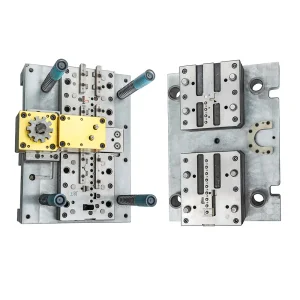
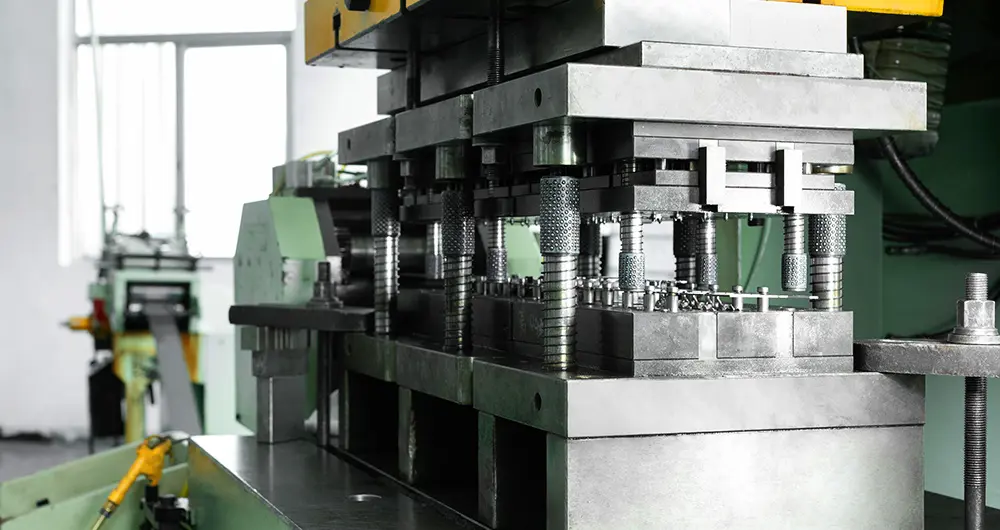
One-Stop production encompassing six kinds of metal processing techniques. High-precision tooling, automatic punching machines, and 10+ manual and automated assembly lines guarantee consistent quality and volume delivery.
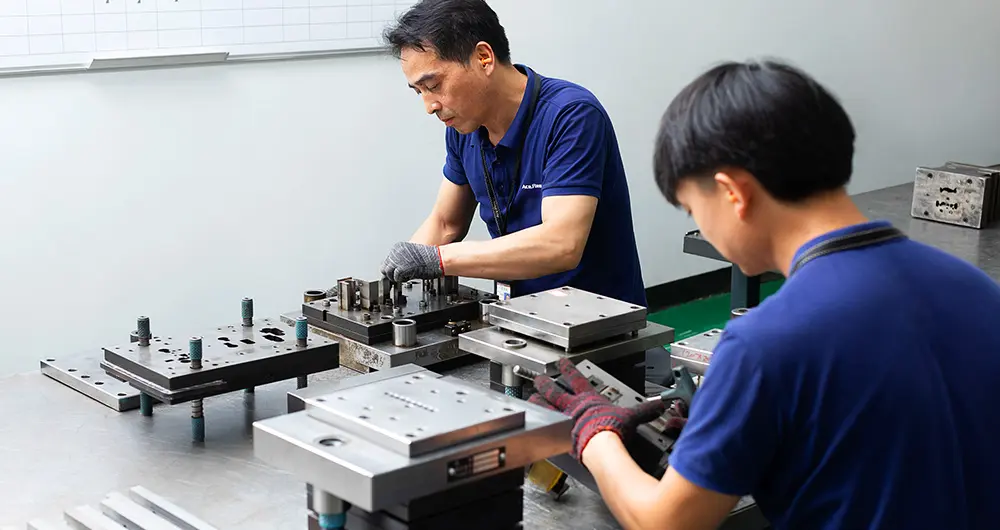
Over 50 mechanical and electrical R&D engineers with a minimum of 5 years of industry experience. Proficient in 3D CAD design, thermodynamic simulation, and arc chamber optimization. Launching 50+ new projects annually.
Our dual-factory system optimizes supply operations. We utilize localized manufacturing alongside U8 ERP software to synchronize scheduling, keeping lead times short and pricing competitive on wholesale components.
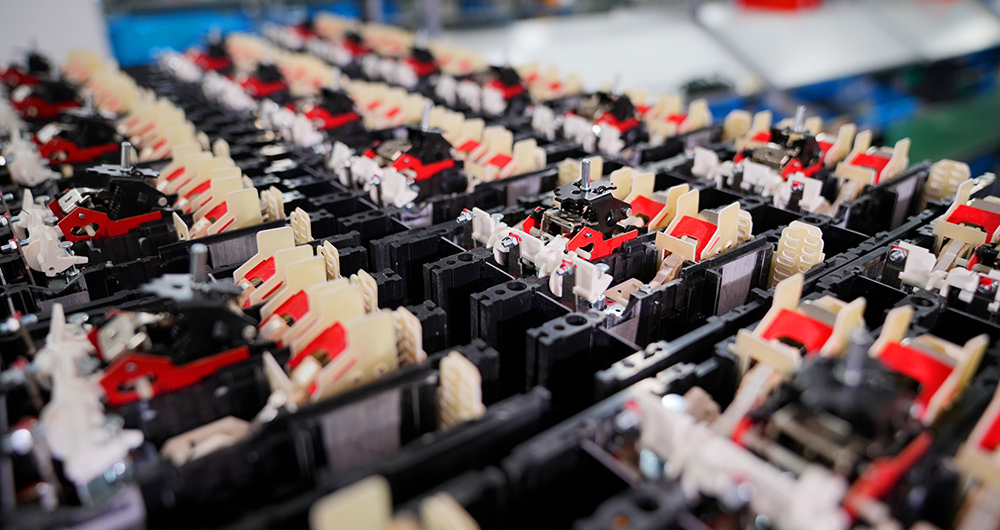
We test products inside our state-of-the-art laboratory using over 150 dedicated testing instruments. More than 20 quality inspectors control every batch using PLM, MES, and strict ISO certification procedures.
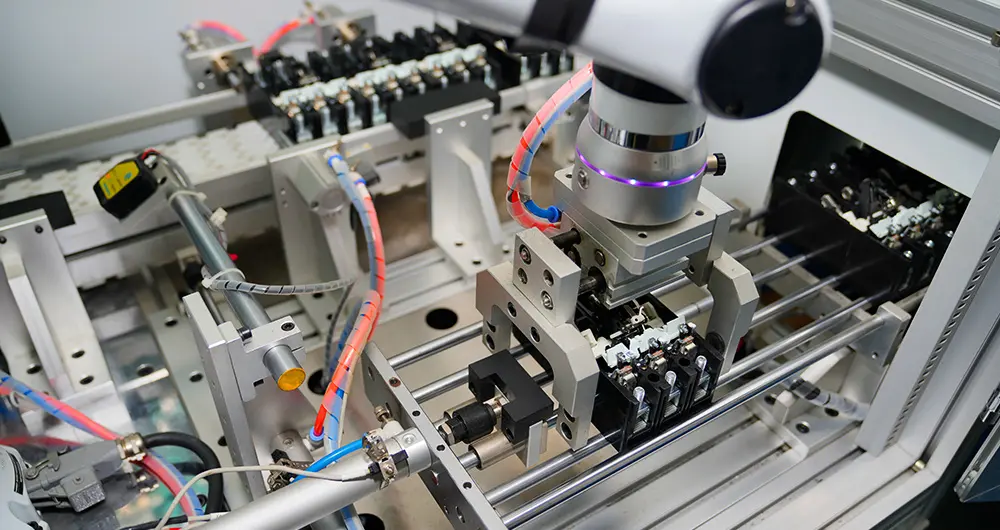
Choosing the right breaker technology depends heavily on coordinates of cost, response time, and local environment. Review our comparisons for MCCB planning:
| Features & Parameters | Thermal-Magnetic MCCB | Electronic Trip MCCB (ETU) | Intelligent Measurement Breaker |
|---|---|---|---|
| Overload Protection Mechanism | Bi-metallic strip (heating deflection) | Rogowski current sensor + Microchip calculation | High-precision CT + Core Edge Computing |
| Short-Circuit Protection | Electromagnetic coil armature | Electronic instantaneous threshold calculation | DSP instantaneous and transient digital filters |
| Tripping Curve Adjustability | Fixed or limited mechanical adjustments | Broad L-S-I adjustment dials (0.4 - 1.0 x In) | Digital firmware setup, dynamic adaptation |
| Ambient Temperature Sensitivity | High (requires derating calculations above 40°C) | Negligible (solid-state electronics compensated) | Zero drift, dynamic thermal monitoring built-in |
| Telemetry & Communication | No telemetry (dry contacts auxiliary option) | Modbus optional on high-end models | Standard Modbus, RS485, Wi-Fi / LoRa options |
Standard electrical equipment will degrade quickly under harsh operational environments. We address these conditions through targeted material design and laboratory verification:

Standard plastics grow brittle and mechanical grease freezes in cold climates, causing mechanisms to jam. We apply specialized low-temperature lubricants, structural polymers, and metal coatings tested down to -40℃ to guarantee reliable mechanical operation.

Coastal and maritime installations accelerate oxidation of vital electrical contacts. We run extensive salt spray tests, validating 72 hours of protection for complete breaker units and 48 hours for sub-assembly components, preventing premature contact resistance issues.
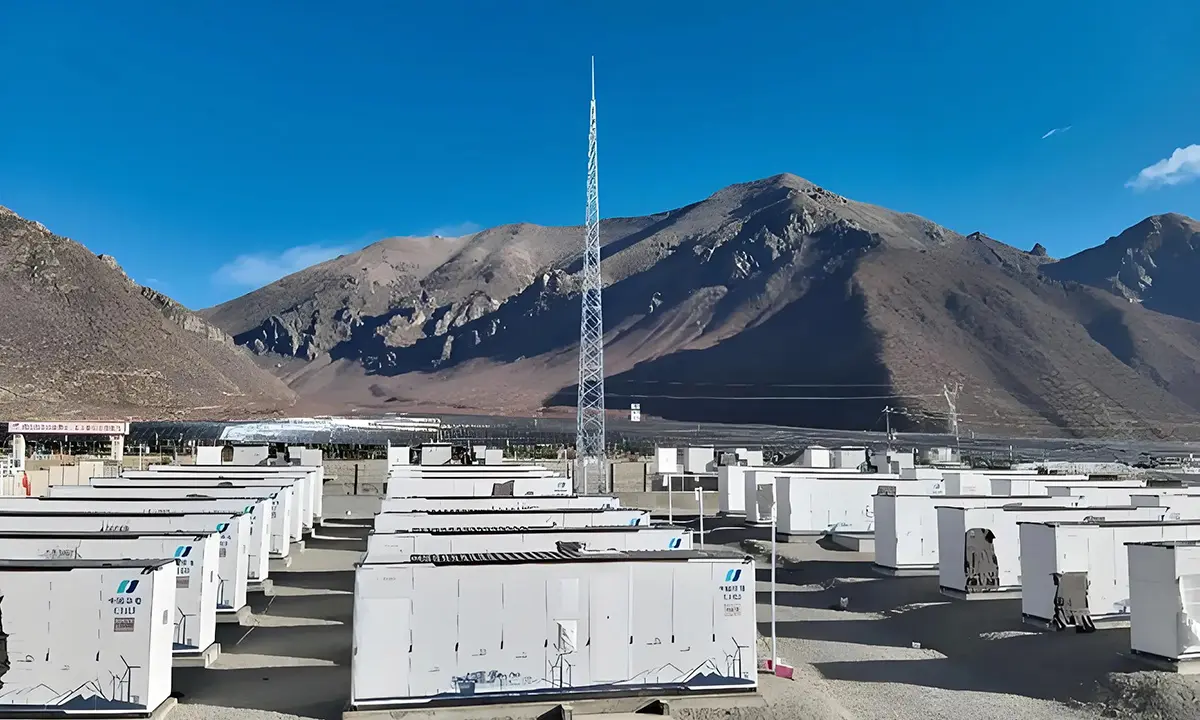
At high altitudes, thin air reduces heat dissipation efficiency and lowers dielectric strength. We configure specific high-altitude derating parameters, applying customized creepage distances to avoid arc-over and corona discharges.

For modern smart homes and commercial structures, MCCBs offer compact, reliable overcurrent protection, securing delicate appliances and building networks from electrical damage.

High temperatures accelerate degradation of standard plastics. We construct our controllers with heat insulation layers, treating raw copper and iron pieces with anti-corrosive plating, validated in our 55℃ environmental chambers.
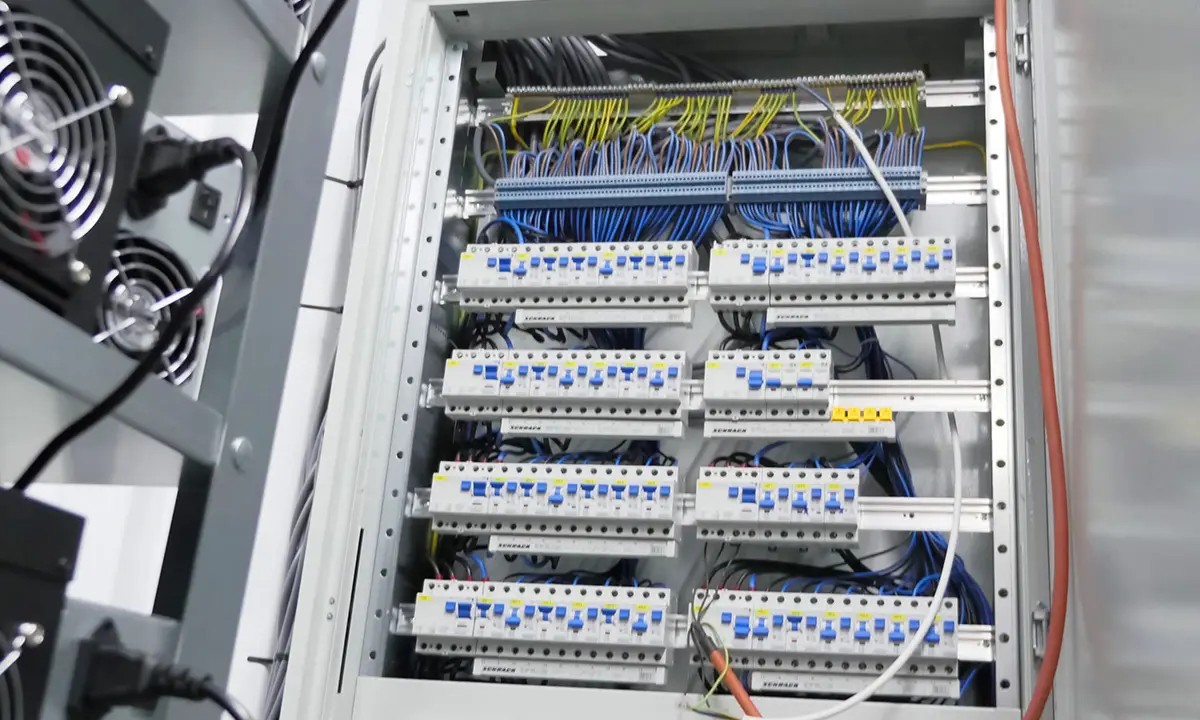
Advanced MCCB designs supply measurement, edge computing, and communication. These units log high-precision consumption metrics, serving as key telemetry nodes in modern smart grid setups.
Choosing a manufacturing partner is about more than buying off-the-shelf products. We help our global B2B clients secure market share, protect electrical equipment, and establish brand recognition through custom-tailored services:
Brand Customization: We laser-print authorized logos directly on the molded casings, design custom retail packaging, and print technical documentation to match your brand requirements.
Engineering and Molds: Our R&D team designs customized molds and mechanisms to meet specific installation footprints. Mold tooling costs are refundable upon reaching target production milestones.
Compliance Support: We supply certified test reports to assist you in acquiring international certifications (CE, CB, IEC, UL) in your local market.
Watch our factory walk-through to see our automated production processes and quality assurance testing.
Detailing electrical parameters, environmental limits, and quantity demands.
Our engineers provide custom solutions and circuit schematics.
Defining delivery dates, terms, and technical specifications.
Raw component stamping, assembly, calibration, and QC verification.
Secure cargo packaging and delivery handling.
Our comprehensive selection of circuit protection options is built to meet global low-voltage distribution requirements:
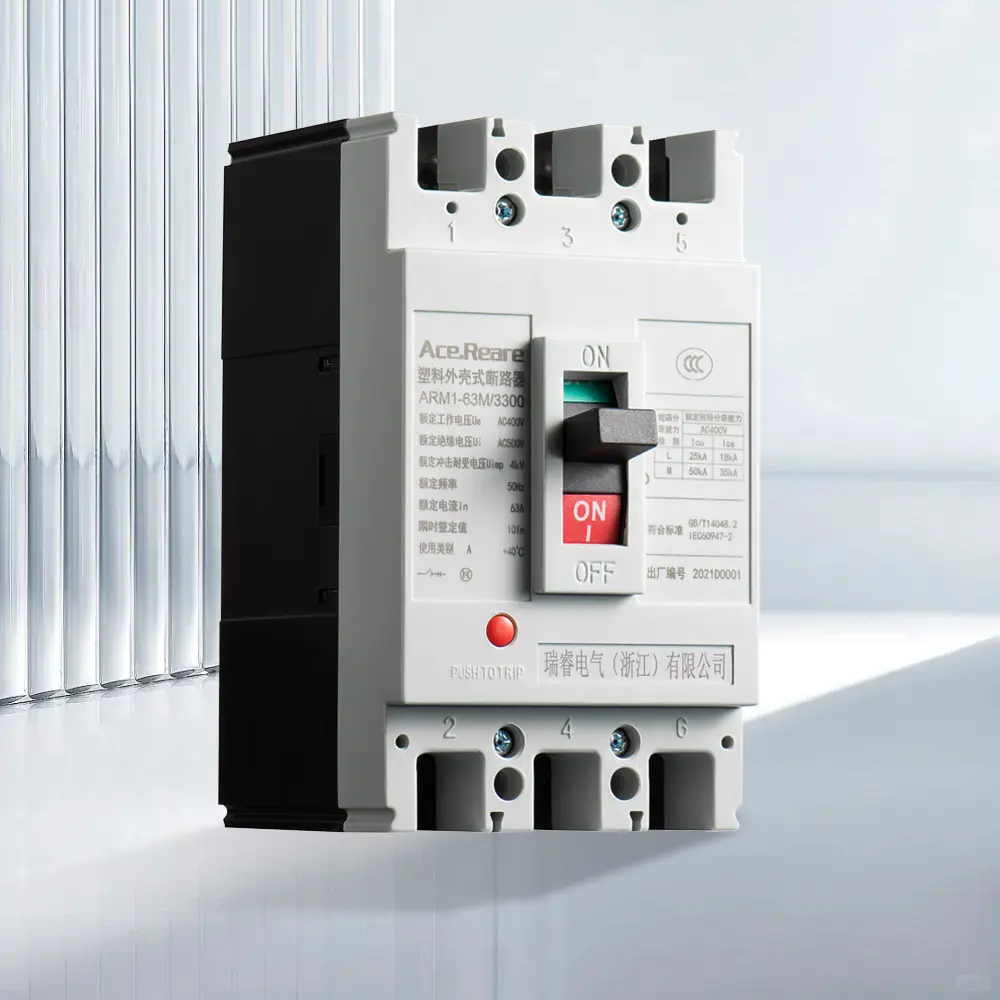
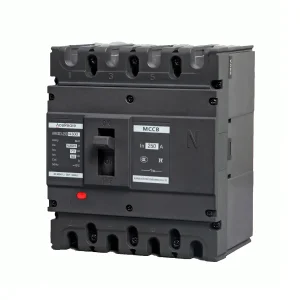
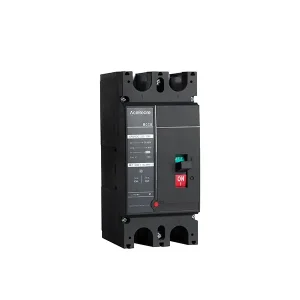
Our baseline molded case circuit breaker series, designed for commercial and industrial low-voltage grids. Provides reliable protection against overload and short-circuit faults.
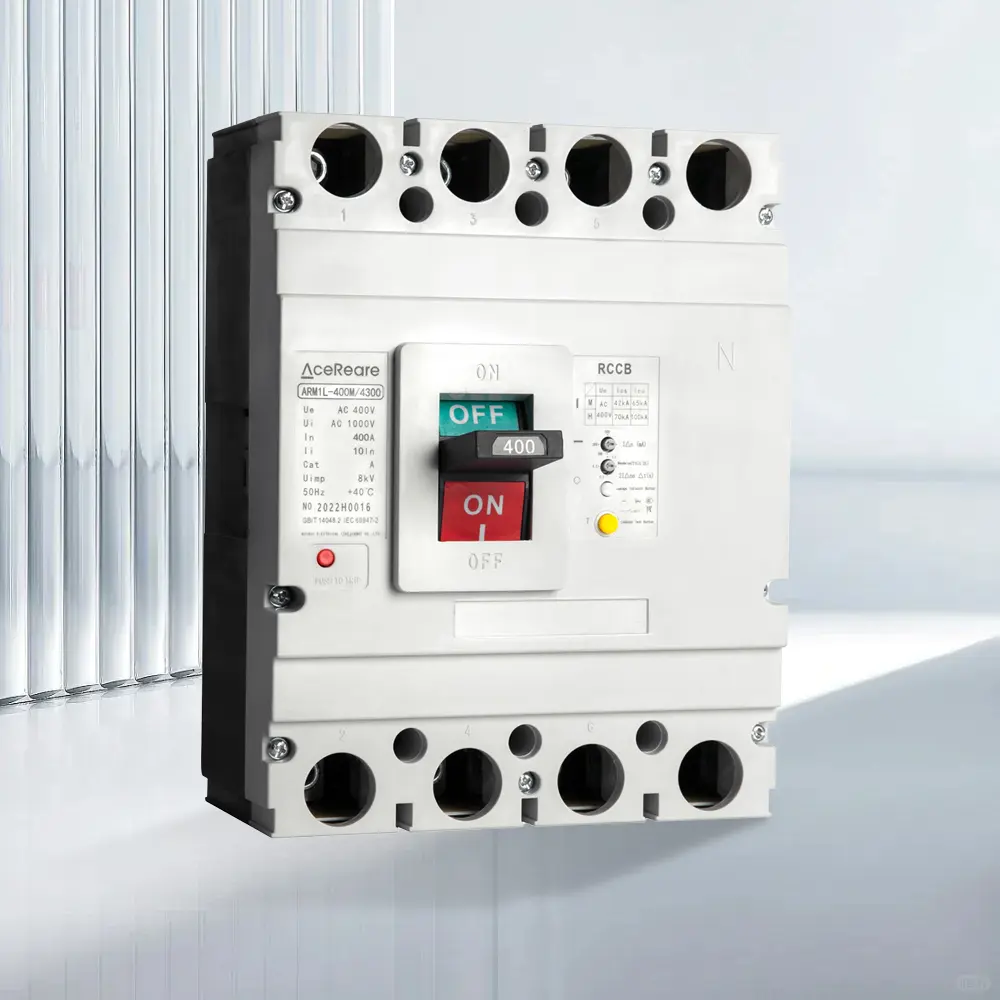
Integrated residual current (leakage) protection. Essential for environments demanding ground-fault detection and personnel safety.
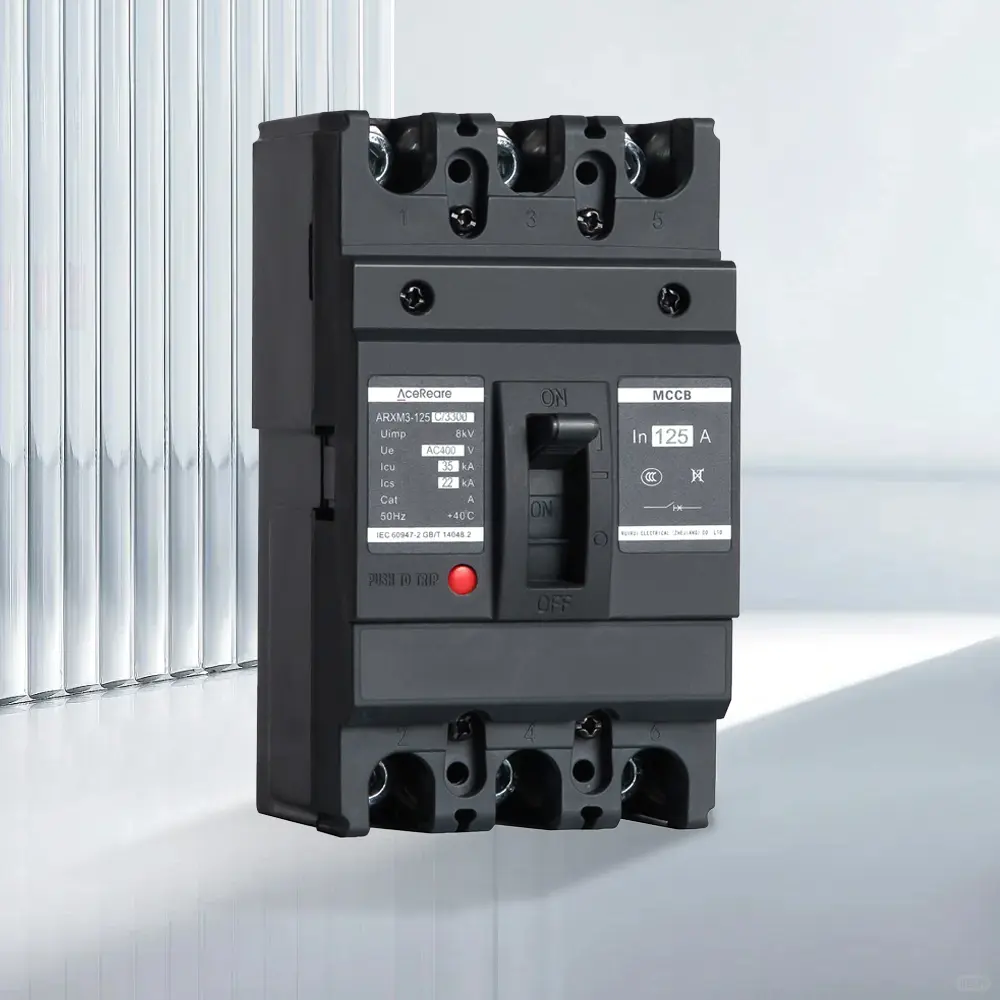
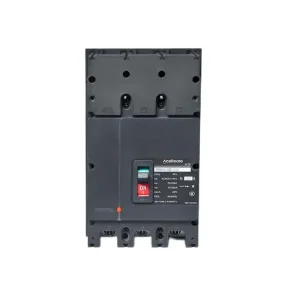
Thermal-magnetic MCCBs designed for flexible calibration in industrial settings, offering stable trip performance in high-current applications.
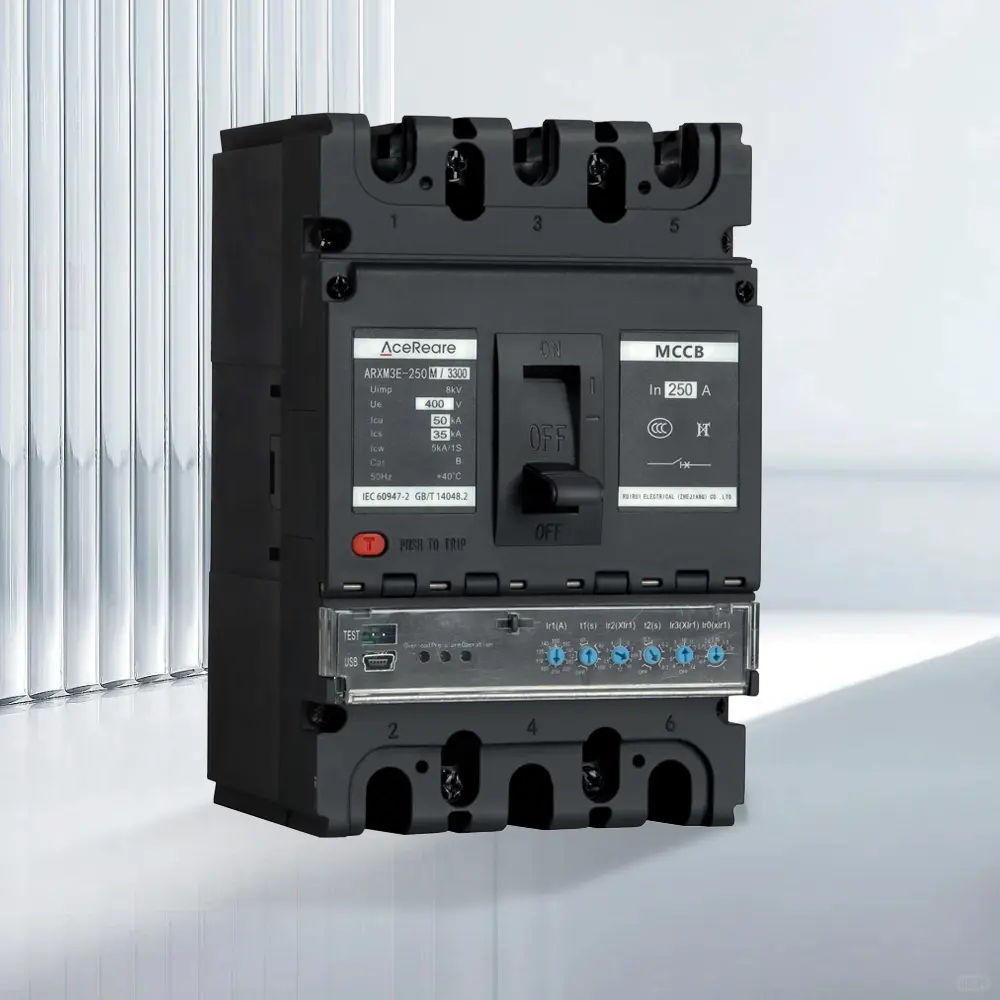
Features microchip-controlled trip mechanisms (ETU) with adjustable current configurations, providing high accuracy for selective protection coordination.
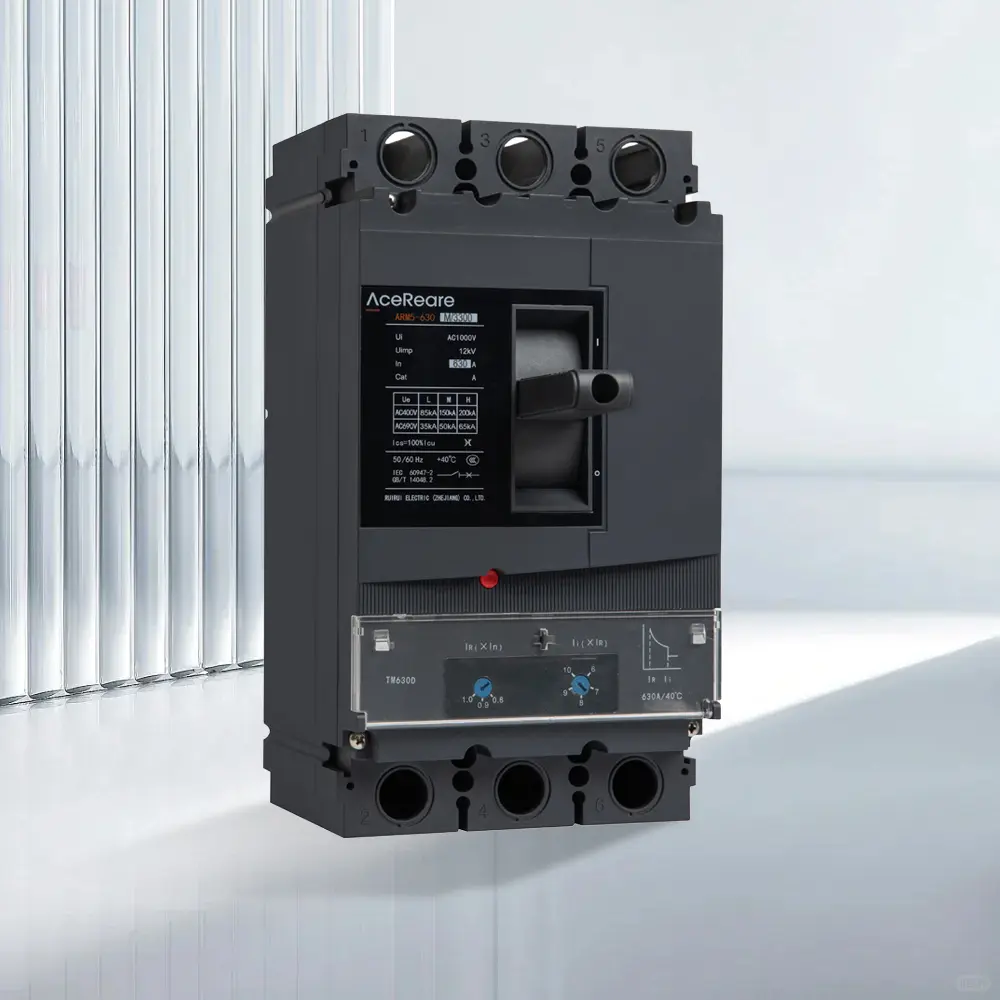
Intelligent breaker system featuring active power monitoring, communication support, and built-in edge metering for smart grid systems.
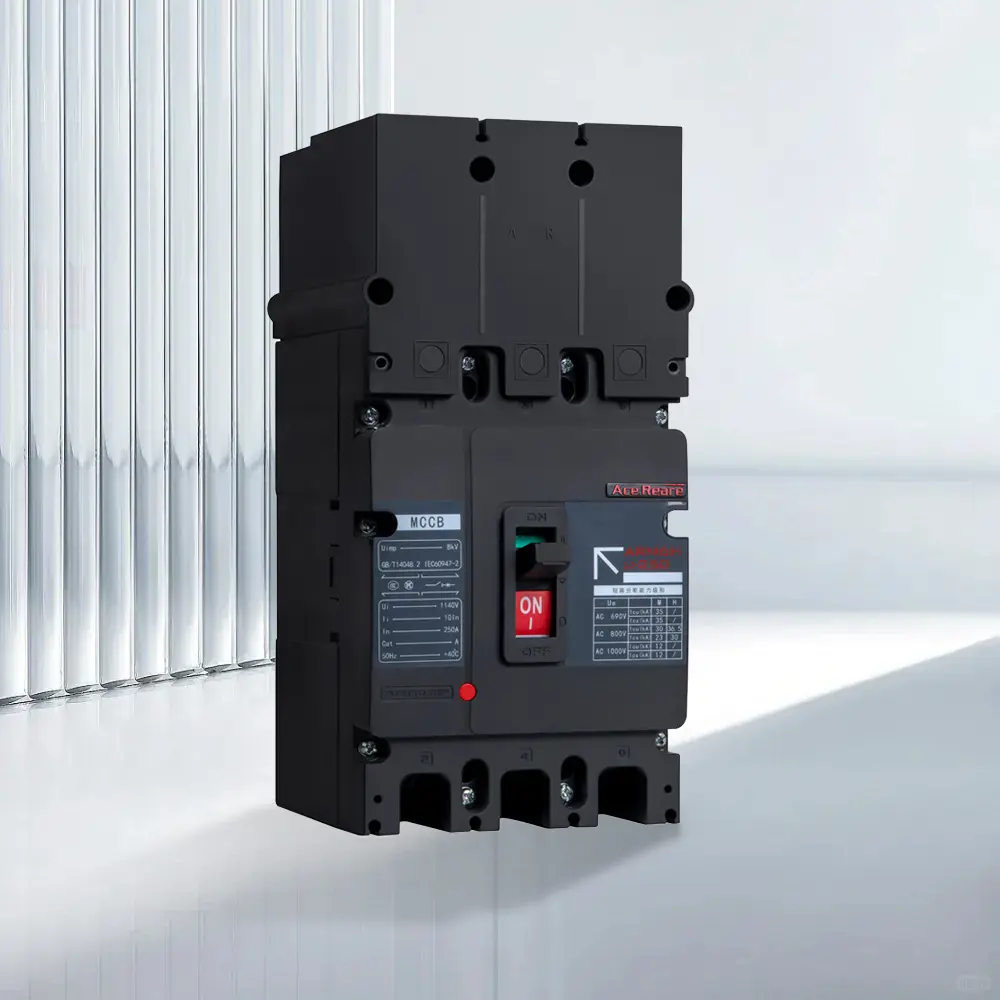
Optimized for renewable energy systems, offering arc protection up to 1000V/1500VDC to protect solar arrays and commercial battery systems.
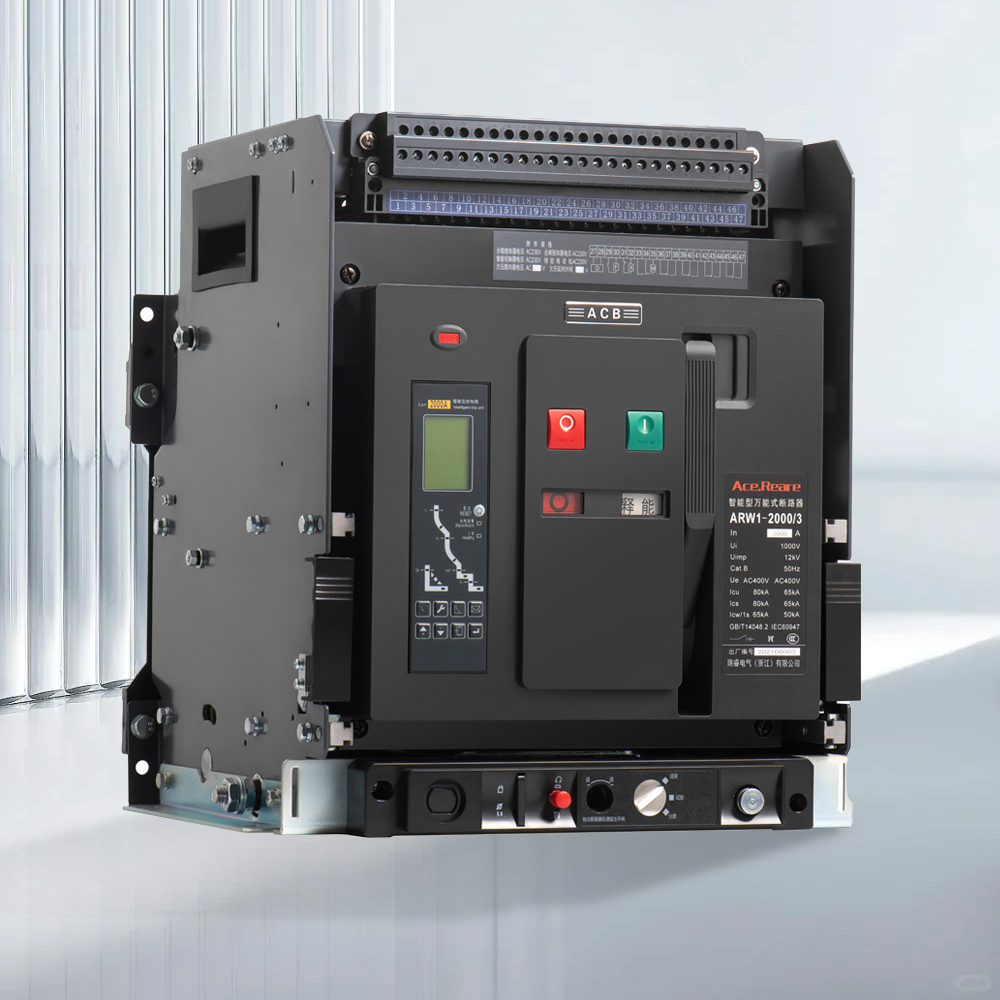
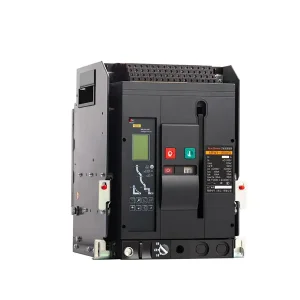
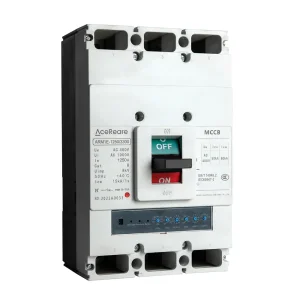
Applicable to AC 50Hz networks, with rated voltage up to 690V and currents from 400A to 6300A. Supports telemetry interfaces for remote automation.
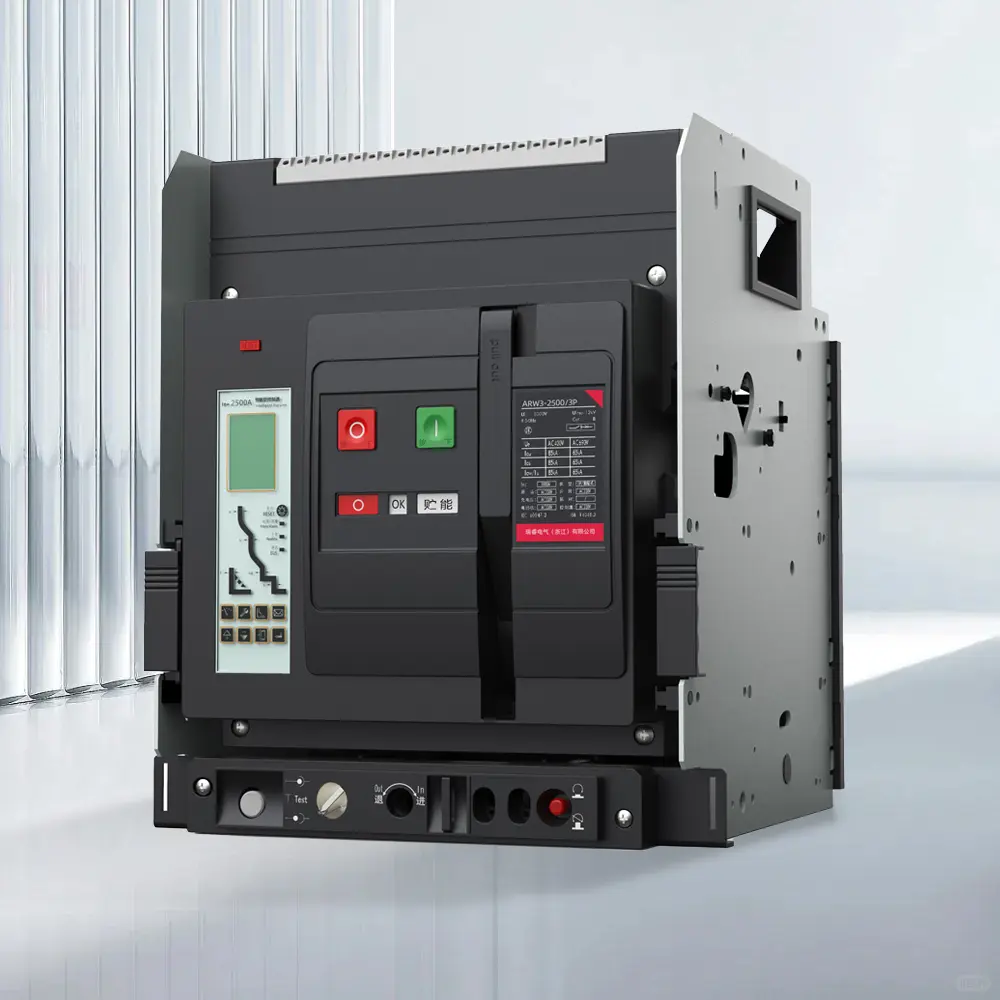
Designed for main power input panels, featuring high short-circuit breaking capacity and advanced microprocessor control for grid reliability.
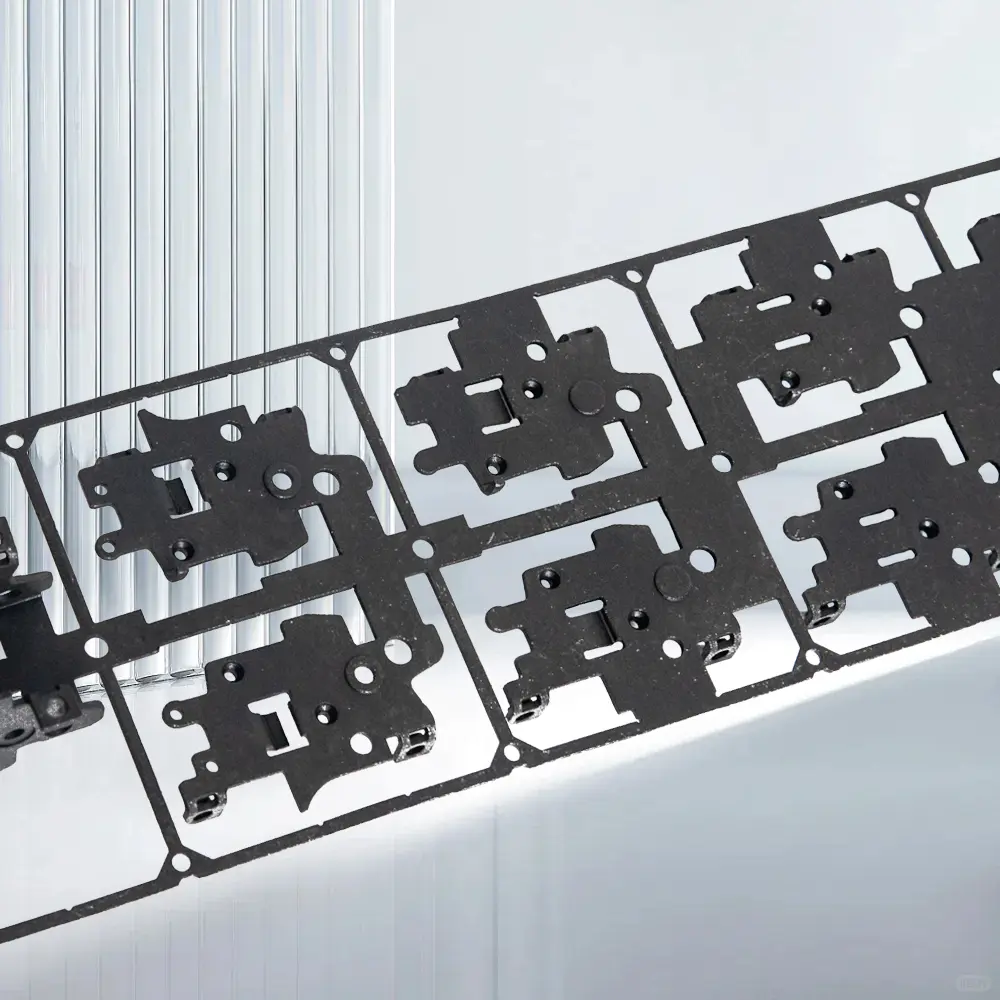
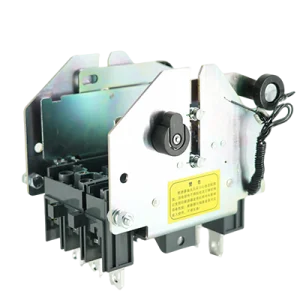
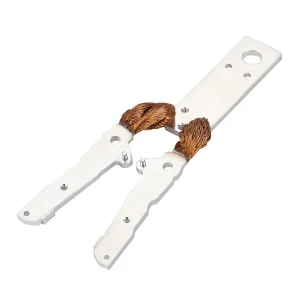
High-quality contacts, connection plates, and stamping parts manufactured in our own workshop to ensure component precision and performance.
As the electrical industry moves toward digitalization and reduced carbon footprints, Acereare is actively developing technologies for the next generation of power systems:
By using silicon carbide (SiC) and gallium nitride (GaN) semiconductors, our upcoming solid-state models will offer microsecond-level isolation times, virtually eliminating electric arcs for critical high-speed applications.
Future intelligent breakers will use predictive algorithms to analyze contact wear and thermal cycles in real time, alerting operators to potential maintenance needs before a failure occurs.
We are replacing fluorinated gases and traditional plastics with eco-friendly alternatives to comply with upcoming strict global environmental standards, without sacrificing arc-extinction capabilities.
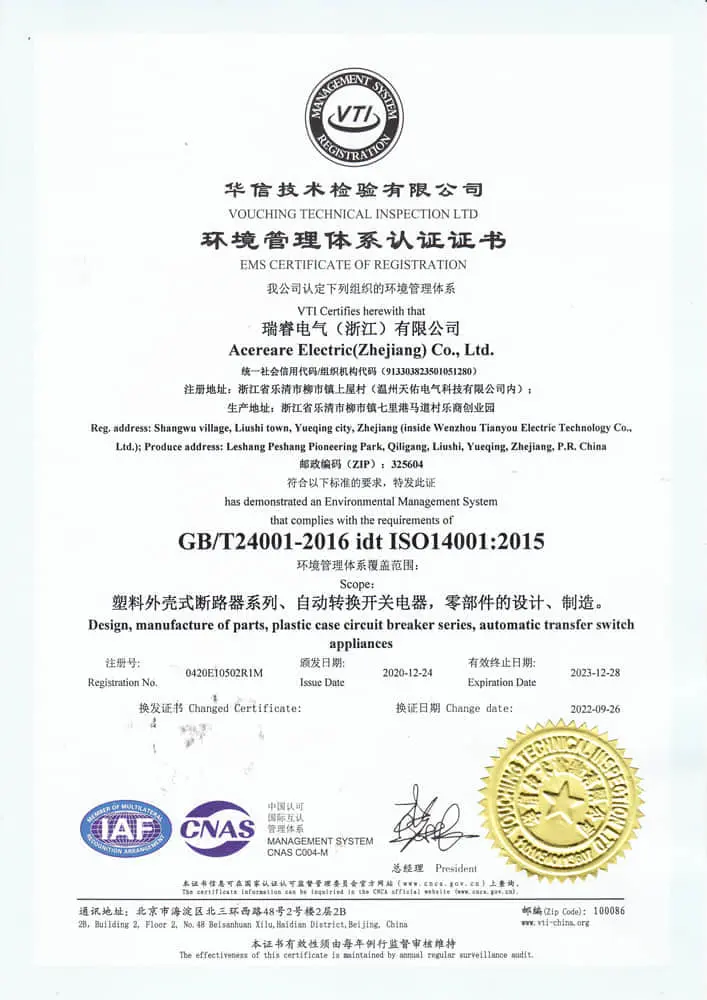
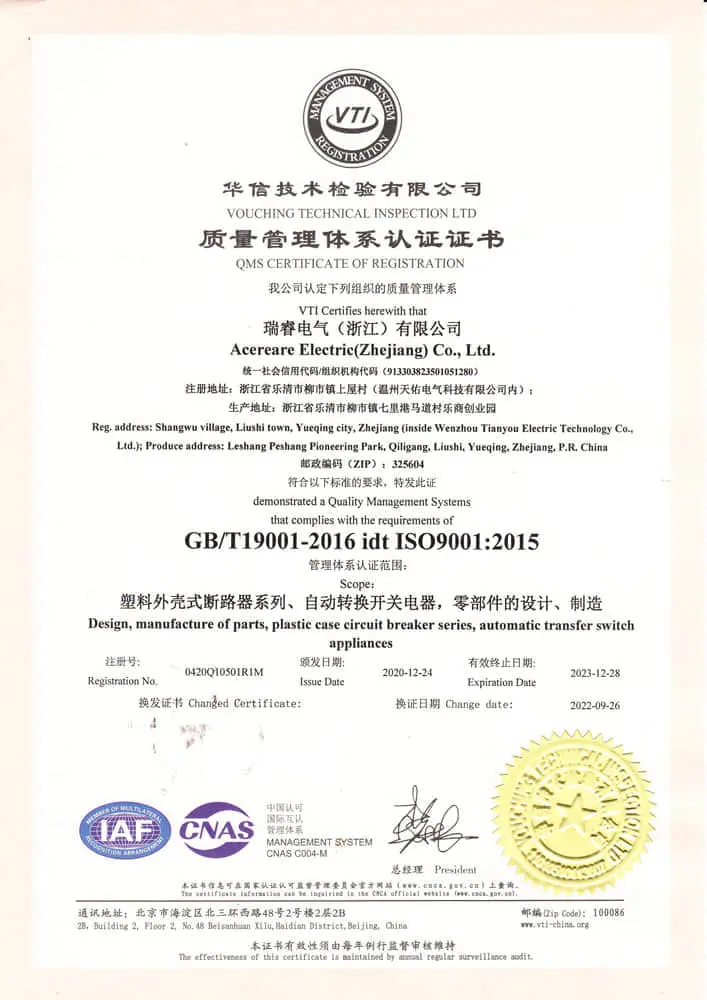
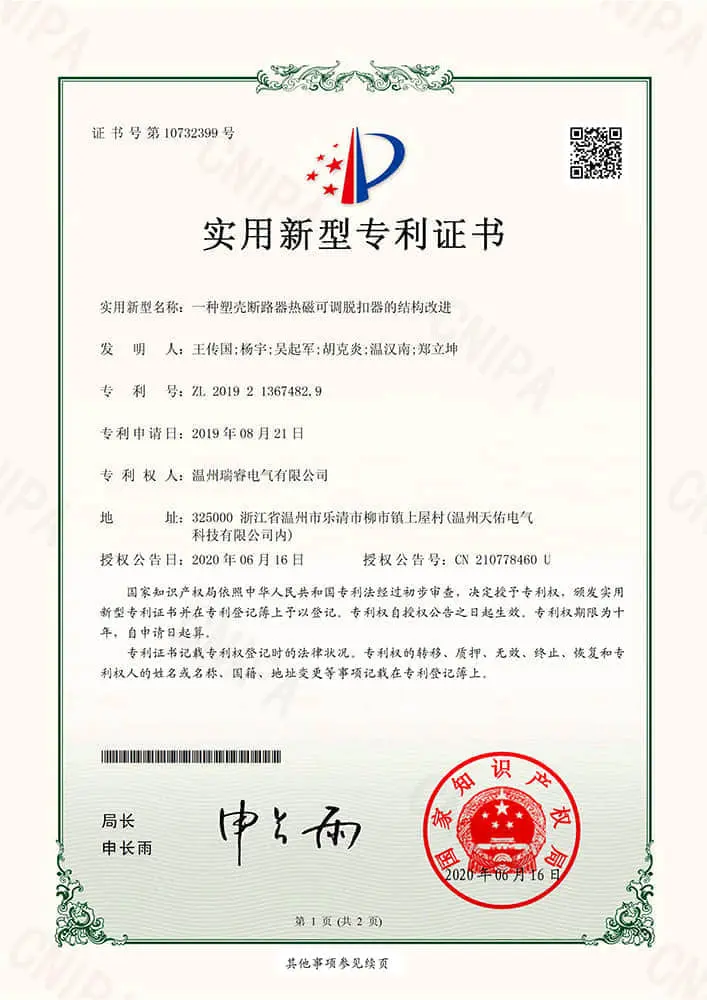
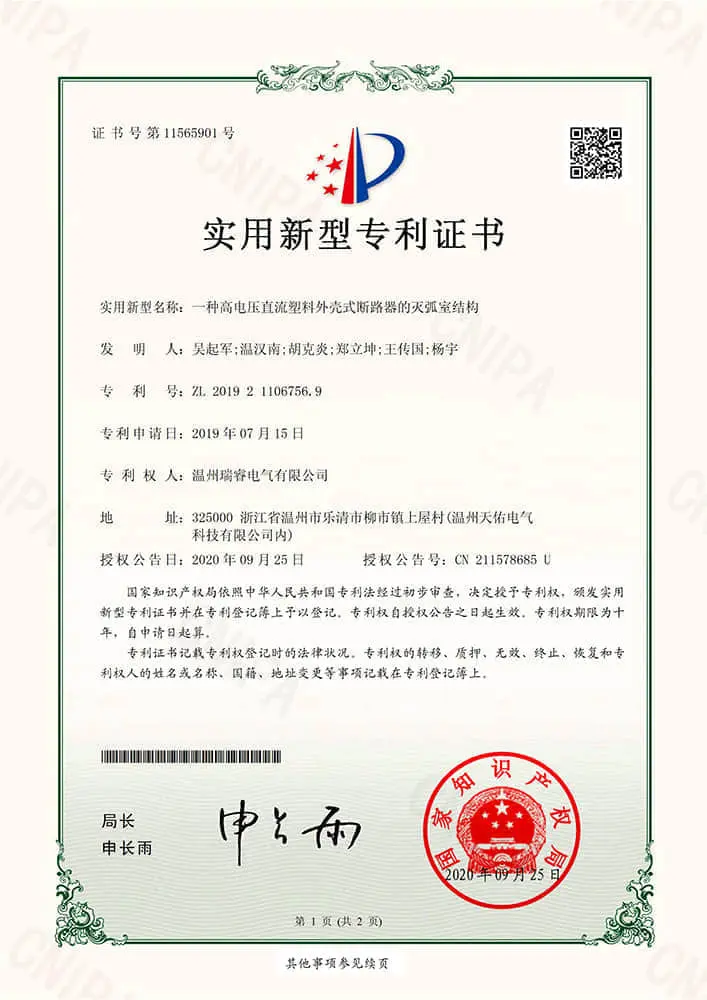
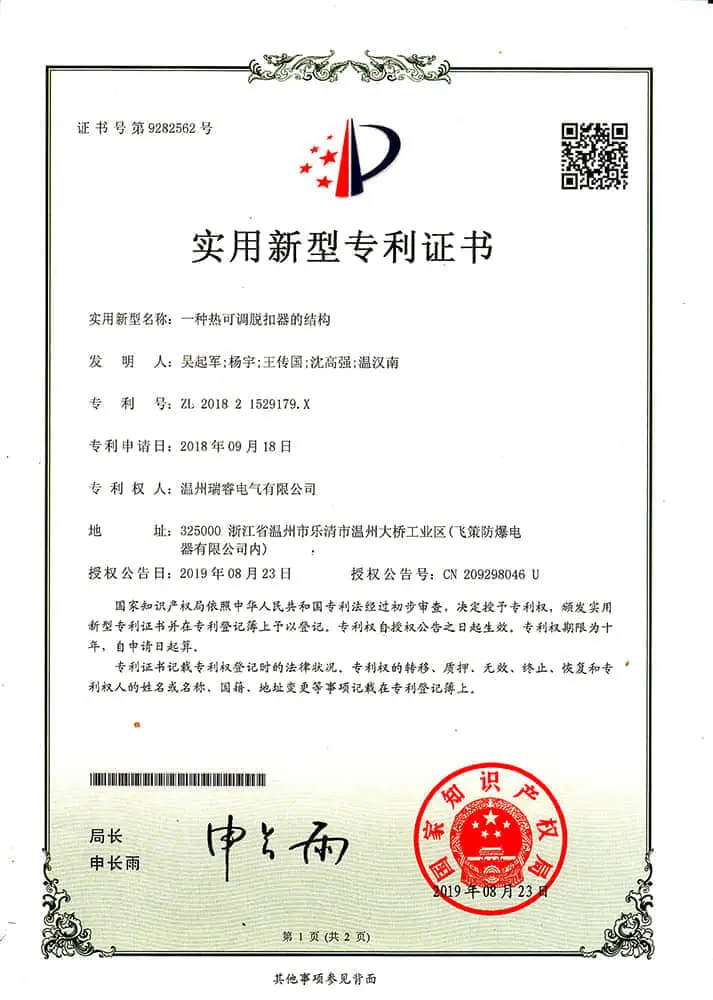
Our manufacturing processes and products are certified to meet international standards for safety and reliability:



ACBs and MCCBs are categorized by their construction, electrical capacities, and intended placement in your distribution network. MCCBs typically handle currents from 15A up to 3200A and are packaged in a sealed molded plastic frame, making them ideal for sub-distribution panels. ACBs operate at higher currents (from 400A up to 6300A) and feature open, air-insulated designs with configurable electronic trip units. ACBs serve as the main incoming protection switch for major switchgears.
Thermal-magnetic circuit breakers trip based on heat generation warping an internal bi-metallic strip. When ambient temperatures rise above their calibrated baseline (typically 40°C), the breaker will trip at lower currents than its nominal rating. We solve this by using high-temperature resistant materials, applying specialized insulation coatings, or supplying electronic trip units (ETUs) that are less susceptible to ambient temperature changes.
Thin air at high altitudes reduces heat dissipation efficiency and dielectric breakdown strength. As a result, standard circuit breakers must be derated for both operational current and rated insulation voltage. For installations above 2000m, we reference high-altitude derating tables and adjust mechanical spacings to prevent arcing and premature degradation.
Icu is the maximum short-circuit current a circuit breaker can successfully interrupt, though the unit may sustain damage and require replacement afterward. Ics represents the maximum current the breaker can interrupt and still remain operational. For critical infrastructure, look for circuit breakers with an Ics equal to 100% of Icu to ensure system resilience.
Every customized OEM run undergoes inspection in our testing laboratory. Tests cover mechanical lifespan, thermal calibration, dielectric insulation, and trip time testing. We record data for each unit using our ERP and MES software, generating traceable reports to verify compliance with international standards.
 AceReare